
Nutritious Homemade Baby Food Recipes Every Parent Can Try For Healthy Growth
Smitha Suresh
Making baby food at home doesn’t have to be complicated! From simple purees to wholesome meals, these easy and nutritious recipes will keep your little one happy, healthy, and full of energy

Your baby deserves complete nutrition with every morsel of food. As your baby grows, you may want to introduce them to different kinds of food that provide essential vitamins and minerals. Packaged baby foods are convenient but may not be nutritious for your baby. The chemicals and additives found in processed baby foods and infant formulas, including white or processed sugar, artificial sweeteners, preservatives, food coloring, etc., could damage the tender digestive system of babies. Also, children grow at a rapid rate during the first three years of their lives, so they require varied nutrients during this stage.
Home-made baby foods are a better alternative as they provide all the nutrients your baby requires. Every household has some age-old recipes of baby food that are passed down through the generations. We present a few such recipes for your baby.
Before you start preparing baby food at home, keep these points in mind:
- Always wash your hands before handling baby food. Keep the kitchen area neat and clean.
- Wash well all the utensils and spoons used for making the baby's food. Sterilise the bowls and spoons before feeding the infant.
- Before preparing baby food, clean all the ingredients properly.
- Avoid salt and sugar, and sweeteners in your baby's food for the first year of life.
- Use fruits and dried fruits to provide sweetness, if required.
- Spices such as cumin, cinnamon, and turmeric can be used to add flavour.
- Use moderate amounts of ghee and butter.
- After the first year, pink salt or any unprocessed salt without additives or synthetic iodine can be used.
- Preferably, use steel utensils to cook baby food.
- Feed your baby small quantities. Remember, baby's digestive system is still evolving.
5 recipes for homemade baby food
1. Coconut milk with malted kanji
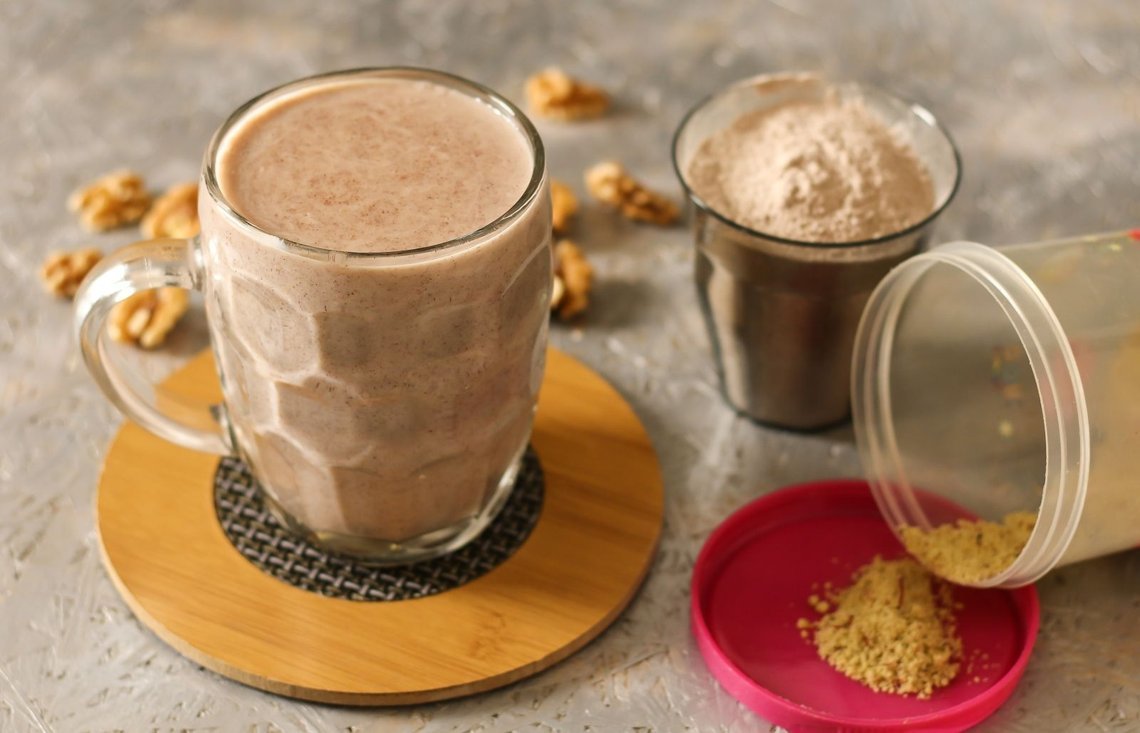
Ingredients:
- 500g ragi
- 500g Bengal gram or green gram
- 50g sprouted fenugreek seeds (optional)
- 200ml water
- 1 coconut
Method:
For the kanji powder
- Soak the ragi for a couple of hours and spread it on a clean towel to dry. Leave it overnight to sprout.
- Sprout either whole Bengal gram or green gram.
- If you choose, you can also use 50gm of sprouted fenugreek seeds.
- Dry all three in the shade and roast separately, till all the moisture is gone and they turn a nice brown colour. This process may take up to twenty minutes for each different ingredient.
- Mix the roasted grains and grind them into a fine flour.
- To prepare the kanji, mix two teaspoons of this flour in about 100ml of water and boil till it bubbles over. Keep stirring to prevent lumps.
For the coconut milk
- Remove a quarter of the flesh of one coconut and grind it finely.
- Add around 100ml of water, grind again, and strain to remove the coconut chaff.
- You will now have the first batch of milk. Repeat this process two more times to extract more milk from the coconut.
- The quantity of water added is the quantity of milk obtained. So, make as much as you need for your baby.
- You can make up to half a litre and store it in an airtight bottle in the fridge.
For the mix
- Add 50ml of coconut milk to the same quantity of boiled kanji and serve.
2. Steamed vegetables with roasted/soaked flax seed powder
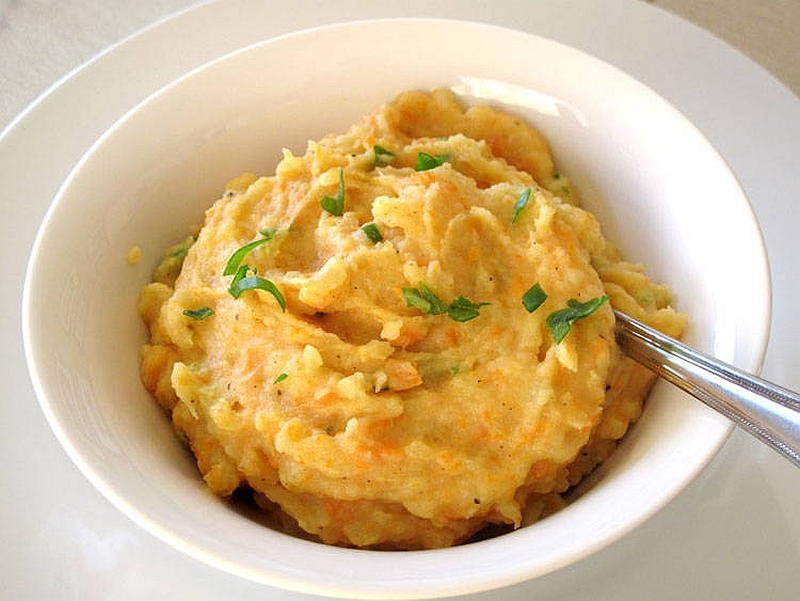
Ingredients:
- 6 tbsp flax seeds
- A bowl of mixed vegetables
Method:
- Select three different vegetables like carrots, peas, and potatoes. You can include green leaves like spinach, too. Try to change the combination of vegetables each day. This way, your baby gets a range of plant nutrients, including vitamins and minerals, and most importantly, the numerous phytochemicals needed.
- Clean the vegetables thoroughly and steam them.
- For infants, make a puree out of these steamed vegetables. For slightly older children, mash these vegetables with a spatula.
- Roast six tablespoons of flax seeds for a couple of minutes on a medium flame. Powder and store in an airtight glass jar and use for one week. Grind a fresh batch each week, as flax seeds lose their effectiveness over time.
- Sprinkle a teaspoon or two over the pureed steamed vegetables and feed your child.
3. Soft-cooked moong sprouts with little millet and vegetables
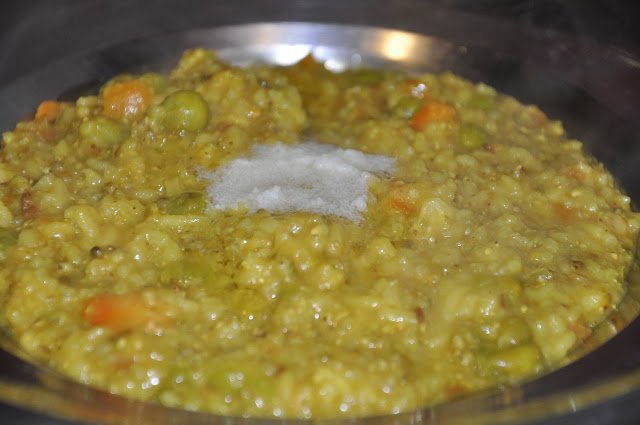
Ingredients:
- 1 cup little millet
- 1 cup green gram
- 1 vegetable of your choice
- 1 tsp coconut/sesame oil
- 1/2 tsp turmeric powder
- 1/2 tsp cumin powder
- Few mustard seeds
Method:
- Soak green gram (moong) in the afternoon and drain the water before you go to bed at night. Leave it overnight in a vessel with a lid or tie it up with a thin cloth. By morning, you will have sprouts.
- Cook little millet (saamai) using two cups of water for one cup of millet.
- Steam cook a vegetable of your choice together with the sprouts till just soft enough for chewing. (Depending on the child's age and ability to chew, sprouts can be left raw too.)
- In a pan, add one spoonful of coconut or sesame oil, mustard seeds, turmeric, and cumin powder. Mix in the vegetables, millet, and sprouts, and fold well.
- Mash well before feeding.
- This is a complete meal in itself. Curd can also be added at the end if you want to feed probiotics.
4. Green leaves and sprouts soup with powdered almond
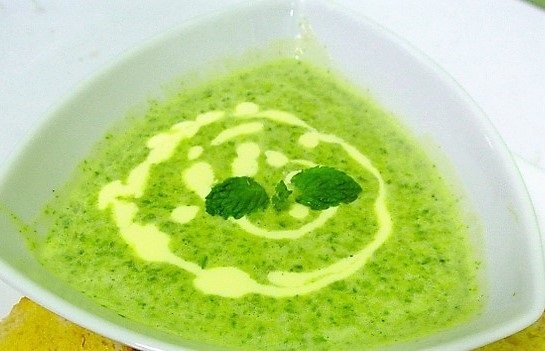
Ingredients:
- 1 small bunch spinach
- 100ml water
- 1 tomato
- 1 diced carrot
- 1 pod of garlic
- Handful of mixed sprouts
- Pinch of spice powder (optional)
- 1 tbsp powdered almond
Method:
- Select a green, leafy vegetable, preferably spinach. You will need one small bunch.
- Remove the roots and wash thoroughly under running water to remove any traces of dirt.
- If you are not sure of the source, soak the leaves in water with a few drops of vinegar added to remove potential germs.
- In a pan, add 100ml water, a tomato cut into large pieces, diced carrot, and chopped garlic. Bring to a boil and add the leaves. Cook only until the leaves turn deep or dark green, usually 5-7 minutes, three minutes in the case of spinach.
- Drain the water into a cup and add some raw sprouts to the vegetable mixture. Grind well into a smooth paste, add in the remaining stock, and grind again. Sprinkle a pinch of spice powder if you want.
- Pour into a cup and sprinkle one tablespoon of powdered almond before feeding.
5. Fruits, soaked nuts, and coconut milkshake
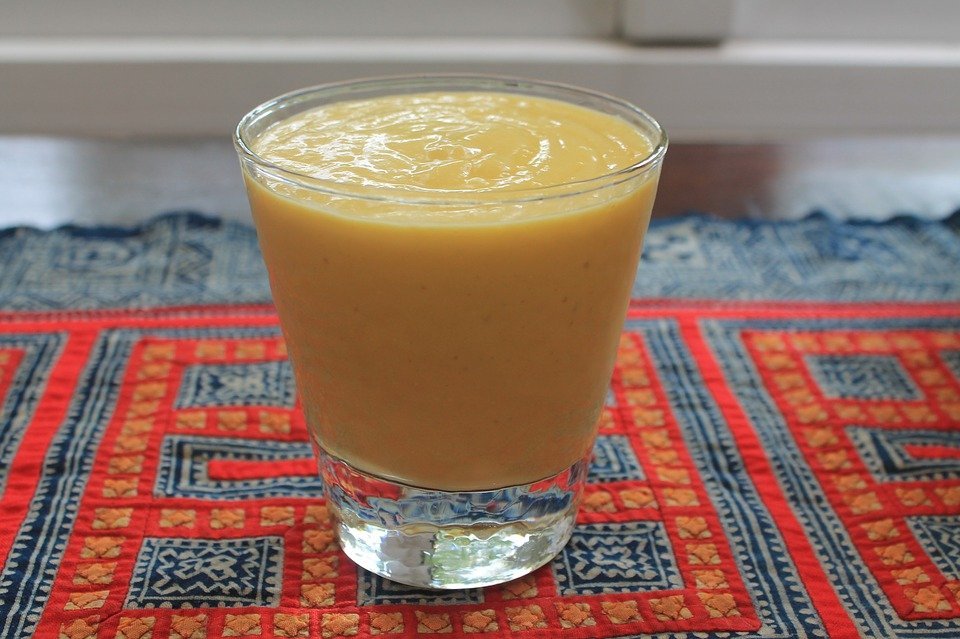
Ingredients:
- 2 tbsp almond
- 2 tbsp cashews
- 2 tbsp walnuts
- 100ml coconut milk
- A bowl of diced banana and mango
Method:
- Take some almonds, cashews, or walnuts.
- Soak them overnight to unlock their nutrients and drain any excess water in the morning. You will need two tablespoons for one serving.
- Prepare coconut milk - you will need approximately 100ml. (Check Recipe 1 for steps)
- To a juice-maker, add banana and mango pieces, and the soaked seeds. Grind till smooth. Add in the coconut milk and blend one last time. The fruit shake is now ready.
All five recipes include superfoods and are, hence, very nutrient-dense. There are no refined and processed ingredients used. Use a variety of grains, pulses, vegetables, fruits, nuts, and seeds to make food for your child. Introducing your child to varied, nutritious food early on gives them a powerful head start.
Last updated on: July 31, 2025
Have insights, questions, or tips to share? Join the discussion on nutrition here.
The Dot health and safety program for pre-primary children places strong emphasis on good nutrition and making wise food choices. We educate children on the importance of a balanced diet and provide guidance on selecting healthy foods, thus laying the groundwork for lifelong nutritious eating habits.































Comments
Edit
Comment Flag
Cancel Update