
Navratri: Legends, Festivities & Family Traditions
Sindhu Sivalingam
author parentcircle author parentcircle author parentcircle author parentcircle author parentcircle author parentcircle
Can't wait for Navratri? Neither can we. Check out the legends and how families and communities celebrate the nine nights and ten days
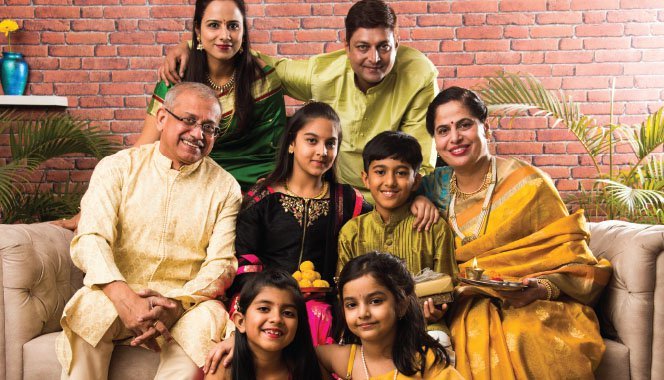
Navratri, meaning nine nights, is a Hindu festival celebrated with great enthusiasm in the month of Ashwin across India. But the celebrations vary considerably depending on the customs unique to each region. Lets take a quick look at the Navratri celebrations in each region.
Regional Celebrations: Highlights
Eastern India (West Bengal, Orissa, Assam)
- Grand Durga Puja celebrations are held, especially in West Bengal.
- Impressive pandals or temporary stages are built to display the awe-inspiring idols of Goddess Durga; her children (Lakshmi, Saraswati, Kartik and Ganesh); her ferocious lion; and, of course, the demon king Mahishasura.
- Streets are decorated with colorful lights, and theres a carnival-like atmosphere, as revelers throng the pandals till dawn.
- Quizzes, dance shows, and singing and poetry competitions are held on the pandal premises.
- On the tenth day, the sindoor khela ritual is held, in which married women playfully smear vermilion on each other in front of the goddess. Later, the idols are immersed in the Ganges.
Northern India
- Ramlila, or the story of the Ramayana, is enacted before packed crowds. Ayodhya, Varanasi and Vrindavan in Uttar Pradesh are well-known for their Ramlilas.
- Dussehra, which marks the end of Navratri, is celebrated on the tenth day and symbolizes the victory of Lord Ram over Ravanthe triumph of good over evil.
- On Vijayadashami, the towering effigies of Ravan and his brothers are set on fire with pomp and show. The burning of Ravans effigy represents the destruction of negative emotions and qualities, such as ego, attachment and anger. One of the biggest attractions is the Kota Dussehra fair in Rajasthan.
Western India
- In Gujarat, children, men and women, dressed in traditional Gujarati attire, perform traditional dance forms like garba and dandiya all night long in community spaces.
- On Vijayadashami, people worship vehicles and buy new ones.
Southern India
- Many families and temples follow the tradition of kolu, a display of dollsdepicting gods, saints, ordinary people, animals and plantson steps. This arrangement of dolls is called bommai kolu in Tamil, bombe habba in Kannada, and bommala koluvu in Telugu.
- Sweets and sundal (a steamed legume/lentil preparation tempered and topped with grated coconut) are offered to the deities on all nine days. Relatives and friends are invited to view the dolls and given sweets, betel leaves, and gifts. Children often dress up as gods and goddesses when they visit their friends or relatives to see the kolu dolls.
- On the ninth day, Ayudha Puja (Saraswati Puja) is celebrated. Families and businesses decorate and worship tools and objects associated with learning and workfrom books and computers to machinery and automobiles!
- Mysurus Dasara celebrations attract a huge crowd every year. Visitors look forward to the Jumbo Savari procession, in which decorated elephants, the idol of Goddess Chamundeshwari, and tableaux featuring the rich culture of Karnataka are the main attractions. The illuminated Mysuru Palace glows like an enchanted fairyland.
- Another exciting feature is the cultural extravaganza of dance, drama and music.
Legends Around Navratri
- The celebrations mark the victory of Goddess Durga, who kills the evil, shape-shifting demon Mahishasura after battling him for 10 days. This feat earns her the name Mahishasura Mardinislayer of Mahishasura, and thus the festival celebrates feminine strength (Shakti).
- Its said that Lord Ram sought the blessings of Goddess Durga before fighting the demon king Ravan. To summon the goddess, Ram had to make an offering of 108 blue lotus flowers. He could find only 107 flowers, so he decided to pluck out one of his eyes, for it resembled a blue lotus. Just then, Durga appeared and blessed him. And then, Ram killed Ravan and emerged victorious on Vijayadashami.
- When the Pandavas went into exile for 12 years in a forest, they left their weapons, wrapped in a cloth, on top of a shami tree. On their return from exile, they retrieved the weapons and worshipped them on Vijayadashami.
Storyteller, actor and author Janaki Sabesh shares what makes kolu special for her family.
1. How was your kolu last year?
We had to give kolu a miss last year due to the pandemic, but we soon realized how much we missed the festivities, our friends, the colors, the artisans and the music. So, we put up a mini version of our usual miniature display to celebrate some of the artisans who have graced our kolu over the years - Mr and Mrs Maity from Digha, West Bengal, for their Mahishasura Mardini, made entirely of shells; Pratyusha from Hyderabad, for the paper-quilled Panduranga and Rukmini; Mrs Ramani of Artefakt, Nagpur, for the Kathakali dancers in papier mch; Ms Katiyayni from Chennai for her Durga, Lakshmi and Saraswati made with fabric; and Mr and Mrs Adah, for our Marapachi dolls from our Africa-themed kolu of 2008, which were dressed by my husband, Sabesh.
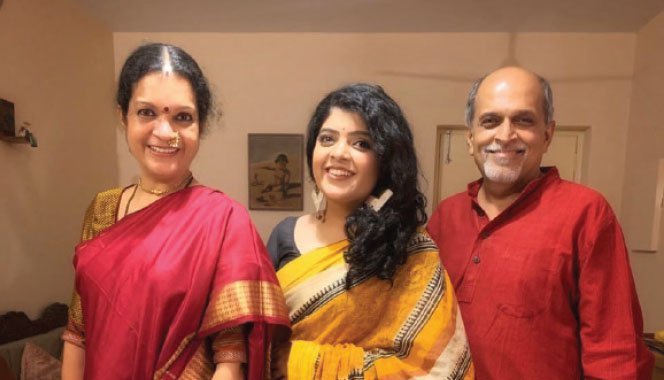
Janaki Sabesh with daughter Dhwani and husband Sabesh
2. Whats special about your kolu celebrations?
All our kolu dolls are miniatures. The height of the five steps on which the dolls are placed is about 2 feet. Also, every year we explore a different theme.
3. What does Navratri mean to you?
Other than the festivities, which are obviously special, its an occasion to showcase our creativity and meet friends. Every year, we enjoy setting up the kolu, planning the return gifts, and hunting for the right kind of dolls. Also, kolu has always been a family affair for us. When my daughter Dhwani was young, she wanted us to have a koluand thats how our kolu journey started! My husband is the main architect of our kolu, while the rest of us help him in whatever way we can.
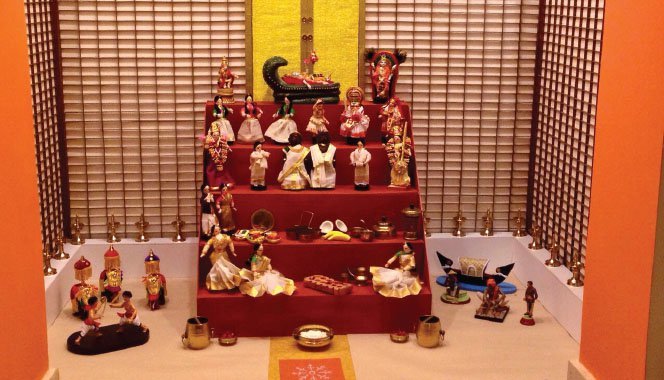
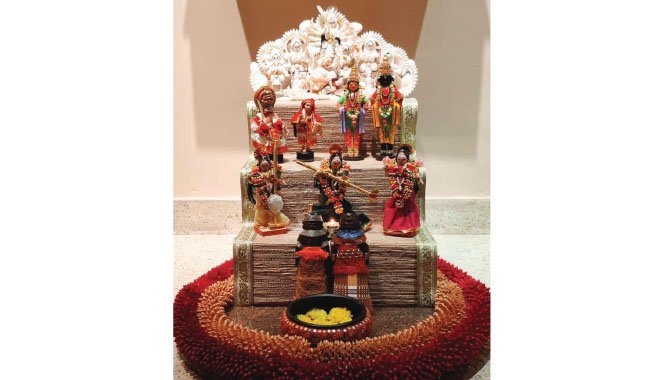
Janaki Sabeshs 2020 Kolu celebrating various artists
PARENT SPEAK
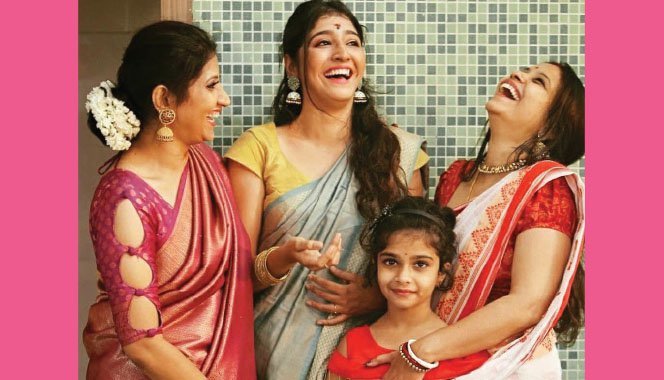
(R-L) Sapna with her sisters Simran and Madhuri, and daughter Riya
I hail from Rajasthan but live in Chennai. Although we dont visit Rajasthan every year, we follow certain customary practices during Navratri. On all nine days, we light an oil or ghee lamp, making sure it glows for 24 hours; fast; and keep a kalash (copper pot) filled with water in the puja room. Usually, we wear shades of red during Navratri. Although the custom is to visit a Kali temple daily during this time, its not possible nowso we go on Fridays. Also, we eat only home-cooked meals, and avoid garlic and onions. I have a deep love for the festival, as it celebrates feminine power. I proudly engage my 7-year-old daughter in the festivities, and she enjoys Navratri as much as I do.
Sapna Sharma, Montessori teacher and mom to a 7-year-old
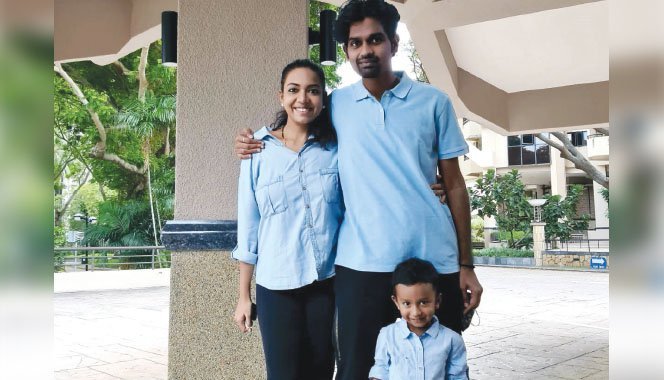
CS Maithreyi with husband Dhilip Kumar and son D Dev Aryan
For my family, Navratri is THE season of bliss and festivities. My husband and I love to brainstorm, plan and execute Navratri. Its a team effort, and we love working together. The satisfaction or aatma tripti we feel after the festivities is indescribable! Our toddler Dev gets to experience all the good vibes associated with this festival. Dressing up every evening, people coming over, the prasadam (offerings), the story around the dolls and his endless questionsIm sure hell recall these happy memories when he grows up.
Every year, we come up with a kolu theme that is close to our hearts. Some of the themes from the previous kolus include country landscapes (countries we visited
that year) and guru lineage (Lord Shiva, Adi Shankara, Mahaperiyava).
Last years kolu at our home had two parts:
The traditional part with steps
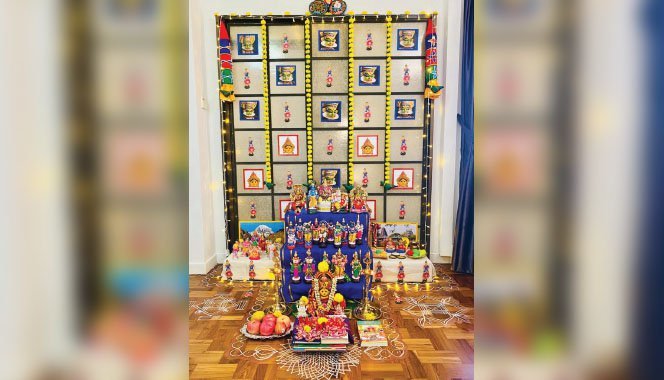
A story based on the birth of Goddess Durga. It was a DIY project inspired by an infographic we found online
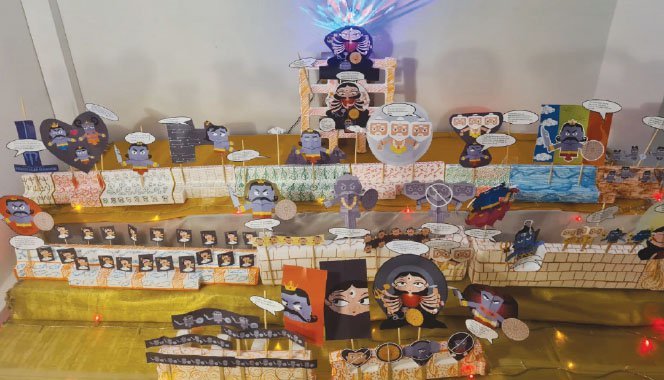
As we were living abroad and couldnt travel to India then, we shipped most of the dolls from Chennai. We wanted to give an eco-friendly yet relevant thambulam gift, so we had ordered reusable cloth masks from an NGO in India. The masks were much appreciated by our friends here in Singapore.
- CS Maithreyi, HR professional
As a child growing up in Kolkata, one of the biggest excitements for me was Durga Puja. My dad would take my cousins and meall dressed up in new clothesto see the most-talked-about pandals in the city. The challenge was to see as many Durga idols as we could. We would visit the innumerable food stalls, gorging on rolls, puchkas (small puris filled with spicy potato mixture and tamarind water), and sweets. We wouldnt return home before 3 a.m.! During the teen years, my friends and I would go pandal-hopping, sometimes walking for miles. Later, when we moved to Bengaluru and then Chennai, I made it a point to visit the pandals and take the blessings of Ma Durga. Im continuing the tradition with my son, as I take him every year to Pandals that are put up in whichever city we are at to enjoy the celebrations and this beautiful culture.
Sahana Charan, writer and mom to a teen
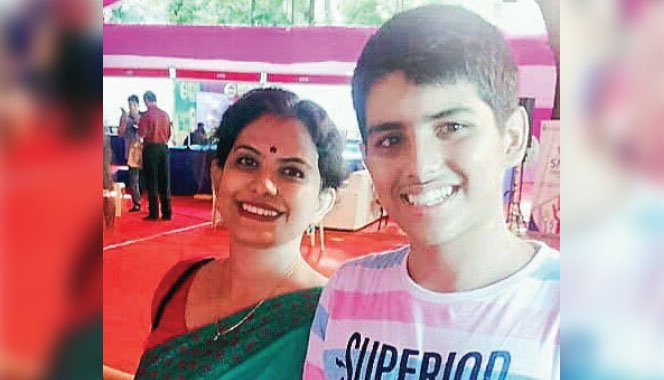
Sahana Charan with her son Saakshath























Comments
Edit
Comment Flag
Cancel Update