
Transform the preschool journey by understanding if your little one is ready for school?
Seemanthini Iyer
author parentcircle author parentcircle author parentcircle author parentcircle author parentcircle author parentcircle
It can be difficult for you and your toddler to make a transition to preschool. But, stay calm and fight that anxiety with these useful tips.
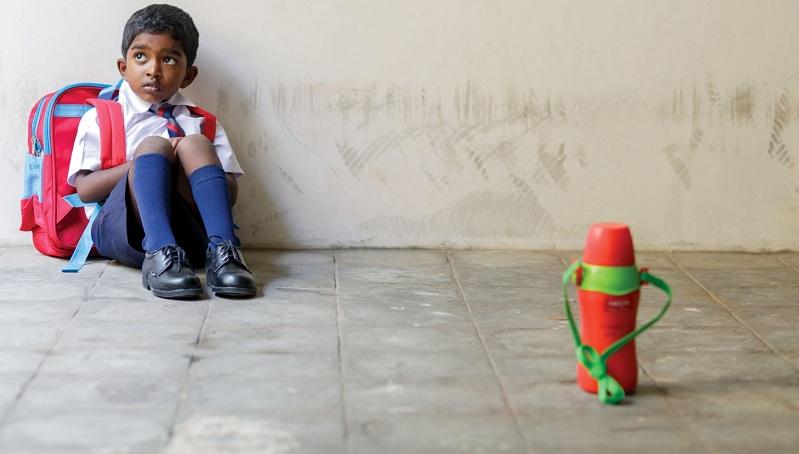
Picture this scene: anxious toddlers crying, some screaming, some whining and some watching silently with resigned, tear-filled eyes; a mother thrusts her little one into the arms of a teacher, who quickly walks away with the child; passers-by smile sympathetically, remembering their own earlier experience - their child's first day at school!
Children traumatized by separation anxiety; parents stressed out on seeing their children so agitated; teachers roping in years of experience to best deal with distressed children - we have all been conditioned to think that this is normal and acceptable. It is not!
What is happening in my child's brain?
According to Dr Daniel J. Siegel, author of several books on parenting and child development, research shows that from birth, a baby's brain is programmed to attach itself to a caregiver and in most cases, to the mother. So, when a child is separated from the parent and is suddenly thrust into an unfamiliar environment, his primal safety instinct and alarm center is activated. His brain forcefully sends signals, asking him to hold on to his parent.
This explains why the toddler clings to his parent and cries, when he is left at school for the first time. Given this information, is it realistic on your part to expect your toddler to feel safe in his new school and attach himself to absolute strangers? No, right? So, how can you make this transition from home to school easier?
A review of "settling in" practices in other parts of the world has shown that children can settle down in school without intense crying and without causing trauma to those involved. So, why not adopt tried and tested practices that benefit not only the young children, but also the parents and teachers.
A child's feelings must be respected
A common fear among parents is that their child may not get admission in a good school if they wait too long. As a result, they start looking for playschools even before the child turns two. They do this without considering one vital question - Is my child ready?
Your two-year-old may recite a dozen rhymes and recognise all her numbers and alphabets. Give yourself a pat on the back, but that does not mean your child is ready for formal education. She needs to be socially and emotionally ready to part from her primary caregiver.
Every child is different. There is no fixed age when you can expect a child to be ready for school. As a parent, you need to observe your child and ensure that she is emotionally ready for school. To gauge your child's readiness, observe her interactions with other children at your local park, at a birthday party or in your apartment block. Here, she has the comfort of your arms to return to, if she feels insecure. If she refuses to get off your lap and let go of your hand, she is signaling that she is not ready to detach from you. The element of stranger anxiety hasn't left your little one yet. The important message here is to respect a child's feelings.
How parents can help ease the transition
As a parent, you can take charge and minimize the trauma of separation:
- Familiarize your child with the new environment. See if you can arrange for a few visits to the school before the child starts. Share pictures and information about the school.
- Find out if there are other children from your neighborhood who are starting school at the same time. Plan play-dates or meet-ups with these children, so your child sees familiar faces around when he starts.
- Respond to the child's emotions and acknowledge his feelings. You need to let your child know that you understand how difficult it is for him. This helps the child cope with his own feelings.
- Finally, it is perfectly alright to keep your child out of school for a term or a year, depending on the readiness of your child. It is an option you can exercise, if necessary!
Schools play a big role too
At a teachers' workshop held in Chennai, there was a discussion about responding to children when they cry. The teachers were of the view that giving children "attention" only encourages them to cry more. They felt it was better to ignore the crying children till they settled down on their own. Ruth Beaglehole, Director, Centre for Non Violent Parenting and Education, Los Angeles, who was conducting the workshop, asked them, "does the child settle down or does the child give up on having his needs met?"
Brain science has now shown us that the seat of learning lies in the emotional center of the brain. When the child feels stressed, the pathways leading to the higher areas of the brain shut down, thus sabotaging the child's ability to learn. So educators need to pay attention to the emotional needs of the child in order to enable learning.
Research shows that learning capacity, memory and intelligence are strengthened by 'attachment' or a 'strong bond' with the teacher. Hence a teacher's attention and comforting gestures can go a long way in helping a child.
It is difficult but not impossible
Here are some simple steps a school can adopt to help children adapt easily to their new environments:
- Teachers can easily become desensitized to children's outbursts by what they experience year after year. Therefore, it is important they continue to use reassuring gestures to respond to, and comfort the anxious children.
- Allow the parents to stay with their child in the classroom or have them wait outside till the child settles down. This way, the child can easily reach out to her parent, if necessary.
- Stagger the incoming dates for new children, so no more than 10 children start every week.





























Comments
Edit
Comment Flag
Cancel Update