
Advantages And Disadvantages Of Joint Family Structure: A Comprehensive Guide For Indian Households
Moina Memon
Growing up in a joint family can greatly shape a child’s values and social skills. But is this living arrangement the right fit for your family? Explore the key characteristics and the advantages and disadvantages of joint family systems to make a well-informed decision

The joint family is a beautiful institution—most of us have grown up listening to this idea and believing in it as well. Our movies portray a joint family as one where everyone eats together, laughs together, and supports each other during both good and bad times.
Like every other social system, the joint family system also has its share of advantages and disadvantages. But the importance of a joint family is still acknowledged by many. Even in this age of the nuclear family, the joint family system exists and remains relevant.
What is a joint family?
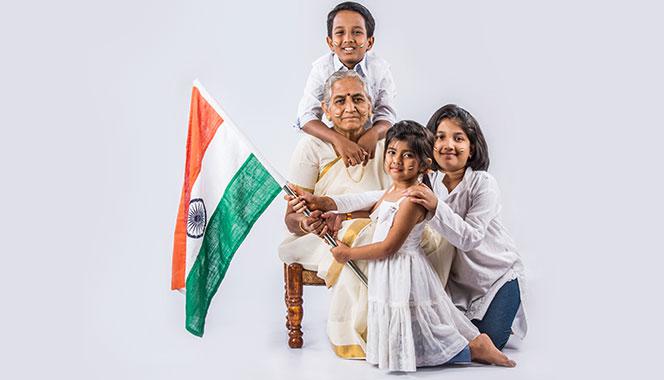
In India, a joint family is usually a large, undivided family where members of more than one generation live together under one roof (grandparents, parents, uncles, aunts, and their children).
As with every system, the family structure is also evolving. Some reasons for this change are scarcity of living space, an increase in the number of households where both partners work, a jump in the number of single parents, and so on. But, even with changing times, a sizable number of Indians still seem to be inclined towards the joint family system.
So, is the joint family a good or bad system? Let's delve deeper to understand what is keeping this old system alive, evolving, and relevant.
Characteristics of a joint family
- The family is usually headed by the eldest member of the family.
- The responsibility of making decisions rests with the head of the family, although family members can give suggestions.
- The family members share a single kitchen.
- All the members are expected to contribute financially towards running the family.
- All the members must share the household chores.
- They must cooperate and support each other, making the system have its share of merits and demerits.
- After marriage, the children also live in the same house along with other family members.
Advantages of a joint family
- Togetherness: Growing up with cousins, uncles, aunts, and grandparents gives children the opportunity to connect with everyone and forge close bonds. Especially, the bond with grandparents, which almost every child cherishes. This feature is among the key characteristics of a joint household.
- Imbibing family values: Many values that parents want to teach children are taught well in the joint household. Growing up together, children learn to share, care for, and respect everyone. They also learn how to empathize with those around them.
- Shared support system: For working parents who need someone trustworthy to be around their children, this family system is a boon. With uncles, aunts, or grandparents around to care for children and have their best interests in mind, parents feel less worried. The support system also ensures they can socialize, catch up with each other at a private dinner, or hang out with friends.
- Division of labor: A big family works as a big team, especially when it comes to doing household chores like cooking or cleaning. Family members get together and ensure that tasks are done on time and, sometimes, even before time. As a result, no family member ever feels stressed about work.
- Financial security: All the earning family members contribute to the common fund for household expenses. This system also acts as a security net. When a member suffers monetary loss or loss of a job, others get together to ensure their needs are taken care of.
Importance of the joint family
The joint family:
- Teaches cooperation and optimum use of resources
- Helps members understand and bond with each other
- Teaches the concept of "one for all and all for one"
- Makes elders feel wanted and supported
Disadvantages of a joint family
- Lack of personal space and privacy: With many family members around, the lack of privacy can become an issue. If a particular family member is called up frequently to shoulder responsibilities, it can lead to disharmony in married life. Also, in a joint household, a couple always has to be mindful about being watched and heard when they want to exchange a compliment or a gesture or engage in a discussion or an argument.
- Less freedom to express: A couple, especially a woman, might struggle with finding their comfort zone outside their room. She may not have a say in many aspects, like food choices, home decor, or even wearing something that is comfortable for her and stepping out of her room. At times, her ideas may also be dismissed by other family members.
- Disagreement on finances: Contributions towards running the household and how the money should be spent are a major issue in joint households. While everyone is expected to contribute money towards running the house, it is the head of the family who controls the funds and decides on how the money will be spent. Sometimes, the decisions taken by the head of the family may not go down well with some family members, leading to disagreements and arguments.
- Conflicts over parenting styles: Parenting becomes a challenge in a big family. Many adults with differing styles may bombard parents with advice on what to do and not do. There may be interferences in almost everything related to childcare and upbringing, right from the use of diapers to food and disciplining. For a new mom, such intrusions can prove to be even more confusing and upsetting.
- Discontent and distress: Over a period, all or some of the above factors might lead to discontent and unhappiness among members of the family. Along with these, even trivial issues like not being able to make a dish as per one's own recipe or inviting a friend over for a birthday bash can snowball into a confrontation. At times, a family member may try to take undue advantage of others, which can also cause immense frustration. Also, those who earn more than others may try to dominate, leading to friction among family members.
The HUF Act
The relevance of the joint family is supported by the HUF (Hindu Undivided Family) Act in India. This law states that a Hindu family can come together and create a HUF. However, all the members of a HUF should descend from a common ancestor. Along with other advantages, a HUF also enjoys tax benefits. Buddhists, Jains, and Sikhs can also form a HUF.
Preferred family structure
No family system in the world is perfect, and the same is true for a joint family. However, some families make the system work by demarcating responsibilities and duties, respecting each other, and being generous and helpful. In the end, it boils down to what we want for ourselves and our children and what is feasible.
Last updated on: August 21, 2025

























Comments
Edit
Comment Flag
Cancel Update