
#IAmResilience: Deepa Malik on her journey from wheelchair to the Paralympics podium
Siddiqha Naseem
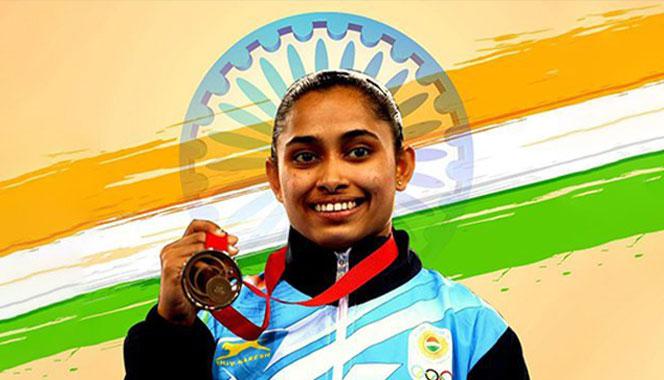
Despite a life of tumors, surgeries and paralysis she entered the world of sports in a wheelchair! Meet the first Indian woman to win a Paralympic medal. We salute Deepa's indomitable spirit!
This women's day, we at ParentCircle bring to light inspiring stories of the women of today for the women of tomorrow! Read, be inspired and share these incredible stories with your daughters. Let your little girls look upto these real-life role models as they grow up to become the strong women of tomorrow.
This#IAmWomanstory relates to #IAmResilience.
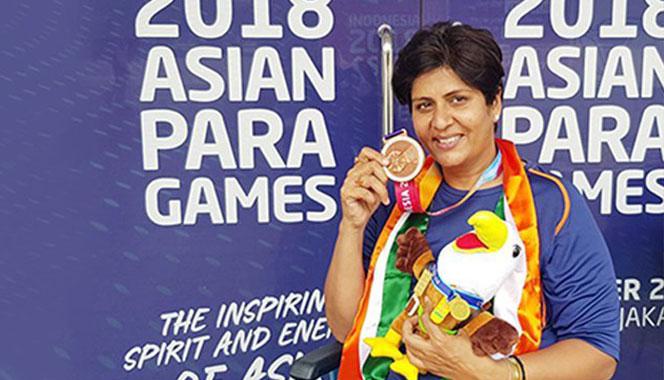
For this, without a doubt, we reached out to Deepa Malik. The woman who faced hardships one after the other, yet, she always bounced back. If resilience is to be synonymous with a person's life, then Deepa Maliks would be a great example. When paralysis struck her at 30, she had a family with two daughters to raise. But she took her disability in her stride and went on to become the first Indian woman to win a medal at the Paralympics. Today, she dons many hats a Paralympic athlete, a swimmer, a biker, a rally driver, a disability activist, an entrepreneur and the President of the Paralympics Committee of India.
How did she do it? What gave her the strength to go about it? Let's find the answers to these questions and more, in this exclusive interview. Read on as Deepa Malik talks about parenthood, paralysis and Paralympics.
Excerpts:
Q. You are the first woman to win a medal in the Paralympics. How did that winning moment feel?
A. The winning moment was very paradoxical for me, in the sense that it definitely was a landmark moment for me, and I will cherish it for the rest of my life. But it also brought to the forefront that it took 70 years of Independence of India for a woman to win a paralympic medal. I hope it doesn't take another 70 years for another woman to win a medal. India has the largest population of physically challenged people in the world but there are not many differently-abled women venturing into sports.
There is a clear lack of opportunities. We are probably running short of role models for disabled women because they have not been looked upon as people who can be sporty or fit. When I started out there was only one wheelchair out there. But today when I go, there are so many wheelchairs that I see. So, there is a change but we have a long way to go.
So, yes personally for me, it was a great achievement. I mean there is nothing beyond that level of winning if you have entered the world of sport. I have become the first woman, I have become part of history, I will go down in the history of the country and the history of sports. And that is a great feeling.
Q. You have tried many sports like javelin, discus, swimming, riding, rally driving and shot put. What persuaded you to try them all?
A. When you have found your passion in a cause, in a purpose, then when you deliver it is to the best of your capacity and to the best of your levels, and I think that converts into excellence. And this is exactly what I teach when I give motivational lectures that if you put your heart into something and you make it your purpose, giving it your 100% focus and working diligently towards that purpose, you will undoubtedly achieve the success of the highest level. There is no other mantra to end up with excellence.
Q. How did you come to terms with the reality of disability?
A. My life has always been about ability beyond disability. My disability gave focus and purpose to my life. Having faced it as a child and having faced it again as a grown-up I felt that maybe there is a reason it kept coming back to me, again and again. When I was a child, I had tumors and was bedridden for three years. But eventually, I began to walk again. Then again at the age of 30, the tumors returned, but this time as fate would have it, I was left paralyzed. Sadly, my daughter too suffered a head injury and her left side was paralyzed. So, I came to terms with all this and thought that probably it was an indication from Almighty that I had a purpose to fulfill.
Q. Do share with us your childhood story when you first suffered a tumor. How did your parents help you through this?
A. I first had tumors when I was too young to even understand what it was. I was barely 6 to 7 years of age. I was bedridden after surgery and continued with rehabilitation. It took me three years to get back on my feet.
Through all of this, I knew I had parents who dedicated their lives to caring for me and tirelessly worked hard to keep me happy. It was so powerful that it helped me recover the happy way. I remember my dad doing up my hospital room with toys and books. So somewhere, I felt that when parents are doing so much for me it is my duty also to, be happy and give back by cooperating in my rehabilitation. Overall, they were very empowering, loving and dedicated as parents throughout my childhood. This made me a very positive person even in the face of challenges.
Q. The tumors returned when you were a parent. How did you deal with it?
A. Yes, when I was 30 years old and happy with two daughters, the tumors came back and I became paralyzed. I told myself that whatever be the challenges, I must be the kind of parent that my parents were to me. I did not want my children to grow up with any kind of inability. When I say inability, what I mean is no psychological fears, no intimidation of being the child of a mother who is crippled. I had to project a very happy me and be a part of all their activities In spite of being a patient all over again, this time I was more in the parent role than in the patient role because I had two daughters to motivate and bring up. That was one thing which I very consciously did. So, I think in both ways, whether it was fighting a challenge or being a parent, the inspiration for both these situations came from my childhood days and the parenting style of my parents. So, my parents became a strong inspiration to kind of fight all the situations of paralysis or disability.
Q. In 2006 you first represented India and you were made to travel all alone. How did you train yourself and manage these things alone?
A. Before joining the world of sports, I took a six-week crash course on body management. I learned how to manage my bladder and bowels single-handedly. I learned the tricks of shifting from chair to bed by myself. It made me realize the capacity I had. When I traveled alone it was my break-free moment. From wheelchair-bound I became wheelchair-liberated.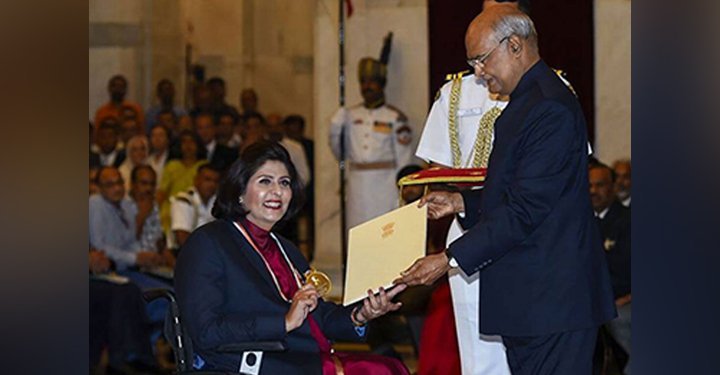
Q. After three years of rigorous training in javelin for the 2016 Olympics, the javelin was replaced by shot put in your category and within a year you managed to pull it off.
A. God, how can I get anything easy? And for Asian Games, they made it discus.
Q. So, what was the transition like? How difficult was it to train anew?
A. It was a 360-degree transition in terms of diet, training, equipment and grip. Javelin is a 600gm, 2.2-meter-long stick. Shotput is a round iron ball which is some kgs. It isn't easy to learn a new skill quickly, especially at my age.
So, whatever I speak today, I speak with a lot of conviction because I have already proved, that if a person has the passion, a never-give-up attitude and the hunger to keep learning, never let that go. I just learned scuba last year, and how to manage my body underwater, so I am hungry to learn more and more, and I think this is what helps me get through life.
Also, my father's words he always said, Never give up. You can always do it if you have your mind to it.
Q. You swam the Yamuna River and created a world record. What motivated you to do that?
A. To be honest, when I used to go for swimming competitions in spite of diligently working very hard, I wasn't making any place in the world, as I was categorized under no use of legs. This includes those who have amputated legs and have more flexibility with their body. But because my shoulders were ripped apart by three major surgeries and I get spasms on the lungs while moving and rotating the arms, things were tricky. I had a deformity and had to drag the entire weight of my 5-feet 9-inch body. So, for me, the challenge of swimming in the water was way higher than for somebody who just has amputated legs. Eventually, it was time to leave swimming and move to athletics in search of excellence. But I didn't want to leave it as a quitter. So, before I left swimming in 2008, I thought of creating this world record to leave a mark in the world of swimming and to call myself an established swimmer. That's how I swam the Yamuna River.
Q. This February you were elected as the President of the Paralympics Committee of India. How did that happen, how did it all come together?
A. As an athlete, I have seen that there are certain loopholes, certain discrepancies that still exist. There is a lot of scope for improvement. I have been on this journey for about 20 years now. What I get as a Paralympian and as an Arjuna awardee is not what I got when I just began. So how does one become a successful athlete if you do not get the right kind of nurturing? I think this whole thing inspired me to put my name forward. I felt that this would be a great chance for me to give back to the fraternity of sports, which has made me who I am today. There is a drastic shift especially with the push of the government towards an athletic-centric approach they are forcing the federations to actually become for the athlete, by the athlete and of the athlete. My credits to the honorable Prime Minister and Sports Minister that federations like ours are also getting athletes in the forefront and encouraging them in leadership roles.
Q. For a woman to do anything big in her life, she has to start by breaking stereotypes one by one. Given your career and experience, how many did you have to break?
I had no footprints to follow. There was no woman with paralysis who had done rallies, biking and all these other things I have done. So, I started out with a clean slate to writing everything down creating policies, getting life insurances, getting permissions from the local governance, etc. It was very difficult to convince people that I want to do it and I will be able to successfully do it. It was and still is very awkward for people to believe that a woman at this age, is going to join the world of sports. Till date, everything has been breaking a stereotype because of the types of activities that I have done.
Q. Has society's perception of women in sports changed over the years?
A. I'll tell you what I think society has evolved. It has evolved even in rural areas. I am working very hard with some young girls from my village area to foster and promote rural kabaddi to reach an international level. I see grandparents encouraging their granddaughters to play in this sport. I see the grandfathers supporting their granddaughters to even get a haircut so that it would not be a hindrance or get caught by the opposing team members. That's the kind of shift that is happening and it's really encouraging.
Q. Tell us about yourself. What makes Deepa, Deepa. What is the unique trait that sets you apart from the rest?
A. I choose to be happy and I am always willing to learn.
Q. Tell us a little about your childhood? What were you as a little girl?
A. I was always a tomboy. Between my brother and I, my brother was always the behaved child of the house and I was not. When my father was on his death bed he told me Deepa, kudos to all those little misbehaviors you did, which has actually made you who you are today. I had a crazy love for the outdoors as a child. Those days I was still caught playing football or basketball with the boys after dark, and then came back home and got my share of scolding. oh, itni raat tak baahir rahi. Not because my father had a problem with it, but because society will say something ill about me. I think I was just born ahead of my time.
Q. What was that one incident that you felt so proud to be a woman?
A. I am proud of it every minute. I am proud of it every second, I was always proud of it. I was proud of it when I became the mother of two daughters. When I brought two more women into the world. Every moment is a proud moment for me.
Q. Your words on raising girls.
A. There is a simple rule that I learned from my parents and I follow. Your child will never be what you want them to be. Your child will be who you are.
Q. What is the message you want to give to the women of tomorrow?
A. People will look at you the way you look at yourself. It's more about building your self-confidence, self-capabilities, your education and your dreams. If you feel accomplished with yourself, respectful of the gender you are, I think that's the way you will be treated.
Women's liberation doesn't mean cutting down the other gender, women liberation means that you are somebody who is educated, can give back to society and can balance a life where you have time for everything. Your work, your passion, your family, if you become a mother your children and even the community.
Q. Who is the one woman that inspires you and why?
A. The woman that I see in the mirror when I wake up every day.



















Comments
Edit
Comment Flag
Cancel Update