
Raising Boys To Respect Women: Tony Porter On Masculinity, Consent, And Equality
Deepthi Balasunder
How can parents raise boys who respect women and challenge harmful gender stereotypes? In this exclusive interview, Tony Porter explains the roots of misogyny, the impact of the “Man Box,” and how fathers and parents can guide boys toward empathy, consent, and healthy masculinity
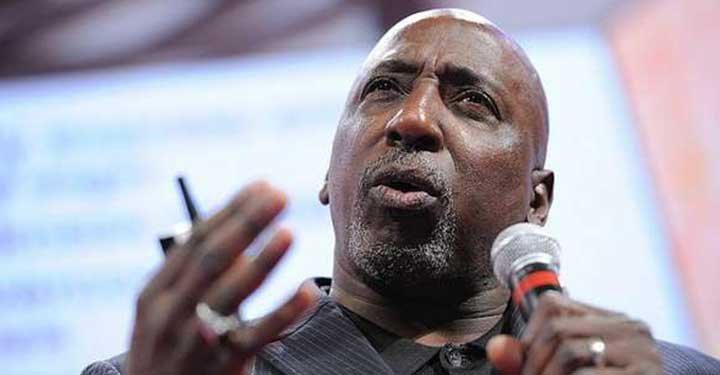
If it would destroy [a 12-year-old boy] to be called a girl, what are we then teaching him about girls? - Tony Porter
In a world where women are still being subjected to violence, abuse, and crime, we sometimes wonder what we can do on our part to prevent these. We do not realise that the problem lies at the root—what we teach our boys as they grow up.
Tony Porter has been striving to change society's discrimination through his organisation, A Call to Men: The Next Generation of Manhood. Along with co-founder Ted Bunch, he continues to work towards their goal, 'Help create a world where all men and boys are loving and respectful, and all women and girls are valued and safe.' Read on to know what they think can prevent violence against women, what they call the 'Man Box', and how to raise boys in today's world.
Why violence against women begins with how boys are raised
ParentCircle brings you this exclusive interview with Tony Porter!
Understanding patriarchy, masculinity, and the roots of gender-based violence
Q. Why is sexual violence so prevalent against women throughout the world?
A. Men and boys who are socialized to view women and girls as property or objects, and as having lesser value than men, are what lay the foundation for violence and discrimination to persist at epidemic levels throughout the world.
Q. Does the prevalence of 'toxic masculinity' and violence against women differ from country to country?
A. Anywhere we see patriarchy, we see toxic masculinity. But I want to clearly say that masculinity is not inherently toxic. In fact, that's one of the reasons we don't use the term toxic masculinity. We appreciate the ways that it has kept the discussion alive in the news media and on podcasts like this one. Here's my issue—if we allow men to separate themselves by saying, "I'm not that bad, look at them, those guys are the ones with that 'toxic' behaviour,' we are missing the greatest potential for change. We men, have work to do.
Men are socialized to view women as of lesser value to them. This idea is taught to men, sometimes unconsciously, and reinforced by society. From using phrases like "you throw like a girl" to a discrepancy in wages, subtle hints in media and advertising, our culture reinforces a norm of male dominance every day, and everywhere you look. Collective socialization lays the foundation for all forms of violence and discrimination against women to persist because all men are socialized to share those values. A vast majority of men are not abusive. They do not sexually harass or assault women.
Yet they are still silent about the violence, harassment, and abuse that women, girls, and other oppressed groups experience. That's why I'm not willing to separate men into those categories. These men are not bad; they are just ignorant about these issues. These men are good. This creates an environment where men can say, "That's not me," and get a pass. It reinforces privilege. It allows men the option to stay quiet, to opt out of the conversation, or distance themselves from the issue.
Q. What can we do as a society to prevent such cases of violence?
A. To begin, we have to offer an invitation to men, not an indictment of manhood. We need to let men and boys know that their ideas about manhood, women, and girls have been shaped by their collective socialization. The messages that the media and culture bombard us with tell us that women are treated as objects and have lesser value than men. Our job is to raise our boys' consciousness about their collective socialization so that they can think critically about how they might be reinforcing or passing on these harmful beliefs.
The collective socialization of boys and why emotions get suppressed
Q. What is the collective socialization of manhood?
A. We know and understand that boys are being taught not to show fear or weakness, not to ask for help, not to cry or express an emotion other than anger, to exhibit qualities associated with power, dominance, and control, to be tough, to man up, and whatnot. That is the collective socialization of manhood.
By the time our boys are three years old, society is telling them not to cry, which is actually telling them not to feel. When they do things outside these traditional, hyper-masculine notions of manhood, they are punished, put down, ridiculed, and bullied. We want to actively push back against that socialization and help our boys embrace and express their full selves and a wide range of emotions. That's really the first step toward healthy manhood.
Talking to boys about consent, respect, and equality
Q. Can parents talk to their children about all this and how?
A. We can and we should, and it must start early. First, let your boys know that they can be friends with girls. Boys are taught to distance themselves from girls beginning in their toddler years. Telling your boy, "That doll isn't for you, here, play with this truck," is an example. From the aisles of our retail stores to after-school activities, society dictates what is 'appropriate' for boys, keeping them neatly tucked inside the 'Man Box'.
We work a lot with middle and high school boys through our LIVERESPECT Curriculum. When we launched the curriculum, we did a pilot study where we found only 19% of boys knew what consent meant. This explains the sexual assault crisis we see on college campuses and in the military. We tell our girls not to walk home alone and not to accept a drink from a stranger, but what do we tell our boys? We aren't having these conversations with boys with the same intention we have them with girls. And we need to.
Our boys are craving these discussions. They are good boys. They want to make good choices. The messages they get in media and culture, especially around sexual relationships, must be addressed. After just one lesson on consent, the numbers rose to 75 percent. Post-curriculum, we found that 75 percent of the boys understand what consent means. Understanding is the first step in putting it into practice.
What is the ‘Man Box’ and how does it shape boys’ behaviour?
Q. Can you tell us about the 'Man Box'?
A. A CALL TO MEN coined the term 'The Man Box' to illustrate the collective socialization of men. The Man Box identifies the limitations on what a man is supposed to be and what he believes. These expectations are taught to men - sometimes unconsciously - and reinforced by society. In the Man Box, men are supposed to be powerful and dominating, fearless and in control, strong and emotionless, and successful. In the Man Box, women are objects who are of lesser value than men. The teachings of the Man Box allow gender-based violence to persist. It perpetuates a heterosexist norm that devalues all those who don't conform to a gender binary. People in the LGBTQ and trans/GNC community demonstrate great courage when they reject the rules of the Man Box and embrace their authentic selves.
How parents can help boys break free from harmful gender stereotypes
Q. How can we help our boys break the shackles of the 'Man Box'?
A. We need to listen to our boys about who they say they are and allow them to be their authentic selves. We still live in a time when the Man Box dominates. Boys are discouraged from showing emotion by the time they are in school. We still push our boys beyond their feelings toward aggression, and they see it reflected in them through video games, music, movies, and pornography. The teachings of the Man Box create a damaging cycle of harm - from insecurity and pain, shame to detachment, and too often even violence. We know that understanding, practicing, and promoting healthy manhood is the solution to preventing violence in our communities. Healthy manhood relieves men and boys of a lifetime of trying to measure up, of trying to be man enough, of endless performance and constant suppression of emotions.
Age-appropriate strategies to raise emotionally healthy boys
Q. Any strategies that can help parents raise their boys the right way?
A. I'm often asked for age-appropriate strategies to help boys broaden their emotional experience. Here are some things that we suggest to other parents:
For toddlers and young children: Help them identify their emotions
Ask questions like: "Are you feeling sad? Are you disappointed? Did that make you happy?" Helping build their emotional vocabulary will serve as a foundation for their emotional intelligence and strengthen their ability to solve problems. Choose books that talk about feelings and emotions for them. The Feelings Book by Todd Parr and The Way I Feel by Janan Cain are great examples.
For young boys and pre-teens: Make emotions relatable
Share age-appropriate stories about your own experiences when you were hurt, disappointed, sad, joyful, nervous, etc., and how you dealt with those experiences. I have always found it helpful to have conversations in the car or at a restaurant where there's an opportunity to talk one-on-one, but also a bit of a distraction, so that no one feels pressured.
For teenagers and young adults: Normalize emotions
Watch television shows or movies together that explore conflict and discuss the resolution. Ask questions about how they would handle similar situations. When they share something they are going through, ask how that makes them feel before offering any advice. Be intentional about seeking content in film, television, books, and other media that reflects a diverse mix of people and experiences.
Why fathers play a powerful role in shaping respectful masculinity
Q. How can dads be role models to their sons?
A. Dads can start by practicing healthy manhood and modeling it for the boys in their lives. Some good examples of this are:
- Embracing and expressing a full range of emotions.
- Not conforming to the pressure to always be fearless and in control.
- Valuing a woman's life, treating all people equally, and promoting the betterment of humanity.
- Not using language that denigrates women and girls.
- Developing an interest in the experience of women and girls, outside of sexual conquest.
Q. Do you think fathers have more responsibility when it comes to the socialization of boys than girls?
A. I don't think they have more responsibility, but their influence is different. A boy responds differently when a man advocates for equality. He is saying to that boy, this is my responsibility, and your responsibility, too.
Hands-on emotional parenting and redefining manhood
Q. Many dads take pride in being hands-on, but the need of the hour is for dads to be hands-on emotionally. What do you think about this?
A. Absolutely! Embracing and promoting healthy manhood prevents all forms of violence and discrimination against all women and girls. It is also linked to improved physical health and emotional well-being for men. When boys are told not to cry or feel, there are lasting negative effects on their health and relationships. Research by the Harvard School of Public Health found that those who suppress their emotions are one-third more likely to die prematurely than people who regularly express what they are feeling. Issues of rage, anxiety, depression, and unhealthy coping mechanisms can manifest. According to the Centers for Disease Control, the suicide rate is four times higher in men than in women. We have to make some changes for the sake of humanity.
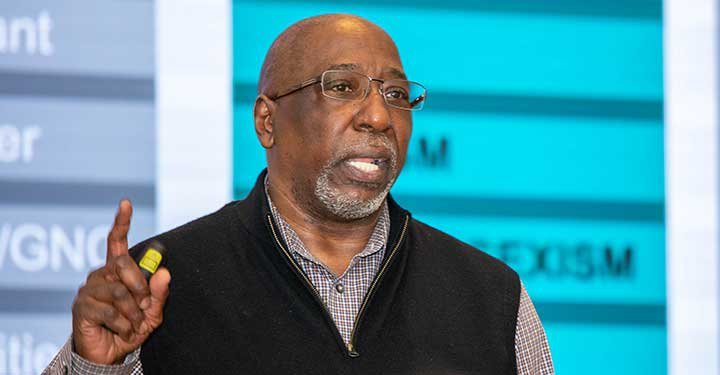
Q. According to you, what defines 'manhood'?
A. You know, I don't want to define manhood for anyone. I want them to have the freedom to define it for themselves.
A big thank you to Tony Porter, the man who has been changing the way society looks at women. In addressing this prevalent issue, he has also shown us how we can do our part to make this world better for the next generation by raising our boys right. It starts early, and we should. Let us strive for freedom and equity, like the way he says!
Last updated on: December 23, 2025





























Comments
Edit
Comment Flag
Cancel Update