
How To Develop Reading Skills In Young Children: An Exclusive With Educationist Dr Palani Ratnam
Jyothi Prabhakar
An educationist explains how reading with understanding what they are reading help children become learners for life

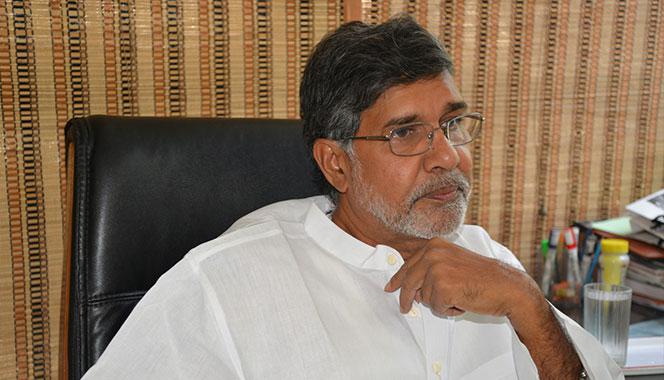
Dr Palani Ratnam, the founder chairman of the Alpha Group of Schools and also the Akara World Schools in Trichy, and one of the founder trustees of Advaitalya, an upcoming IB proposed PYP school in Mylapore in Chennai, brings with him a vast teaching experience from when he was a faculty member at Bharathidasan University. He has been an educational administrator, has a keen interest in exploring various methods of effective learning in children, and is constantly looking at how to help teachers teach better so that children become independent learners. In this interview, Mr Ratnam reveals why developing reading skills in young children is the key to making them excel in the future. Excerpts …
As an educationist, what is the one pressing concern about the Indian education system on your mind at the moment?
One is that we are still driven toward rote learning and content reproduction from the book. The second issue is that the entire education system, from preschool to PhD, is looking at the one-dimensional growth of the learner—cognitive development. Our education focuses on the materialistic utility value of education rather than one’s personal journey of realizing one’s full potential. If we can address this, we can have learners for life.
There is much talk about the education policy (NEP 2020) that explores children’s learning potential. Will it change the early learning atmosphere that’s prevalent now?
After over 30 years, we seem to be landing on a good, well-thought-out and documented program. The objectives have an Indianness about them, the Indian wisdom of how we originally looked upon education and personal development. Foundational literacy and numeracy has been given the much-needed push. The central government in 2021 launched the NIPUN (National Initiative for Proficiency in Reading with Understanding and Numeracy) Bharat Programme, which outlines the format, implementation, process and model of how every child can be imparted minimum foundation skills of reading and writing and numeracy. I believe that if we help develop sufficient reading skills in children before they complete Grade 3, they will do well all through their life. If children have to prosper via self-learning, the fundamental requirement is reading skills. Reading and comprehending the written word will ensure children think.
What do you mean when you say “reading”? Children do learn ABCD and to spell cat, mat and all …
Reading is basically comprehending the meaning of the written text, the individual words and sentences. Somebody has encoded some meaning into all the words, which when written as letters are nothing but a set of abstract meaningless symbols; the letters of the alphabet by themselves have no meaning. So, this encoded meaning has to be decoded by children. But for this decoding process, the building blocks are actually not the words, but the sounds that make up the words.
This is where the reading wars that have been going on all over the World for the last 50–60 years come in—whether to start off with teaching a child to read using the whole language method or the phonics-based approach. Research shows that it is helpful to first get children to understand that words are made up of specific sounds or phonemes in a language. Hence, familiarizing children with the sounds in a language and helping them understand how they map to letter patterns will certainly help them develop reading skills progressively.
Will this not develop naturally in children?
Speaking is a natural process that children acquire on their own, provided they are surrounded by adults who speak that language well. But the human brain is not wired to learn to read on its own as it is wired to learn to speak or walking upright naturally. This could be because the use of language as a communication tool in the form of the written language, is a recent knowledge of human ancestry. So, reading has to be taught explicitly and systematically. Research shows that children who speak a language, any language, learn to read that language more comfortably.
Schools tend to start off teaching English by teaching children the letters of the alphabet and their names. Some progressive schools also teach them the sounds of the letters. A child is just not given the chance to first feel and experience that language as a tool of communication, as a tool of self-expression, as a meaningful set of sounds. If this happens, I think children will learn to read more comfortably and efficiently, just as it happens in the mother tongue. For example, children who speak their mother tongue at home learn to read their mother tongue easily, because they can understand what it means.
Why not begin with proper teaching of reading skills then?
Before we complain about schools, we must understand that the first challenge here, or the first level of interference, comes from parents. They anticipate what a school would teach, and teach their children the letters of the alphabet at home; in fact, they give their children whole words to read! This is really a deterrent; oracy, followed by literacy, is always more effective.
So, to equip children with the right tools to be able to read and comprehend, what should schools do differently from what they are doing now?
Teachers are following the wrong model of teaching, and for this to change, two major shifts have to happen. Teachers have to be re-trained in using more modern, researched and evidence-based approaches to teaching. One such approach is the Science of Reading (SOR), which is based on a collection of research conducted across multiple fields of study, including neuroscience and developmental psychology. According to SOR, teachers must focus on the five elements of effective reading. The five elements are:
1. Phonemic awareness
2. Phonics
3. Vocabulary
4. Fluency
5. Comprehension
In 2001, Scarborough’s Reading Rope model was published in a book. The model uses an infographic to capture the multiple dimensions that help children learn to read effectively. This rope contains two distinct strands, Word Recognition and Language Comprehension, which when combined together lead to skilled reading. So, just sounding out a word will not help children understand what it is. To comprehend something, they need to know vocabulary, have subject knowledge, understand language structure and context, know the culture and so on. Only if word recognition and language comprehension are systematically and explicitly taught, will children gradually learn to read. Our teachers have to be given professional sessions on this at the national and state levels; this has to become a huge pro-reading war, I would say.
Just a little earlier you mentioned that parents sometimes interfere with the way children are taught in school. How can parents inculcate reading skills in their children?
This can be solved by a cooperative effort between the family and the school. Parents have to be taken into confidence; we have to train them too—either through documents and workshops or videos to guide them to understand how children learn a language, particularly a language that is not spoken in society outside the school. Whereas in the case of the mother tongue, society acts as a corrective agent, and your child self-corrects after listening to you speaking the right way. This doesn’t happen in tier 2 and tier 3 cities when it comes to English. In these towns, children’s exposure to English outside the school is very little. Hence, there is a compelling need for schools to take parents into confidence and tell them what to do and what not to do.
Explicit and systematic teaching of synthetic phonic is absolutely essential from the teacher’s side. If teachers aren’t able to say the letter sounds or pronounce the words correctly, we must use technology—apps, video programs, notes, and pronunciation tools—to help them give children explicit phonic instructions, and if the same is shared with parents, they can extend the learning experience at home.
Talking of educating parents, you have just opened an IB Board school in Mylapore in Chennai. Knowing parents’ preference for CBSE schools, how difficult is it to convince them to opt for an alternate board?
I think we have a responsibility to educate parents. Not simply to make our project a success, not to degrade our local boards of education, but because we are yet to fully liberate children from a compliance model and allow them to be themselves inside the classroom. Now, the flexibility of the International Baccalaureate (IB) program is such that it does not get stuck in the content of the so-called textbook. It puts the child at the center of their learning, allowing them to be dynamic and express themselves. Given the shelf life of knowledge these days, I would say that we must give children much more than even the application of learned content. They must be able to acquire knowledge on their own, apply it and do a bit of research, and come out with some sort of a solution.
The IB curriculum does exactly this—it gives children the freedom and flexibility to come up with solutions and methods of application of the learned knowledge in real-life scenarios. The learning process must be rooted in the culture and regional experiences of children. This helps them channel their approach to life from a very young age. So, we owe it to parents to explain to them the differences in the approach to learning among the various boards in India today. We must help them make informed decisions to support their children to be prepared for the future.
Talking about the future, with the implementation of the NEP, where do you see Indian education 10 years from now, from pre-primary to Class 12?
If implemented effectively, I think NEP 2020 will change the profile of Indian youth. Proper implementation will change schools into a learning place rather than a teaching place. Right now, if you go through the documents maintained in schools, it’s all about attendance, the arrival of teachers, syllabus coverage, answers corrected and returned, tests conducted, scores, etc. All of this is from the teacher’s point of view. Is learning analyzed, understood, tracked, and where is the real-time support for children? That is missing. Everything is targeted toward this mythical “average child,” with some remedial program in the guise of additional exercises. The rush is to move on to the next unit because the school is answerable to the overall system. The competency-based learning approach will change all this. If they move toward this structure, the face of Indian youth will change.
Discover the comprehensive Dot language and communication program for kindergarten that cultivates essential listening and communication skills through fun activities.

























Comments
Edit
Comment Flag
Cancel Update