
NEP 2020’s message to parents: The education system is opening up and so must you
Jyothi Prabhakar
Students, teachers and parents are all talking about the National Education Policy (NEP) 2020 and its impact on our education system. But what is the role of parents in the formal education of their children? What does NEP 2020 expect from parents? An expert decodes

In the March edition of ParentCircle, in an article titled ‘We Are Rapidly Moving Toward The Amazonization Of Education,’ Dr. G Balasubramanian, former director (academics) of the Central Board of Secondary Education (CBSE), had spoken extensively about the much-talked-about NEP 2020 and how it is set to transform the Indian education ecosystem. However, he also stressed the right implementation of the policy’s framework and a deep understanding on the parents’ part about how the policy wants to engage parents in the learning process of their children, for the policy to achieve its outcomes. In this concluding part of the interview, Dr. Balasubramanian talks about how parents can join hands with schools and give their children a different learning experience altogether.
Excerpts:
As you said, the NEP has done its job in laying the ground rules and now it’s up to the parents and the teachers to take it forward. So, according to you, what needs to be done?
I have seen, over the years, that parents often have a very fixed idea about what their child should learn and how they should learn it. Mostly, it’s with a competition mindset—they want to be able to say, “My child can write, do this, do that.” So, parents come to school—even parents of, say, kindergarten children—and start arguing with the teachers. They say the teacher has not done this chapter or that chapter, or that what is being taught is not in the book, etc.
Now, parents must understand one basic idea—that the textbook and curriculum are like a runway for the aircraft to take off. If the pilot can’t fly the plane beyond the runway, what’s the use of being a pilot? The job of the teacher is to be able to take the children through the runway and teach them to fly by using the knowledge they gain and thereby do well in the world. For this, they need to understand concepts and apply them in real life, and not just blindly learn pages from the textbook by rote. Parents must partner with schools and teachers; they must encourage holistic learning, even if it means spending more time with their children doing learning activities together.
The NEP also talks about bagless days. Is this a possibility in Indian schools?
It should be. Every school and every parent must advocate this. I would strongly recommend it because bagless learning is much more than just taking a book out of the bag and sitting in front of it. Bagless days are meant to provoke the curiosity of the learner, which can happen only when children explore the curriculum as well as life—beyond what’s in the school bag.
So, what is it that parents need to do?
Parents should now start interacting with children to trigger their curiosity, to trigger their understanding of the environment and ecosystem in which the children live, to boost the confidence and profile of the learner, and to help them become self-conscious and self-dependent. And therefore, the innate confidence, conviction, and courage of the children must be nurtured right from the formative stages. I think this is the essence of education. To this, we must add enterprise. Many a time, I have noted that the Indian education system gives all of us knowledge and skills, but we are still not enterprising enough, because we always seek out a job that will be given to us by somebody else. I am not saying that you should not seek employment or look for a job, but everyone has got a certain amount of skill. The winners are those who contextualize it and can use it in the world at large. Therefore, I would request that parents be a little more liberal with their children, and be more of a joint venture partner in their learning endeavors.
What do you mean by being “liberal”?
To let children explore beyond the school curriculum and textbooks. Parents must whet their children’s appetite for learning so that they become self-learners for life. Yes, children need to learn to use a smartphone, but at the same time, cyber sensitivity is an equally important subject for children. Talk to them about it, and let them form their own opinions from a young age.
Most of us today view technological proficiency as the end of all and any learning—it’s not. Simply reading a book is an equally important learning activity. Do you know in many countries parents routinely sit with their children and read a book? Either both of them read different books together or the parent reads a book to the child. So, these kinds of joint ventures are very important in our society too, where the family system is crumbling. I think you have to reinvent the family system in the country because that’s a very important bond, an emotional base for the children to stand tall in life and build a value system that will help them navigate the world successfully.
You say that the transformation of education has to start gradually from the very beginning. If that is so, what should parents look out for in terms of education when a child begins their formal schooling?
The most important thing to remember is, a happy child is a great asset. And therefore, parents should first ask themselves, “Is my child happy at school?” Similarly, are they happy at home? We have to create an environment in which the happiness of the child is nurtured because the more the child is happy, the more the child is going to be curious and engaging. So, we need to move from the fault-finding system to working along with institutions that focus on learning as an individual process. My request to parents is, don’t compare your child with any other child. No two children in the world can be compared because though all of us have the same brain, the prototypes are entirely different, the patterns are entirely different. Learning is a unique process, and it’s more dependent on emotions. Learning depends on the family construct, the social construct, and so many other external and internal factors. So, do not compare your child with others, even at home; if you have got 2–3 children, do not compare them, everyone is a masterpiece.
Well said, but parents also have to get their child to study, isn’t it?
Of course. But don’t push your child to the wall because very often it so happens that a child has not got 99% in school. I have had several students who got only 35–40% when I was a teacher but who went to the top of their professions at a later point in time. So, marks are not the only indicator of growth.
You may say, if children don’t get good marks in Class 12, they can’t go for engineering and all. This is a normal complaint among parents. But I say, forget about it for the moment. Why are you pressurizing the children for everything right from Class 1? The most important thing when children set out to study is to provide a happy home. The second most important thing is that parents need to engage with their children for at least half an hour or one hour every day. I recall a very interesting incident that happened a couple of years ago. I was in Faridabad (Haryana), conducting a program for parents. I was just taking a round and, very casually, asked one of the parents, a lady, “When was the last occasion that you smiled at your child?” And you wouldn’t believe it, she started crying and said, “I don’t remember.” That’s the situation today. So, even half an hour that you give to your children is worth a million dollars.
Everyone says parents need to engage with their children. How to do that? Is there any suggested specific method?
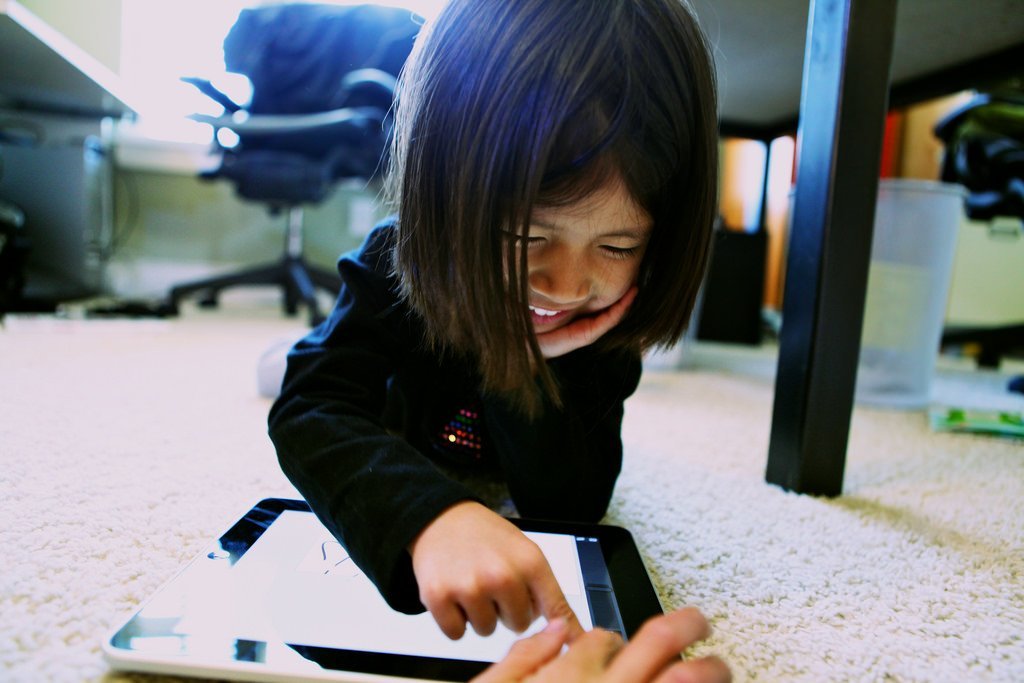
Engaging doesn’t mean you switch on the TV or give them a phone or something; that is not engagement. Your personal, intellectual, emotional, and psychological engagement with the child is very important. A big part of engaging with the child is also maintaining a happy environment at home. Now, this doesn’t mean that you provide them with everything that they want; always keep them happy–py - this is not necessary. The happiness part also includes bringing to the children an understanding of the idea of wealth, because, today, when I go to the classrooms, children think money is wealth. Money is not wealth. Money is only an instrument of wealth, and therefore, this misconception among children needs to be diffused. Health is wealth, family is wealth, knowledge is wealth, and relationship is wealth; there are a hundred things that will make you wealthy. So, these fundamental values have to be incorporated into children, and parents have got a very significant role to play in doing the same.
And this is mentioned in the NEP 2020?
For the first time, the NEP 2020 has taken cognizance of the important role of parents, and what it says is that preparing the child to learn, to go to school is a mother-driven process because learning happens from the prenatal stage when the child is conceived in the womb of the mother. There is a part in the NEP that talks about ages 0–3, when parents have to prepare the child. This part is probably going to need maximum advocacy because right now every parent thinks teaching is the school’s job. But the NEP deems that the parents’ job is not only to let the child go to school but also to handhold the child. I think the synergy between the parent, the child, the teacher, and the school is very important for every child to succeed in life.
So, what are the key points for parents in this new policy?
In the last couple of decades, our whole concept of education has got derailed—it has been focusing on certification from people. It promoted unhealthy competition among learners to obtain marks, whether they had the knowledge, whether they had the skills or not. So, even students who got 90% could enter premier colleges without the necessary skills to face the realities of life and a profession. Therefore, there is a total mismatch between the kind of education that is being delivered in schools and colleges and what is required on the professional front. We needed a policy that brings a paradigm shift from content to competency because, without the latter, education is of no use. Here are the key takeaways from the policy:
- Shift from content to competency. What you are going to learn today is going to be irrelevant in the next five years or 10 years with the kind of technological interventions happening around. So, every learner should be competent enough to learn by themselves.
- Hence, the focus is on a self-learning, self-directed learning, and self-help skills right from the primary stage. And this is where parents come in.
- The education system is opening up, and what we call preparing the child for engineering, preparing the child to become a doctor—all this is about to go.
- There are thousands of jobs out there that are absolutely new, well-paid jobs that we could not even imagine coming up back in the day. So, we need to prepare our students for these jobs.
- We really do not know what kind of jobs will emerge in the next 5–10 years, so the thing is, no amount of degree is of use unless you have two things: Currency and competency of knowledge. I think this is the message.
- So, parents need to facilitate schools to help their children to become open-ended learners, thinking learners, and learners who can experiment with the knowledge they have. I think that’s the key message that the policy has for them.
Having said that, today, how is Indian education poised to handle the expectations of new-age parents?
I have been using two terms a lot of late when it comes to our school education system. One is “digital natives” and the other is “digital immigrants.” The children of today are digital natives, as they are exposed to technology from a very young age. People like us, who are in the 30-plus age bracket, are digital immigrants. New-age parents believe that their children must become successful, so they wire them up for that. But what is success? It’s something that needs to be debated.
Today, success seems to be defined by achievement syndrome and the refusal to accept failure. And in this process, a number of psychological issues are coming through. In the children of today, in most schools, we can see these psychological inadequacies coming through—emotional tantrums, crying, etc. I think new-age parents have a very significant role to play in engaging with their children. They should play with their children, and when I use the word play, it means simply that. No pressure, no competition. I remember when I was young, our parents used to play carrom with us, and they would deliberately lose in order to make the children win. So, achievement doesn’t mean you reach a goal; achievement is a daily process. And parents should teach their children to pursue excellence and not success. Success is an event; excellence is a journey. In that process, parents need to make their children enterprising. This will help children face failure at any point in time and show that it’s not the end of the road. Life has no ends, only bends, and therefore, parents should help their children to become confident and ready to face reality. Children should celebrate themselves, their self-pride and their courage to be who they are.
Dr. Balasubramanian’s tips to parents for nurturing learners for life“Parenting is indeed a very tough job. It needs a lot of understanding, it needs a lot of emotion, it needs a lot of handholding and, especially in these times, it’s very complex. But in the midst of all this, parents can make learning an exciting experience for their children so that they find joy in learning, even as grown-ups. Here are five things to remember:
|
The Dot pre-primary curriculum enhances positive classroom behaviours like focus, confidence, and communication and social skills. The program also provides step-by-step guidance, instructional resources, and tools for teachers to set them up for success.

















Comments
Edit
Comment Flag
Cancel Update