
FEATURED
Why Pre-Primary Education Matters: 10 Benefits Of Building Strong Foundations In Children
Sugandh Jolly
author parentcircle author parentcircle author parentcircle author parentcircle author parentcircle author parentcircle author parentcircle author parentcircle
Every parent wants their child to begin their learning journey with joy and confidence. From a teacher's perspective, quality pre-primary education helps children develop important life skills, build friendships, and nurture a love for learning that supports their overall growth and development
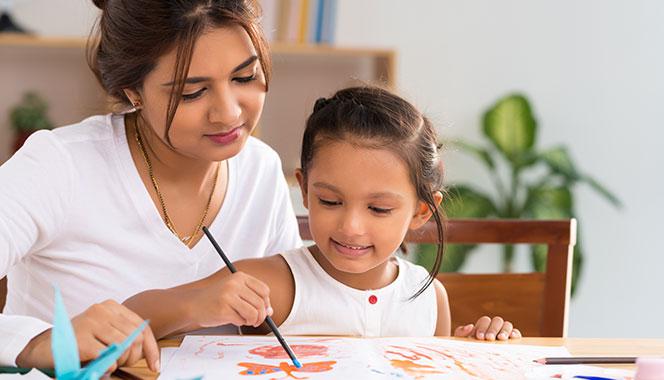
The early years are a period of rapid brain development. During these years, children learn through play, relationships, exploration, and everyday experiences.
Positive early learning experiences help lay the foundation for children's physical, social, emotional, language, and cognitive development.
According to early childhood experts, quality pre-primary education supports the whole child. It goes beyond preparing children academically; it helps them develop social and emotional skills, curiosity, and independence.
As an early childhood educator, I have seen how quality pre-primary education helps children become more confident and happy learners.
Benefits of pre-primary education
1. Nurtures curiosity and love for learning
Children are born with an inherent curiosity about the world around them. They have an active imagination, are always eager to discover new things, make new friends, and explore new environments. Early years schooling nurtures this inquisitiveness and imagination, inspiring children to become lifelong learners.
2. Supports attention and listening skills
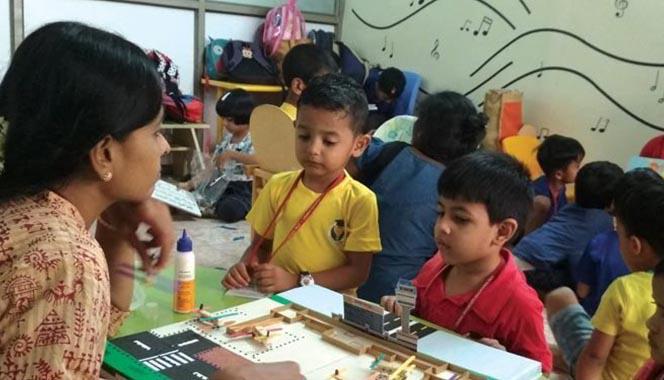
Preschool-aged children are curious and playful by nature; hence, their attention span is short. Activities designed to build their skills can help them learn to concentrate, listen well, and follow instructions.
3. Strengthens cognitive and problem-solving skills
Practical activities and a fun learning environment provide opportunities for children to observe, think, ask questions, and solve simple problems.
4. Enhances social and emotional development
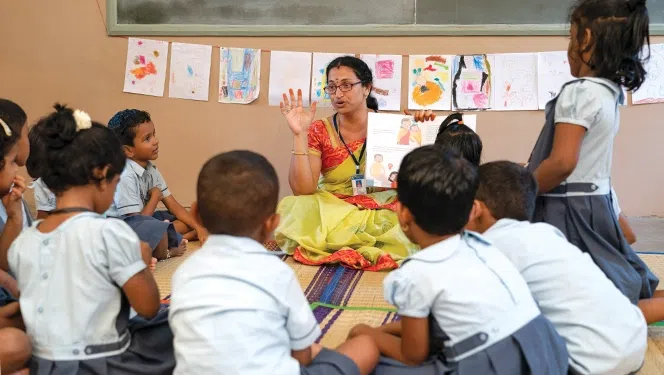
Children's social skills develop when they work together in groups, make friends, help each other, and listen to others' opinions. Teachers build a classroom environment of trust and understanding, while children learn to name and express their emotions, to regulate themselves, and practise empathy.
5. Builds confidence and independence
Children are encouraged to learn to work independently, complete their tasks, ask for help, and take up learning challenges one step at a time.
6. Encourages respect for diversity
In a multicultural classroom, children learn about natural differences among people, how they can appreciate and respect children from different backgrounds, and that every individual is unique.
8. Develops early literacy and numeracy skills
Teachers impart research-based numeracy and early math concepts and avoid mere repetition and counting activities.
9. Encourages patience, resilience, and perseverance
With guidance and encouragement, children learn that mistakes are normal, they think harder, and search for different ways to solve a problem. Children are encouraged to try again and feel excited about new challenges.
10. Prepares children for the school years ahead
Social readiness, emotional confidence, independence, communication skills, and early literacy and numeracy experiences form a strong foundation for future learning and wellbeing.
What research says:
- The early years are a critical period for brain development and lifelong learning.
- Children learn best through play, exploration, relationships, and meaningful interactions.
- Quality early childhood education must support children's social, emotional, physical, and cognitive skill development.
Sources:
- UNICEF – Early Childhood Development Resources
- WHO – Nurturing Care Framework for Early Childhood Development
- Harvard Center on the Developing Child–InBrief: The Science of Early Childhood Development
Key takeaway for parents
Quality early years education is about much more than learning letters and numbers. A child is more likely to develop a love of learning when they feel emotionally safe at school, and the learning is fun and fascinating.
Last updated on: June 16, 2026
The Dot KG Learning Program helps teachers and children effectively manage their emotions to maintain a calm and positive environment in the classroom.
























Comments
Edit
Comment Flag
Cancel Update