
How to Teach Children to Cope with Tragedies
Arun Sharma
Witnessing a tragic event can affect a child's thoughts and behaviours. So, how do you help him deal with tragedies or unfortunate events successfully?

While most parents protect their children from traumas or tragedies, some aren't able to effectively do so. As a result, children end up emotionally scarred. Also, nowadays, thanks to access to various forms of media, even children who haven't had traumatic experiences are no strangers to such events. In such a scenario, a heightened sense of imagination coupled with ignorance of how to deal with tragic situations can adversely affect a child's thoughts and behaviour.
Joshi et al published an article titled, 'TV coverage of tragedies: what is the impact on children?', in the journal Indian Pediatrics (2008). According to the article, "Children who witness violence directly or indirectly may experience unpredictable affronts to their sense of safety, wellbeing, and bodily integrity, disrupting the normal developmental trajectory of childhood. Such reactions to trauma typically vary by age and developmental level and should be viewed within the context of the social-cognitive processes occurring during each developmental stage."
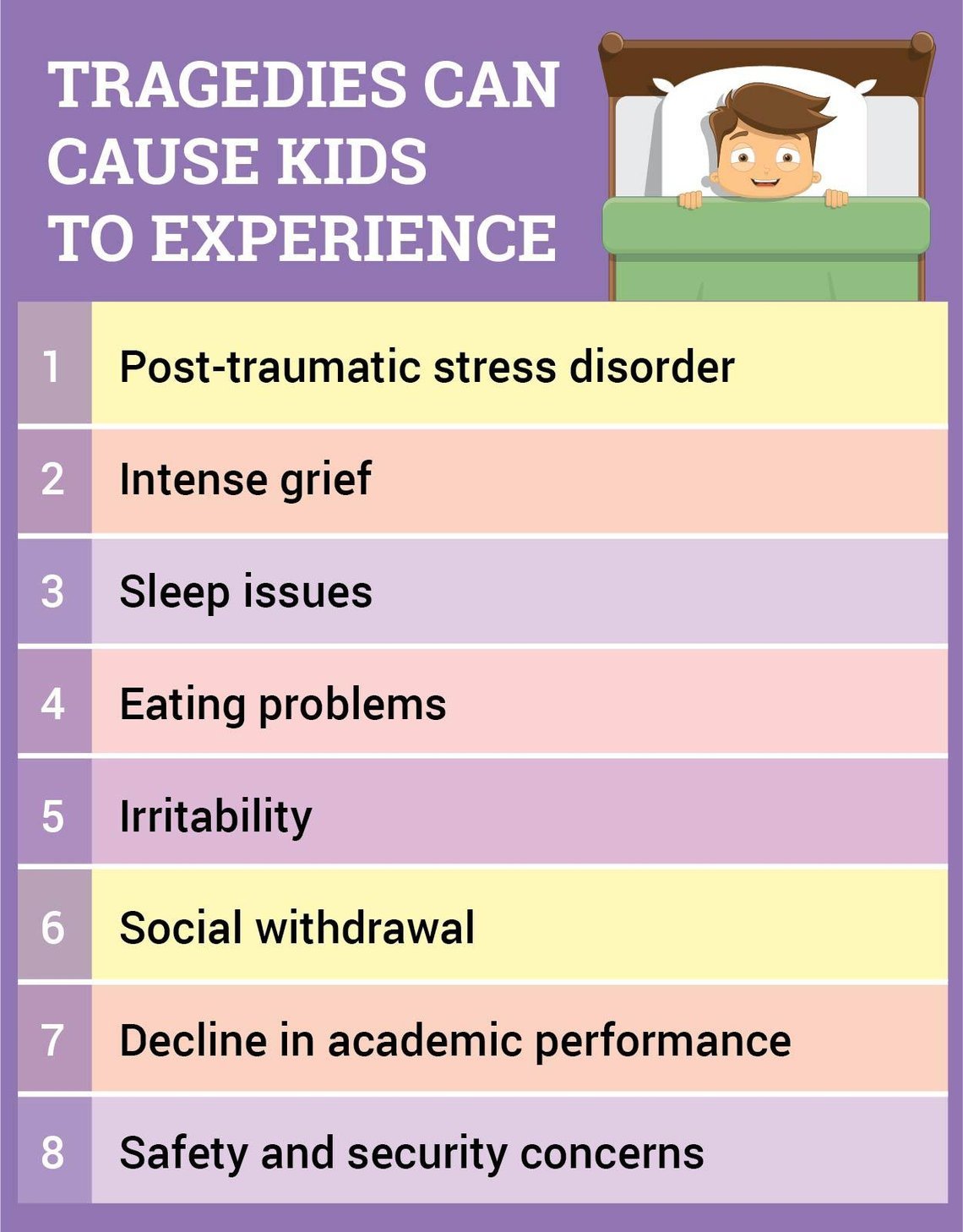
In young children, the emotional after-effects of exposure to a tragedy may manifest as thumb-sucking, bedwetting, separation anxiety, sleep difficulties, clingy behaviour and so on. Adolescents, on the contrary, may try to isolate themselves or downplay the effect a traumatic event has had on them.
It is the responsibility of parents to provide their child with proper support and guidance to come out emotionally strong and unscathed from a tragedy. Here are a few things you can do to help your child deal with the emotional upheaval that usually follows a tragedy.
- During a tragedy or adverse situation, try to remain calm and composed, as your child would use your behaviour as a guide to model his thoughts and response.
- Speak to your child in a calm and composed manner. Use age-appropriate language to explain what has happened. Also, be careful about how much information you give your child; while too little information can prove confusing, too much can be overwhelming.
- Spend a little extra time with your child and try to engage him in a conversation. This will help in clearing any misconceptions your child may have. Also, you can use this opportunity to reassure your child about his safety and security.
- Do not criticise your child if she shows inappropriate behaviours like thumb-sucking or bed-wetting. Allow your child the time to adjust to the changed circumstances.
- As far as possible, prevent your child from witnessing graphic details of the tragedy on TV or listening about it on the radio or seeing its images in print. If this is not possible, stay beside your child while he is exposed to such details to speak to him and clear any misconceptions. With their strong sense of imagination, children can conjure up dreadful images or consequences after watching appalling visuals.
- Children are slow in comprehending the magnitude of a tragedy and may resort to asking the same questions again and again. They do this to understand things better. So, be patient and answer the questions every time your child asks them.
- If your child doesn't speak or raise concerns about a tragedy, it doesn't necessarily mean that he is unaffected. So, try to observe him and ask open-ended questions to gauge what is going on in his mind.
- Come up with some enjoyable activities for your child to do to divert her attention from the event.
By not offering their support during times of tragedy, parents can leave their child vulnerable to undesirable emotional consequences. It is important for parents to stand by their child and equip her with necessary coping skills to wade through any crisis. Parents should also remember that, while some children may get over a crisis in a short time, others may need their support a little longer to feel reassured. Being with your child and supporting her emotionally during a crisis would not only make her feel safe and reassured, but also create a strong parent-child bond.
According to the article mentioned earlier, "While children cannot be completely protected from outside events, parents can help them feel safe and help them to better understand the world around them."
Hope you liked this article. To get expert tips and read interesting articles on a wide variety of parenting topics, subscribe now to our magazine.
























Comments
Edit
Comment Flag
Cancel Update