
Readjusting To Traditional Exams
Aruna Raghuram
How do you help your child cope with the challenges of offline exams in March this year? Read this article to know more
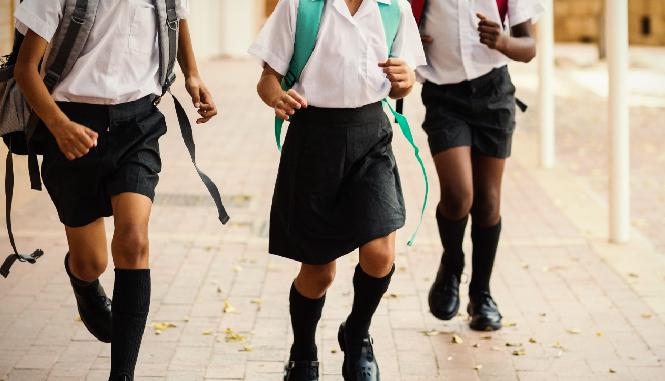
The COVID-19 pandemic has created a huge bubble of uncertainty around the education scene. Parents, children, teachers, and schools have been struggling to cope with the situation during the past two years. Children of all ages have been affected. While there have been efforts by schools to maintain continuity through online classes and assessments, there have been several hurdles as well.
We are now looking at a possible scenario when primary and middle school (6–13 years) children may be back at school and giving offline exams by March this year. If so, how do you help your child readjust to the traditional system of assessment?
Also, Class 10 and Class 12 state and central board exams are scheduled for March–April this year. So, high school students (14–18 years) have a tough upcoming challenge. Exams are always a stressful period for both children and parents. More so now on account of the pandemic, the fear and anxiety it has unleashed, and the disruption it has caused to the academic environment.
Primary and middle school
Under these extraordinary circumstances, is assessment really necessary for primary and middle school students? Assessment of knowledge, skills, and abilities is important to find out a child’s potential and promote student learning. Assessment can be summative (in the form of exams) or formative (continuous feedback recorded by the teacher).
“As an educator, it’s my strong belief that young children shouldn’t have to face summative assessments. Parents and schools should be pushing for formative assessments done over a longer period of time,” says Preethi Vickram, founder of Tapas Progressive School, Bengaluru’s first school to introduce 100% project-based learning. Presently, the school offers admission from grades 1 to 5.
Her advice to parents is to stay calm and not let the sword of assessment hang over their heads. “Talk to your child about any form of assessment casually, making it sound enjoyable. Organize fun mock tests at home with timers. Remember that your child has to get socially and emotionally adjusted to going to school again. Go easy on your child, and gradually build up their tolerance for assessment. Never compare your child with others or exert pressure to perform. Your child may not have taken to online classes. In that case, you’ll need to talk to the teacher and school authorities about the learning gaps,” explains Ms Vickram.
Parent Speak Aarthi Prabhakaran, a Chennai-based edtech consultant, and mother of a 10-year-old, has the following concerns about children readjusting to traditional exams:
|
High school
After two years of online learning, what are the challenges high school children will face in getting used to offline learning and assessment? Says Priyanka Singhvi, academic director at Takshila School in Vellore, “We went offline for a brief period and observed that the mental and physical health of children have been gravely affected. Their well-being is our primary concern. Education comes after that. When they came to school, they were lost and found it difficult to mingle in class. They have become used to living in a closed compartment, with their best friend being their phone or laptop.”
Children will find it difficult to sit in one place and listen to instructions. Following a routine or doing physical activities will seem a daunting task, even torture for some. Also, even though schools have tried to do a good job of online learning, the absence of physical presence and peer learning has had its negative impact, adds Ms Singhvi.
So, what can you do to help your child prepare for the traditional exams in summer? Ms Singhvi advises parents to give their children time and talk to them. “Parents who are working from home are themselves stressed and pressed for time. They also do not have a set routine. They get work calls at odd hours. A healthy family routine for all is needed. Family time has to be created so that parents and children can rejuvenate their minds and body with some physical exercise or light conversation. Education will follow suit,” she says.
In addition, parents should work as a team with teachers to help their children. Don’t pressurize the child for marks, Ms Singhvi stresses. “Make sure your child practices a mindfulness activity. This could be 10 minutes of meditation or mandala drawing to bring a sense of peace. Also, one hour of physical activity is vital to relieve stress ,” she says.
Rachna Gangwar, Ahmedabad-based academician whose son is in Class 12, emphasizes that she and her husband don’t put pressure on their son. “We just tell him to do his best but to take the whole aspect of assessment lightly as this is an unprecedented situation. We are more concerned about his overall health. It’s a relief that he will get two doses of vaccine before the board exams. We make it a point to spend evenings together going for a walk or a drive to get some ice cream, playing games, or watching a show,” she says.
Of course, there’s anxiety because of the uncertainty. There’s no certainty that board exams will be held in March this year and whether they will be subjective as has been said. Moreover, her son is a science student but has hardly had any chance to attend practicals in school. That is another concern, she adds.
‘Not the Time for High-Pressure Exams’ Kiran Bir Sethi, the founder of The Riverside School in Ahmedabad and social entrepreneur, hopes that the government in its wisdom decides that assessment in March does not take the form of high-pressure exams. “Assessment should be about skill-testing rather than testing of knowledge, which would prove burdensome. We want to reduce children’s stress and ensure they look forward to education in the long run. They must rediscover the joy in learning,” she stresses. According to Ms Sethi, children slip into a rhythm very quickly. Just as they got adjusted to online classes and assessments, they will get used to traditional school. She believes children will get used to sitting down at their desks, working in teams, and other aspects of regular school as well as exams. |
What you can do
Considering how their lives have changed in the past two years, time management and setting and attaining goals will pose significant challenges for children of all ages. Here are some of the things you can do to ease the situation.
1. Provide a routine
Lack of structure in the day is a problem children face when they are at home the entire day. Prepare a daily activity schedule to structure the day in consultation with your child. You can help her prepare a weekly study timetable as well.
Sample Study Timetable for Primary Schoolers*
*We are assuming that schools are conducting online classes.
To help your child stick to a schedule, get her an alarm clock so that she becomes independent and accountable about waking up at a certain time every day. Persuade her that a morning bath would refresh her and help her concentrate better on their studies.
Factor into the daily schedule rest, recreation, hobby time, mealtimes and family time so that there’s sufficient downtime in between study periods. Ensure that homework time and additional study time also have brief, relaxing breaks. This will make it easier for your child to adhere to the study timetable. Generally, it’s preferable that high school children make their own choices and decisions, as this prepares them for adulthood. What parents can do is be available to guide them and make them realize their responsibilities.
2. Fix a study area
When children are at home all day, they may study on the bed or couch—this may cause postural issues as well as problems of concentration. Identify an attractive, well-lit, quiet study area at home for your child. Associating studying with a particular place will help him focus better.
Having a designated study area is especially important for older children, as they have to tackle a heavier syllabus and face more pressure. Ask your teen to keep all books and study materials in one place so that he doesn’t waste time wandering around the house searching for things. If your high school student keeps the study area decluttered and neat, it will enable clear and orderly thinking.
3. Limit screen use
Monitor your child’s screen use. Devices are required for online classes. But you can limit the time she spends watching cartoons on television and OTT shows or playing video games. Excessive entertainment screen time and screen dependence may harm your child’s eyesight and reduce her focus and concentration due to distractions. Ensure your teenager does not keep checking social media posts while studying.
4. Encourage exercise
Staying indoors has taken a toll on the physical and mental health of children. Ensuring safety, encourage your child to exercise outdoors properly masked—let him go for a run or cycle ride around the block. Indoor activities like skipping or aerobic dancing (using videos) are good alternatives.
5. Ensure adequate sleep
According to the American Academy of Sleep Medicine, children aged 6–12 years should regularly sleep for 9–12 hours and teens (13–18 years) should sleep for 8–10 hours. Sleep deprivation can affect concentration and mood. Make sure your child sticks to a consistent sleep schedule on weekdays as well as weekends. For teens, you can enforce a “gadget curfew.” Also, make sure that electronic devices are not used in the late evenings and in bedrooms.
6. Provide the right diet
A nutritious diet is essential to help students concentrate and build immunity to illness. Junk foods like chips, chocolates and soft drinks are a clear no-no. High-sugar food impairs concentration. Small, frequent meals are better than heavy meals that can make your child feel sleepy and lethargic. Each meal should have adequate protein, fresh salads, green vegetables, and whole grains. Boiled corn, fruits, and nuts are healthy snacks. For hydration, apart from water, coconut water, lemon juice, and buttermilk are good options.
7. Help your child with goal-setting
Help your child set subject-wise goals that are realistic and attainable. For instance, her goal could be learning the multiplication tables 8, 9, and 12, or mastering 8 times tables during the additional study time in one day if she is in primary school. The next day, she could learn a set of antonyms and synonyms in English and so on.
High school children may set their own goals but would require a sounding board. So, be available to listen to them without imposing your viewpoint.
8. Inculcate good study habits
Hard work is important but smart learning is equally essential. Help your child break up large projects into smaller chunks. This will make the project or assignment seem less intimidating. Also, while revising, tell your child to start with simple chapters and move on to more difficult topics. This will build confidence. Set practice tests at home with a timer for your primary schooler and seek feedback on these from teachers at school.
You can help your older children learn techniques that enhance memory. Also, you can act as a student and get your teen to teach you a difficult concept so that he understands the concept better.
Warning Signs of Exam Stress
|
Dealing with exam stress
It’s important for parents to observe their children closely and recognize the signs of exam stress. Apart from playing down the bogey of exams, you can assure your child of your unconditional love and support. Be present and approachable so that your child can communicate his fears. Make sure he does not dread failure by inculcating the belief that failure is part of life and learning.
You could encourage your child to take up yoga, which will calm the mind and improve concentration. Visualization techniques and affirmations will also help in building a positive approach. During mealtimes and family time, keep the conversation light and pleasant, using humor to de-stress. If you’re unable to deal with your child’s stress, seek the help of a counselor.
Finally, as Ms Sethi puts it, “Parents must understand how important their presence and body language is. Greet your child when she is back from school with a smile, a hug, a joyful word of love. You can ask her about homework or test results later. A mother must not look anxious and stressed. COVID-19 has made our children fearful. Parents have to play their role to get the courage back.
































Comments
Edit
Comment Flag
Cancel Update