
No More Tears! Follow These 10 Tips To Handle Separation Anxiety In Your Toddler
Aruna Raghuram
Having to leave your wailing child with a caregiver is pure agony, especially when your little one doesn’t know that the separation is temporary. But take heart—separation anxiety is normal, and there are ways to ease the pain for both you and your child
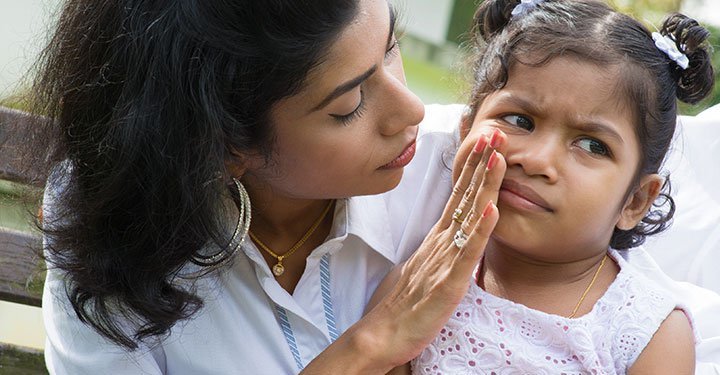
For Mona, the hardest part of going back to work was leaving her 14-month-old son at home with a nanny. Her son had begun to recognize the signs that she was leaving him for the day. When she picked up her bag and gathered him in for a hug, he would start bawling, clinging to her leg in desperation.
Ria’s parents were trying to get her used to sleeping in her own room, but the 2-year-old did not like this new arrangement one bit. After the bedtime story, hugs, and good-night kisses, Ria would return to her parents’ room and insist on sleeping with them. It was as if she felt her parents would disappear during the night if they were not with her.
Both these cases illustrate separation anxiety—the bogeyman that terrifies young children when their parents leave them, even for a few hours. While the anguish of the child and the guilt of the parents are very real, parents must realize that separation anxiety in children is a normal, healthy phase of development.
What is separation anxiety?
In their article, ‘Developmental trajectories of children’s anxiety and depression after the birth of a sibling,’ Thomason and her colleagues (2017) give a concise definition of separation anxiety—“Separation anxiety is a normal developmental phase during early childhood in which a young child experiences distress brought on by separation or fear of separation from the primary caregivers (usually the parents). The child displays clinginess to the parent and extreme distress upon separation from the parent and may appear fearful, anxious, or high-strung.”
Children usually develop separation anxiety when they are around 7–8 months old, and the anxiety peaks between 14 and 18 months. Typically, it goes away by the time a child is 3 years old.
Around the age of 7 months, babies start perceiving what is known as “object permanence”—that things and people exist even when they are not in sight. When your baby can’t see you, his primary caregiver, he realizes you have gone away somewhere. Since he doesn’t have a sense of time, he doesn’t know if and when you’ll be back, and this makes him insecure and unsettled.
His anxious mind is filled with questions, such as “Will my mom come back?” and “Will my parents forget about me?” Different children react in different ways to this anxiety. Some may cry, cling, throw a tantrum, and resist other caregivers in order to persuade the parent not to leave. This behavior usually subsides once the parent is out of view. Others may refuse to say goodbye and sulk. Still, others may be fearful and restless during the entire duration of their parent's absence.
Separation anxiety in toddlers
The toddler years are when children explore their surroundings more actively and develop a measure of independence. As a result, they begin having a greater awareness of separation. For instance, your toddler may wander into the garden and get absorbed in trying to catch a butterfly. Suddenly, he may realize that you’re not around and start crying.
It’s the attachment to the primary caregiver that causes the sense of “missing” that person and separation anxiety. Another reason is that toddlers feel shy about receiving care from others—this may trigger anxiety when they are left with a grandparent, family friend, or nanny.
According to the American Academy of Pediatrics (AAP), separation anxiety, defiant behavior, and a growing sense of independence are all part of toddler development. As your child begins to understand that she’s a separate person from you, she also wants to take some control. And one of the ways she wants to do this is by not letting you leave her.
The positive side
- Separation anxiety is absolutely normal and a healthy phase of child development.
- It’s a sign that your child feels loved by you—his primary caregiver—and misses the love, comfort and safety associated with your presence. This strong bonding is referred to as “secure attachment.”
- This type of anxiety also serves the purpose of keeping your child safe, as it reveals your child’s desire to be with you and her distrust of strangers.
- Separation anxiety is also a sign that your baby is getting smart and remembering things. Earlier, he lived entirely in the present—he had no recollection of the past or no anticipation of the future. He now remembers that you were near him a moment ago but are no longer there.
- Separation anxiety will lessen and eventually pass. To what extent your child displays this type of anxiety and when it will fade away depend partly on your child’s temperament.
When to worry
In rare cases, babies and toddlers may not display separation anxiety in expected ways, like crying or sulking, but they may display some other symptoms. Although it doesn’t necessarily mean something is wrong, if your toddler frequently shows signs of distress such as vomiting, reach out to your pediatrician, or consult a psychologist.
Separation anxiety rarely troubles a child after the preschool years. However, it may return, triggered by illness, the birth of a sibling, parental conflict or divorce, a shift to a new neighborhood, a new nanny, or even when a young child has to go back to school after a vacation.
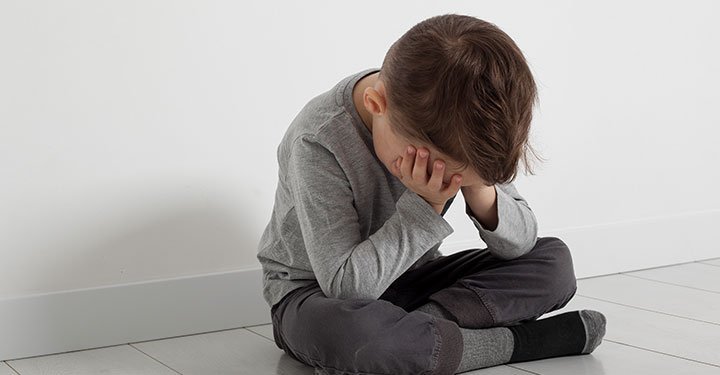
If your preschooler or the school-age child seems particularly and regularly upset about being separated from you, he might have a separation anxiety disorder. In this case, it’s best to consult a mental health professional, such as a clinical psychologist or psychiatrist.
EXPERT TAKE
ParentCircle asked clinical child psychologist Preethi Ninan when parents should worry about separation anxiety. This is what she had to say:
“A parent should worry if the child shows anxiety to a degree that is more than what is expected for the developmental stage, or if he continues to show anxiety over long periods of time—anxiety that interferes with daily activities and tasks. We would then call it separation anxiety disorder, a diagnosis usually made at later ages, such as beyond the age of 5 years.
Some of the factors that may be associated with higher levels of separation anxiety disproportionate to that developmental stage include:
- Heightened anxiety in parents: If parents themselves are experiencing severe anxiety, then the normal separation anxiety in a child may become worse. This could be due to genetic transmission, or because of the way anxious parents react to situations.
- Parenting variables, including overprotection and overinvolvement (such as restricting the child’s exploration of new situations).
- An insecure attachment to parents.
- The child’s temperamental characteristics, such as “behavioral inhibition” (the tendency to experience distress and withdraw from unfamiliar situations, people or environments).
- Stressful life situations that the child might have encountered, such as severe parental discord, or separation, or physical illness in the child or parent.
10 tips for easing your child’s separation anxiety
Although it’s normal behavior for a toddler to express separation anxiety in various ways, separation anxiety can be very disturbing for both you and your child. Here’s what you can do to ease the anxiety and distress.
1. Keep goodbyes short: Don’t sneak away without saying goodbye to your child. But keep the goodbyes short. Be loving, and hug and kiss your child. Tell him where you’re going (whether to the office or for errands) and that you’ll be back soon. Instead of focusing on the goodbye, get your child excited about what you’ll do together when you’re home from work.
Parenting educator Elizabeth Pantley in her book, The No-Cry Separation Anxiety Solution: Gentle Ways to Make Good-bye Easy from Six Months to Six Years, suggests playing peekaboo and moving on to play the “bye-bye game” with your child. Say “Bye-bye” to your toddler and duck behind a cot or chair so that she can’t see you. Wait a few seconds and then pop out and say “Hi, baby!”
“You can increase the interval slowly as your child grows older and understands the game, and this will help when you need to leave the house, or simply leave the room,” advises Pantley.
2. Settle your child before leaving: Separations are tougher to handle when children are hungry, tired, or sick. You can’t prevent illness, but ensure that your child is rested and fed before you leave. Also, you and your child can leave simultaneously—she goes to the park with her caregiver while you go shopping. Another way to prevent separation anxiety is to leave her enjoying her favorite snack. Ask the caregiver to keep a toy or game ready to distract your child soon after you leave, or as you’re leaving, so that instead of dwelling on your absence your child is engaged in play.
3. Don’t show negative emotions: Never show your guilt or anxiety to your child even if his cries wrench at your heart. Look relaxed and happy when you’re leaving. If you show your worry or sadness, your child will feel more anxious. Keep the atmosphere cheerful. Assure your child that he’ll be fine. Be firm, as this will help him adjust to the separation sooner.
Also, never return to check on your child. If you’ve just left your wailing toddler at a daycare center, you may be tempted to drop in after an hour to check whether he is okay. Avoid doing this, as it will further unsettle your child.
4. Practice being apart: If you’re a young mom planning to go back to work, get your toddler used to your absence by leaving her initially with grandparents or family friends with whom she is familiar.
“I got back to full-time work when my daughter was a year old. But I started practicing leaving her alone for 3–4 hours ever since she was 9 months old. I wanted her to get used to my being away. She was fine with that. But now she’s more demanding of my attention. She pulls my hand and cries when I leave for work. I’m told by my in-laws and the caregiver that my daughter is okay after five minutes and gets distracted easily, which is a relief.
I just try to spend as much time with her as possible. Recently, we were at a family wedding where I was with her constantly. Since we returned, she has been clinging a lot more.”
– Vidisha Hegde, working mother of 1.5-year-old Nivriti
5. Encourage independence: Leave your toddler alone in the playroom with his toys and spend time in another room, checking on him now and then to ensure he is safe. It’s important to encourage independence and give your child opportunities to exercise control. For instance, help him learn how to brush his teeth, or let him pick a snack or choose which book you will read to him.
6. Get your child used to the caregiver: Select your nanny with care and hire her well in advance so that your child feels comfortable and secure in her presence. Make sure your child senses you have faith in the caregiver.
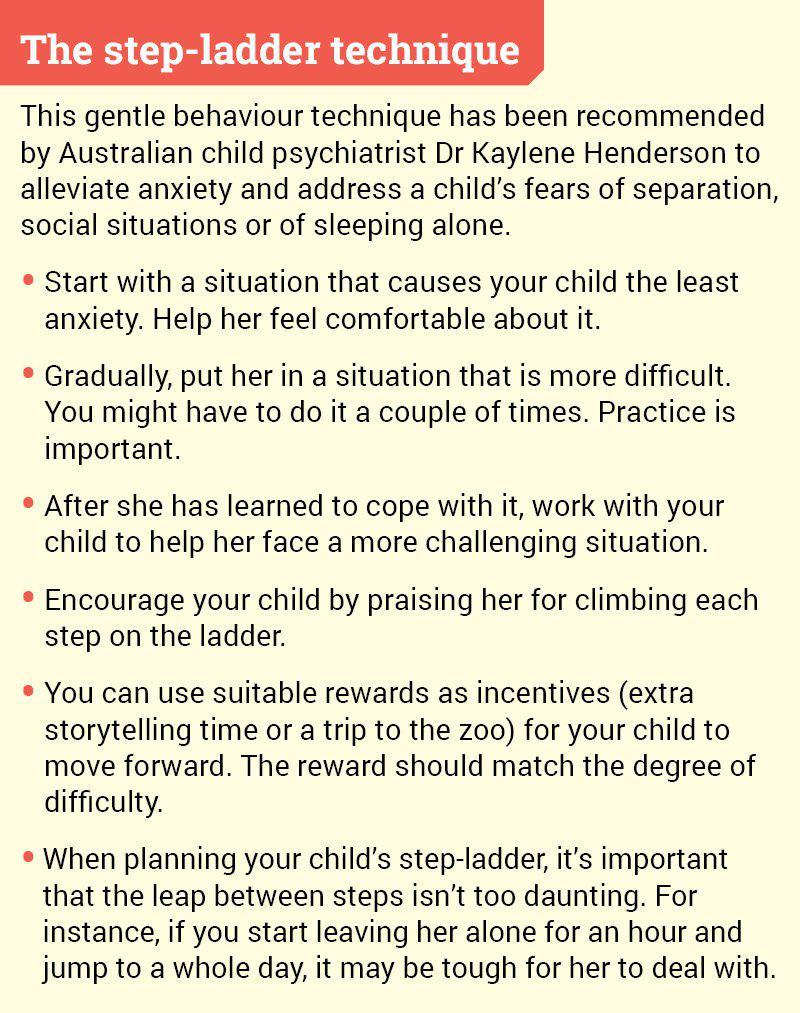
Try a short trial separation. This first time you leave your child alone with the nanny, keep it short—not more than an hour. Gradually, as you and your child get familiar with both the caregiver and the separation, extend the number of hours.
7. Set up a comforting routine: Leave your child with something comforting like a favorite blanket, a soft toy, or a family picture. In the popular picture book The Kissing Hand (1993), a mother raccoon is shown comforting her baby with a kiss on the paw. This book has been used by thousands of parents to reassure children upset by separation anxiety.
Apparently, author Audrey Penn, on a train journey, saw a mother raccoon place its nose on a baby raccoon’s paw. The baby then placed its paw on its own face. This ritual, Penn was told by a park ranger, transferred the scent from mother to baby so that the baby could recall the mother’s scent in her absence. Penn started kissing her daughter’s hand whenever she had to leave her daughter. She told her daughter she could put her hand to her face whenever she missed mommy. This made her feel a part of her mom was with her even when she was away.
8. Keep your word: If you tell your toddler that you’ll be back when she gets up from her afternoon nap, make sure you do. Being consistent will make your child trust you, and she’ll adjust more easily to your absence. Also, ensure your child is happily engaged in your absence. If there’s something in the child-care setting that she does not like, she is likely to display more separation anxiety.
9. Spend sufficient bonding time: When you get back from work or before you leave for an errand, spend relaxing time with your toddler, taking him to the park, reading a story, playing a game, or dancing to music together. Interestingly, the deeper the bond you form with your child, the more it helps him grow as a separate being and enables him to face more separation.
10. Help her understand her feelings: Read books or tell her stories about separation anxiety. If she knows that a baby raccoon also feels the way she does when her mommy is away, it will reduce the anxiety. Never criticize your child for her difficulty with separation. If you try to discipline her with time-outs or other consequences, it will make her behavior more difficult to manage.
In a nutshell
- Separation anxiety is normal and usually nothing to worry about.
- It’s a sign that your child is well bonded with you.
- However, as it disturbs both the child and the parents, it can be eased by adopting several strategies, such as setting up a comforting routine and practicing being apart.
- Parents need to be calm and consistent to help their children cope with this anxiety.
What you can do right away
- Keep goodbyes short.
- Be cheerful and talk about joint activities planned for later.
- Get your child gradually used to the substitute caregiver.






























Comments
Edit
Comment Flag
Cancel Update