
Practical Ways To Build Confidence And Self-Esteem In Preschoolers For Lifelong Growth
Saakshi Kapoor Kumar
author parentcircle author parentcircle author parentcircle author parentcircle author parentcircle author parentcircle author parentcircle author parentcircle author parentcircle
Discover simple, loving, and practical ways to help your preschooler build their confidence and self-esteem. Learn how everyday parenting choices can nurture resilience, independence, and a positive self-image in young children

Naisha, a 3-year-old, watched as all the other children climbed the monkey ladder at the park. She too tried to climb the ladder, but she kept slipping and falling. She soon gave up in frustration. Back at home, her father, Nithin, noticed Naisha sulking in a corner. "What happened? Is something bothering you?" he asked in concern. "Papa, I want to climb the monkey ladder. My friends can climb it, I can't," Naisha replied with tears in her eyes. "How about we go to the park tomorrow and try climbing the ladder again? I'll be there to help you," her father said. Naisha's eyes lit up as she nodded yes.
The next day, Nithin took Naisha to the park to help her practice. After a few days, she was able to climb the ladder on her own. But she was still too scared to climb down without holding on to her father's hand. One day, after she had climbed the ladder, her father reached out to help her climb down, but his phone slipped out of his pocket and fell to the ground. As he bent down to pick up his phone, Naisha climbed down the ladder-all by herself! When Nithin looked up, he saw his little girl beaming with smiles as she exclaimed, "Papa, Papa, look ... I can climb up and down all by myself!"
How did Naisha manage to overcome her fear? What was her inner voice telling her? How did she gain self-confidence? With a little support, a little encouragement, and lots of love and care!
We've all heard, read, or watched stories of triumph against all odds. Besides one's abilities, hard work, and grit, there's another secret ingredient that completes the recipe for success: CONFIDENCE. It's the key to building a healthy mindset that drives a child toward success in school, in their career, and in life.
Read on to understand why raising a confident child matters and what you can do to help build confidence in your young child.
WHAT IS CONFIDENCE?
According to the Oxford Dictionary, confidence is "the feeling or belief that one can have faith in or rely on someone or something."
A confident child feels C.A.R.E.
Capable - I can (I'm learning to do many things on my own. I know my parents will always help me learn.)
Accepted - I feel safe (I like myself because my parents and my teachers like me, and I like them. They take care of me. They help me.)
Resilient - I try, I learn (I couldn't do it now, but I can learn and try again.)
Effective - I did it! (Good things happen when I work hard at something. I learn how it works. I feel good.)
Why confidence and self-esteem matter in preschool years
A study titled "Self-Confidence and Academic Achievements in Primary-School Children," published in 2010 by Sabina Kleitman and Tanya Moscrop, found that self-confidence in children promotes higher achievement at school, irrespective of cognitive ability, age, and gender.
A confident child:
- Is sure of themself
- Performs better at school
- Is more receptive to changes and transitions
- Responds to situations proactively
- Expresses and regulates emotions better
- Is not afraid to learn something new
- Is better at everyday decision-making
Roots of confidence
Your child's self-confidence is rooted in self-belief, the thoughts they have about themself. Their experiences and interactions with the people and the world around them shape these self-beliefs, which are greatly influenced by:
- What they think and feel about themself
- What you think and say about them
- Your attitude toward others and the comparisons you make
- Their experiences with family members
- Their experiences with adults at school and in the community
- Their experiences with peers
At this age, your child is still developing the ability to think and reason. So, they're more likely to believe and accept what others think and say about them. When your child has positive experiences, filled with words of encouragement and appreciation, they develop a positive self-belief. On the other hand, if their world is filled with criticism and negativity, they're likely to have a negative self-belief, which leads to low self-esteem and low self-confidence. So, for your child to build confidence, it's important to create an environment where they feel supported, safe, and secure.
Everyday parenting tips to boost preschooler confidence
As parents, we have a crucial role to play in developing our child's confidence. Here are some practical tips for building your preschooler's confidence:
1. Show your appreciation
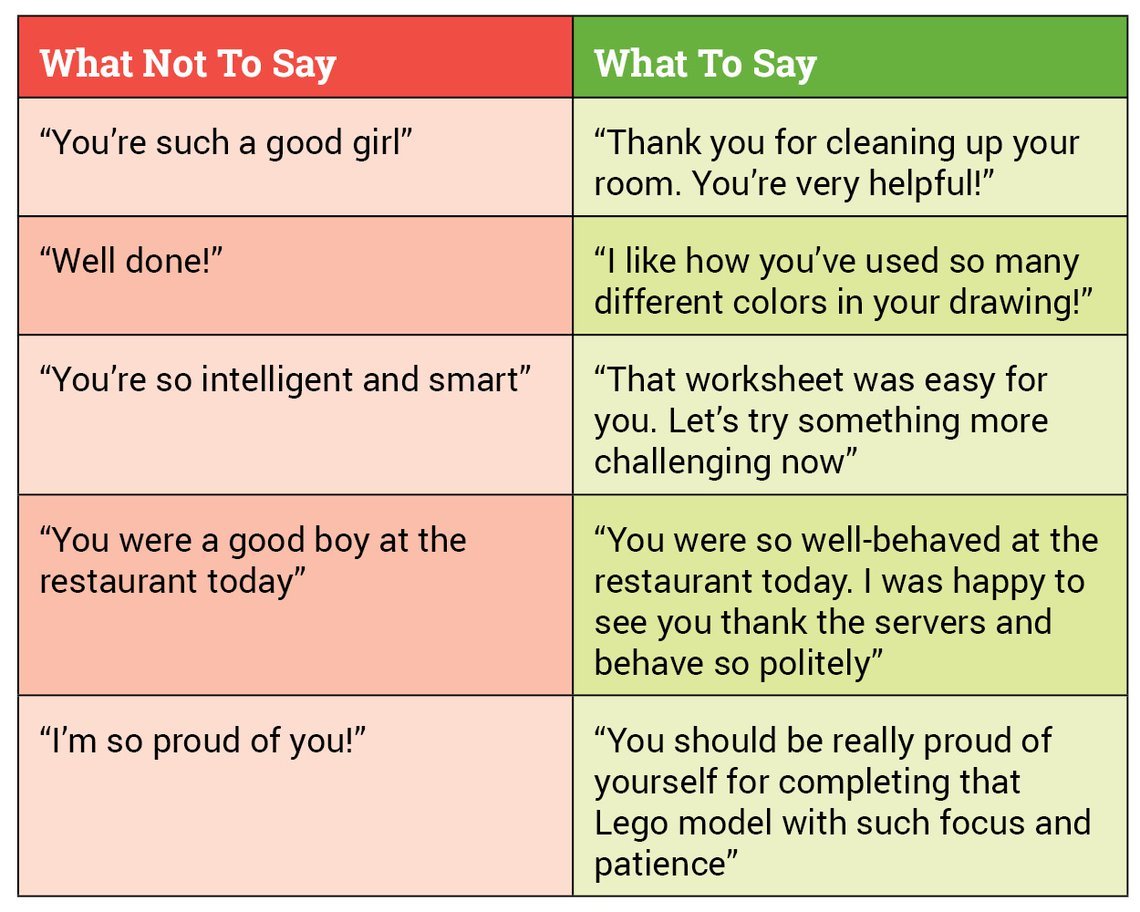
When your child displays positive behavior, puts effort toward accomplishing a task, or tries something new and challenging, show your appreciation. Appreciation here doesn't mean "praise" for everything your child does or praising their talent and ability. Such praise can actually do more harm than good. Be sure to appreciate the effort and be specific in your praise. This will motivate your child to repeat positive behaviors and help them feel capable and effective.
The table below shows how to effectively praise your child.
2. Allow for mistakes
Your child is developing new skills every day. As a part of their learning journey, they will be experimenting and trying new things. Along the way, they're bound to make mistakes and even fail sometimes. How you react to these failures can impact the way they feel about themself.
For example, let's say your child messes up and makes a mistake while writing the letters of the alphabet.
Instead of saying: "You're so clumsy!" or "How many times do I have to show you how to do it?"
Say: "I can see how you've been trying to write your letters. I know you're having a hard time with the curved lines. Let's practice drawing curves on paper. Soon you'll be able to write your C's and D's better."
Instead of criticizing your child for the mistakes, appreciate the effort they put into their work, and then guide them on how they could improve. This is how you will build resilience in your child. They'll be ready to take on new challenges to learn and grow.
3. Help your child feel a sense of accomplishment
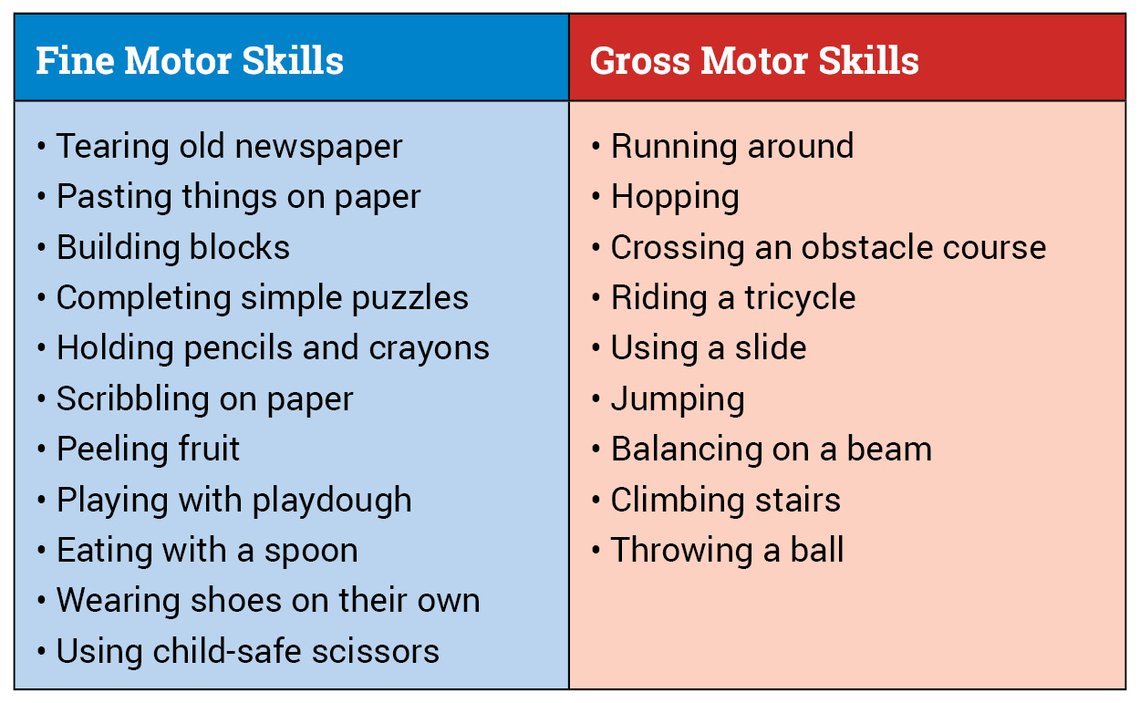
Children develop self-confidence by learning new skills and having successful experiences. Research by Linda K Bunker, published in The Elementary School Journal, shows that children greatly benefit from exploratory activities that enhance their fine motor and gross motor skills. These activities help them develop a sense of competency and become more confident. Challenge your preschooler with movement activities that can help boost his self-confidence.
Remember, every child is different. Some children take longer to reach a milestone, compared with others.
- The first step is to determine what your child can do.
- Then help them practice that skill and master it before they progress to the next level.
- Make a game out of it. Show your appreciation when you see them try, or when they succeed at their task.
- If they're struggling with a particular skill, remind them that though they can't do it yet, with practice, they soon can.
Your child will begin to feel capable, resilient, and effective.
4. Encourage your child to solve their own problems
When you see your child struggling to do something, you may be tempted to step in and do it for her. However, it's best not to interfere with your child's work. Allow your child to finish the task to the best of their ability. When they're able to solve their own problems, they'll feel more confident.
For example, if your child is trying to put together a puzzle, give them the time and space to solve it on their own. If you sense they are struggling a lot or are getting frustrated, you could offer some tips by saying, "See this blue piece? Where do you think it goes? Which part of the puzzle is blue like this piece?"
When you allow your child to solve their own problems, you help them feel capable, accepted, and effective.
5. Challenge your child to learn something new
Young children learn something new almost every day. Set little challenges for your child to get him out of their comfort zone. For example:
- If your preschooler can stack blocks, challenge them to stack the blocks according to a specific color pattern.
- If they can jump for two minutes, challenge them to hop on one leg.
- If they can sing a song well, challenge them to snap their fingers along with it.
Make sure that the goals you set can be achieved by your child with a little effort and practice. Avoid giving challenges that are beyond their capability. When your child tries something new and succeeds, they feel capable and effective.
6. Give your child unconditional love
Accept your child for who they are. Even if you do not approve of their behavior sometimes, let them know you still love them, that it's their behavior that is upsetting you, not them as a person.
For instance,
Instead of saying: "Don't talk to me like that. You're upsetting me."
Say: "I don't like the way you're talking to me."
Instead of saying: "Stop hitting me. You're a bad girl. You're hurting me."
Say: "Hitting is not okay. Hitting hurts me."
Instead of saying: "You never listen to what I say. You upset me."
Say: "When you don't listen to what I tell you, it makes me upset. I'd like you to put on your listening ears."
When you show your respect and unconditional love, your child feels loved, accepted, and resilient.
When your child believes in themself and has self-confidence, they feel they can achieve anything they set their mind to and put in the necessary effort. They feel empowered and are ready to take on the world. So, go ahead and give your child a boost of confidence and watch them soar toward their dreams, where even the sky is not the limit.
In a nutshell
- Self-confidence is about self-belief. Confidence makes your child feel capable, accepted, resilient, and effective.
- Self-confidence has been linked to better academic performance as well as enhanced social and communication skills in childhood.
- To help your child build self-confidence, use specific praise, accept mistakes, and give them unconditional love.
What you can do right away
- Ask your child one thing they think they're good at and would like to learn more about. It could be painting or singing a rhyme. Provide them with opportunities and resources to hone their skills.
- Similarly, ask them about one thing they would like to get better at, like catching the ball or eating by themself. Help them take small steps to achieve their goal.
- You can do the same for yourself. Partner with your child on this goal-attaining journey. It will help your child feel supported.
- Read books and stories like Emily's Quills and I Like Myself! to introduce the concept of self-confidence to your child.
Saakshi Kapoor Kumar is a psychologist, educator, and Head of The Dot Learning Experience, a comprehensive early childhood education ecosystem. She works closely with schools and teachers to create joyful, child-centered learning environments and has extensive experience in teacher training, early childhood education, and social-emotional learning.
Last updated on: September 5, 2025
The Dot social emotional learning program is designed to help each child feel emotionally safe and ready to learn. The program also helps children learn how to manage their emotions and behaviours in different situations. The SEL program builds self-acceptance, confidence, resilience, and a growth mindset in young children.


























Comments
Edit
Comment Flag
Cancel Update