
Fun Detective Games For Kids To Play
Amrita Gracias
Encourage your child to put on his thinking cap this summer. Detective games are a great way to not only keep children engaged but help channel their inner Sherlock Holmes. Explore and investigate.

Whether it was the Famous Five embarking on an exciting adventure to find a hidden treasure or solving a burglary, amateur sleuth Nancy Drew on one of her gripping adventures, or fictional private detective Sherlock Holmes' meticulous yet proficient deductions on a variety of cases, haven't we all dreamt of playing detective and solving mysteries?
Donning the role of a skillful junior investigator is a great way to keep children engaged and active. Detective activities are always appealing as they involve much excitement and enthusiasm. So, what better way than to keep your child's curious brain ticking?
These simple detective games and activities make for fun learning while they are sure to keep your little ones occupied and enthralled throughout. Children are always eager when it comes to looking intently for clues that will help them solve a mystery or a treasure hunt.
So, let your little investigators put on their 'detective hats' and enter the thrilling world of pondering, finding and seeking.
As Agatha Christie once said about the renowned Hercules Poirot, "If you are to be Poirot, you must think of everything"!Benefits of playing detective games for kids
- Improves analytical and critical thinking skills: Asking questions, looking for clues and putting them together to solve a puzzle, requires breaking down findings into smaller components to move ahead and solve the problem. This enhances the ability to reason, think logically and analyse the situation. In the fast-paced and rapidly-changing world that we live in today, this is an added advantage. Your child will learn to analyse and re-analyse a situation and look at it from different points of view that will help him discover cause and effect. As he hones these essential thinking skills, he will learn to apply them in everyday situations - both inside and outside the classroom.
- Increases memory capacity and working memory: Good memory skills lay the foundation of all learning. In fact, memory skills are not innate; rather they need to be developed and fine-tuned. A child's working memory - the ability that allows the brain to hold new information - is key to learning and performing certain basic tasks. It also helps hold memories and compare and connect old memories with new ones. Long term memory on the other hand enables information to be stored and then recalled for future use. Both short-term and long-term memory are equally important and therefore it is essential to develop memory skills. Simple detective activities help the child sharpen their visual memory, make connections with information given and form association with various details, all of which stimulate and improve memory capacity.
- Enhances skill building: Several other useful skills are also used, learnt and honed while playing detective games. For instance, children get familiar with and learn useful skills such as map reading or how to decipher simple codes. Learning Morse Code is another essential skill that can be learnt in a fun manner. Besides, children also come across and learn interesting facts about various topics. Indoor detective games also allow for imagination and creativity, which help greatly in more ways than one. Teamwork, leadership, collaboration, observation skills and the motivation to learn and achieve are just some of the other essential abilities that children are sure to acquire while playing detective games.
Detective games that children can play indoors
1. Detective Memory

Materials required: A tray, various items that the child can identify. (Try and use items a detective would use like torch, notepad, pen, magnifying glass, hat, key, watch etc.)
How to play: Place the items on the tray and let the child look at them for about thirty seconds to a minute. Then take away the tray. Now the child must recall the items he saw on the tray and list them. Or to make things more interesting, take away only a few items. Now let your child identify the missing items.
Skills: memory, logical thinking, analysing
2. What's in the box?

Materials required: A medium sized box, a pair of scissors, various items that a child can identify (use a variety of items to make the game interesting such as food, stationery, toiletries etc.)
How to play: Remove the flaps and make holes, on either side of the box, large enough for your child's hands to fit through. Place the items inside the box and place the box on the side such that the open portion faces the front, and you can see what the child is holding. Now let your child put his hands through the holes into the box and identify the items by touching and feeling them.
Another way to play this game is to put only one item in the box at a time. The child can then put his hands into the box and ask five questions to get clues about the item. For example, if the item is a banana, the child can ask questions like, "Is it food?", "Does it need to be cooked?", "Do I like eating it?", etc.
Skills: Thinking, analysing
3. Spot The Differences
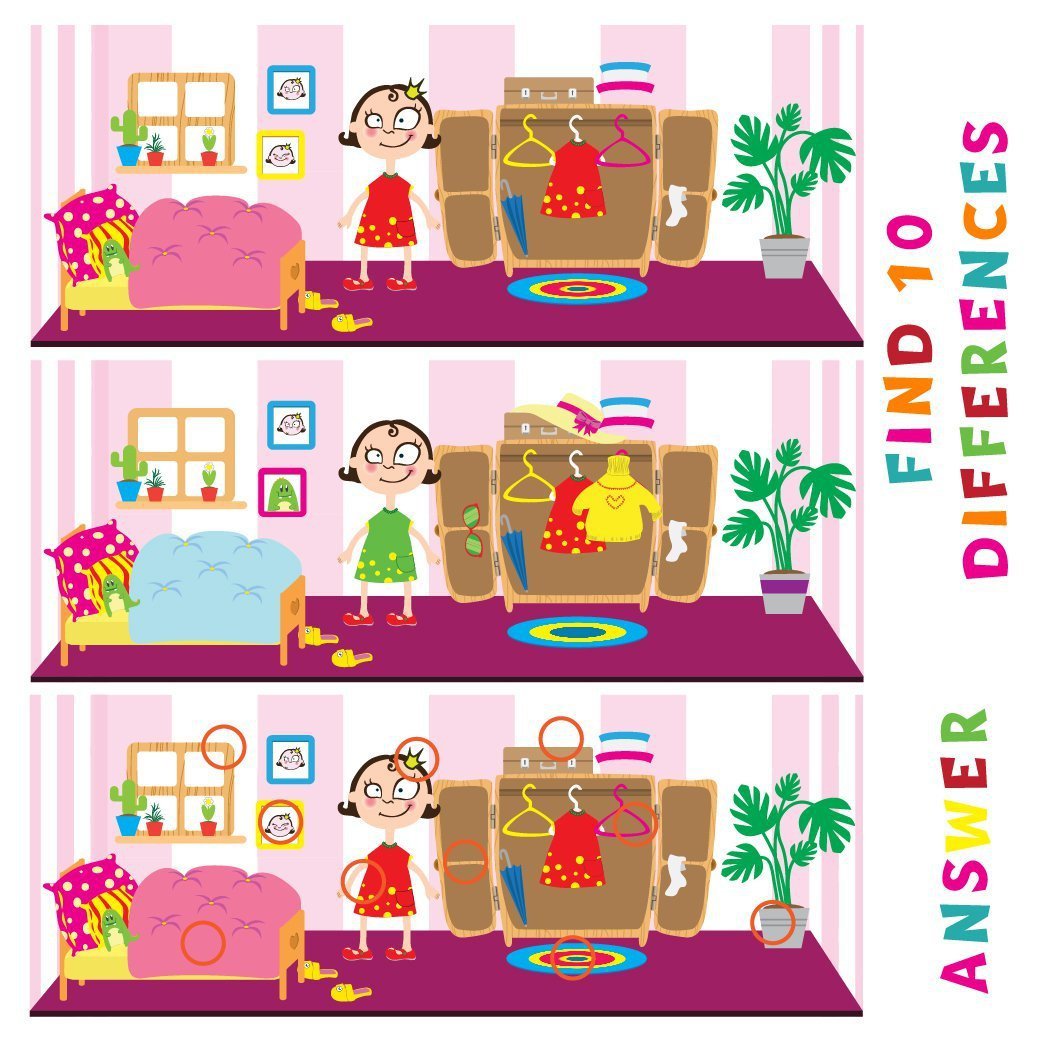
Materials required: 'Spot the difference' activity sheets to be downloaded (and printed if possible) from the Internet
How to play: Both the pictures of a set are almost identical except for a few minor details. Your child must scan the picture thoroughly in order to spot the minor, yet visible differences.
Skills: Observation, visual scanning, giving importance to details
4. Crack The Code
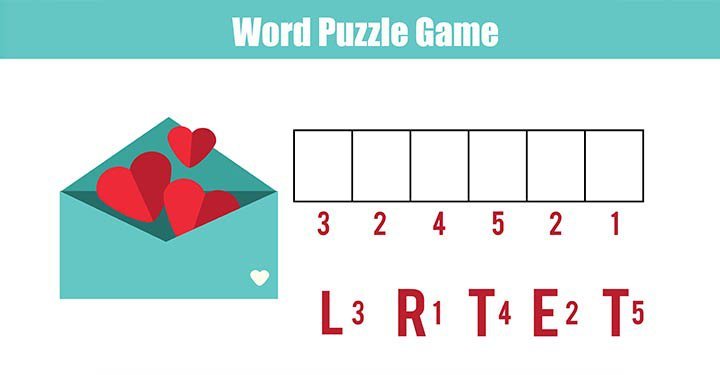
Materials required: Sheets of paper, pen / pencil
How to play: Make a code key with alphabets and numbers, meaning each alphabet is represented by a number (A = 1, B = 2, C = 3 etc.). Now, write a message on a sheet of paper using only the number code. Let your child decipher the message.
You can also make a code key with alphabets, shapes and symbols meaning each alphabet is represented by a shape or symbol (A = circle, B = triangle, C = exclamation mark etc.).
To get your child's imaginative juices flowing, once she gets the hang of the game, ask her to create a code and a secret message for you to decipher! Now, doesn't that sound like fun? It's sure to keep her engaged for long too!
Skill: analysing, critical thinking, creativity, memory
5. Einstein's Riddle

Materials required: Download the riddle from the Internet
How to play: This tricky puzzle, created by Einstein himself, has a series of statements that give clues about five homeowners. Using logic and reasoning, the aim is to find the nationality, pet, drink, house colour and hobby of each owner. This puzzle is quite a challenge and is suitable for older children.
Skills: Logic, reasoning, critical thinking
6. Treasure Hunt

Materials required: Small pieces of paper for clue cards, small items to use as clues, one item as the treasure.
How to play: First choose an item that you are going to hide as the treasure and hide it! Now write clues on bits of paper (write clues depending on age of the child) and hide them in various places, making sure one clue leads to another and ultimately to the treasure. For older children, use riddles or trick questions to make it a tad bit harder to decipher and figure out where the next clue might be hidden. Or you could leave behind some 'evidence', which will lead to the next clue.
If you don't wish to use clues written on paper, you can simply hide objects as clues. For example: hide an item you would usually find in a particular kitchen cupboard somewhere else, so that your child understands that the next clue is hidden in that particular cupboard.
Another way to conduct a treasure hunt is to draw a map, which the child must read and decipher in order to find the treasure.
You could hide your child's favourite toy and call the game 'The Case of The Missing XXXX' to get your child excited and more involved. In fact, ask him to dress like a detective while playing the game and even carry around a notepad, torch and magnifying glass!
Skills: thinking outside the box, map reading, critical thinking, analysing
7. Ten Questions

Materials required: No materials required!
How to play: The aim of the game is to guess what or who the other person is thinking of. So one has to simply think of a person, place, animal or thing. The other person - who has to guess - must ask questions to get clues about the answer. But the twist is that the person can answer only with a yes or a no. And, only 10 questions can be asked and two guesses are allowed! For instance, if you are thinking of a family member, the person who is guessing can ask questions like "Is the person male?", "Does he live in Chennai?", "Does he wear spectacles?", "Is he married?", etc.
Skills: logic, memory, attention to details, asking the right questions
8. I Spy

Materials required: No materials required!
How to play: This game is rather simple and is best suited for younger children. The aim of the game is to guess the object a player has spotted with the help of a simple clue. You can pick items in a particular room or surrounding. For instance, the player picks an item such as a blue vase and says, "I spy with my little eye something blue". And so, the others try and spot items of the same colour in the room and guess which one it is.
Skills: attention to detail, observation, visual memory
We hope your child enjoys these simple yet fun detective games. While they are sure to keep your child thinking, deliberating and guessing, such games can also help strengthen a weak area, nurture a strong skill that he might already possess or even ignite some underlying investigative talents! Ultimately, it's all elementary, isn't it?
Also read: Best Board Games To Play
About the author:
Written by Amrita Gracias on 18 May 2020.
Join our Together At Home | COVID-19 Circle to share, discuss, learn from fellow parents and for interesting ways to spend your lockdown days!
Looking for fun ways to keep your preschooler engaged at home during the pandemic? Check out Little Learners at Home, a home learning programme specifically designed for 3 to 5 year olds by our team of experts.
For expert tips and interesting articles on parenting, subscribe now to our magazine. Connect with us on Facebook | Twitter | Instagram | YouTube

























Comments
Edit
Comment Flag
Cancel Update