
How Parents Can Play A Vital Role In Raising Environmentally Responsible Children
Lakshmi Krishnamoorthy
Renowned environmentalist, Arun Krishnamurthy talks about environment conservation and the role parents can play in raising environmentally responsible children
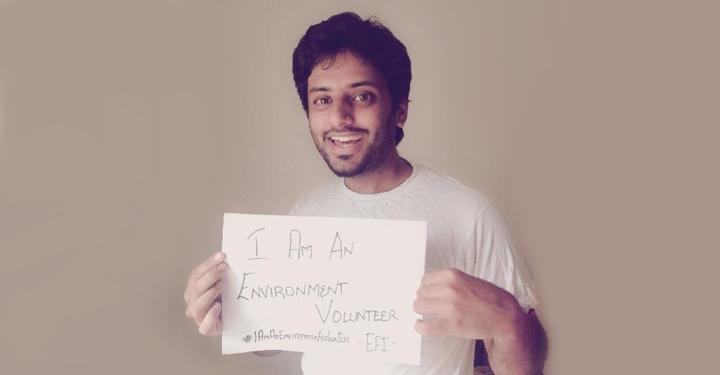
Renowned environmentalist, Arun Krishnamurthy of the Environmentalist Foundation of India, talks about the importance of environment conservation and the role parents play in raising environmentally responsible children.
Environmentalist Foundation of India (EFI), founded in 2007, works for wildlife conservation and habitat restoration aimed at creating a sustainable planet for all life forms.
EFI's founder, Arun Krishnamurthy, attributes his involvement in environmental initiatives to the values and discipline imbibed by his family. He is happy that his parents groomed him into a "nation-loving, environment-caring individual." Arun says his parents never stopped him from doing anything that he wanted to. This kind of support, according to him, is essential for any youngster to pursue his dreams.
Arun acknowledges that his school and college curricula fuelled his passion for environmental conservation. They contributed to his learning and made his work for the environment a seamless effort.
Challenges faced as a young environmentalist
Having started out as an environmentalist at a young age, Arun thinks his journey has been an immense learning opportunity. "Executing collective work in a complex and diverse set up such as our country is the biggest challenge. I have understood there are more talkers than doers when it comes to the environment in our country. There is tremendous scope and potential to take up work," says Arun.
EFI's first achievement
The organization, says Arun, started its environment conservation initiatives with the first-ever citizen-based voluntary lake clean-up project in Hyderabad on 30 May 2008. The success of this project led them to take up more such work and grow to where they are today.
Tips for children to save the environment
The best way for children to connect with nature is to step out and explore our natural environment without disturbing it, says Arun. He is emphatic that parents should teach children to shun the use of polythene, avoid consuming packaged and processed foods, and be aware of our country's wildlife and forests.
Tips to raise environmentally responsible children
According to Arun, parents must make lifestyle changes in order to be role models for children to ensure their future is secure. They must refrain from practicing the "use and throw" culture. Also, they must switch from being consumers to humans if they want their children to be sensitive toward the environment.
Inspiring students to spend time in environment conservation
Arun is happy that a lot of students are members of EFI. They participate in various activities ranging from conservation, communication, research and management, based on their interest levels, he says. EFI aims to develop young leaders in conservation.
Arun talks about how EFI inspires students. He says that EFI presents the predicament of the environment before the students who understand that their future is at stake and participate willingly.
The youth today are definitely motivated but "need appropriate guidance to ensure optimum results. The cause and its impact get lost in photo opportunities; science and logic take a back seat." This needs to be avoided for sustainable conservation practices amongst the younger generation, says Arun.
Arun Krishnamurthy's hall of fame
- British Council International Climate Champion Excellence Award in 2010.
- Google Alumni Impact Award in 2011.
- Rolex Awards for Enterprise award in 2012 for cleaning Lake Kilkattalai in Chennai.
- Jane Goodall Institute Global Youth Leadership Award, 2010.
- Youth Action Net Fellow.
EFI conducts regular camps to encourage students in environment conservation:
1) Heat camps (summer camps that focus on youth empowerment by teaching them the nuances of communication and conservation)
2) Wild Venture (10-day wildlife trek to understand wildlife filming, photography, and conservation)
3) Youth Championship & Cold Shoots (one month-long championship focusing on inculcating social entrepreneurship and conservation in youngsters)
Make a positive impact on the environment! Follow our tips for a plastic-free home now.























Comments
Edit
Comment Flag
Cancel Update