
We Look At 7 Wonderful Ways To Get Your Child To Care About Our Beautiful Planet
Richa Shukla
author parentcircle author parentcircle author parentcircle author parentcircle author parentcircle author parentcircle
By starting early we can help children build sustainable habits and become agents of change, writes Richa Shukla, educationist and behavioral change consultant

Climate change is the biggest crisis facing humanity today. It gets a tremendous amount of media coverage every day, and deservedly so. Children will be most affected by climate change and will likely face more severe issues than us in the future. The UNICEF’s Children’s Climate Risk Index reveals that nearly half of the world’s children live in countries that are at an “extremely high risk” from the impacts of climate change. India is among the countries most vulnerable to climate change.
Our children face the threats of extreme temperatures, more natural calamities, and displacements. How do we prepare them better? How do we instill climate resilience in our children? It has to start early. As children’s brain development is happening at a rapid pace in the early years, experiences or inputs in the early years matter. Research shows that learning through play can be impactful in children developing skills and values like love for nature.
A 2020 study, titled ‘The role of climate change education on individual lifetime carbon emissions,’ shows that climate education can lead to future reductions in carbon emissions. If 16% of children were to receive climate education, it can lead to a 19 gigaton reduction in carbon emissions by 2050. By starting early we can help children develop sustainable habits and become equal partners and responsible citizens. Research shows that children can bring about change and make their parents or caregivers follow good habits like washing hands, using soaps, reusing things, and conserving energy and water.
Environment citizenship can be developed through a modular format in elementary school and at home through playful hands-on experiential activities. Parents are always children’s first teachers and positive role modeling can inculcate many habits early on.
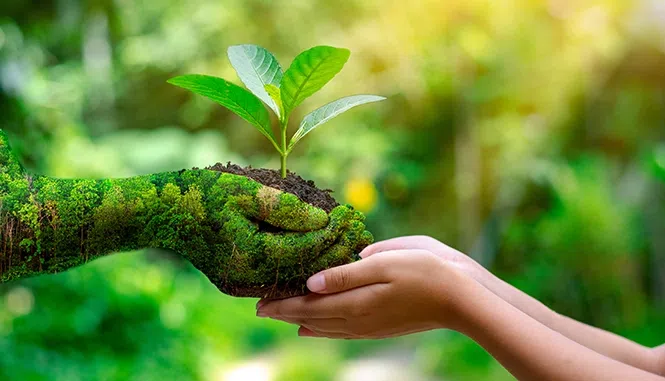
Here are some simple ways you can help your child take care of the environment:
- Nurture your child’s love for nature—help them do simple gardening activities, or go on nature walks with them
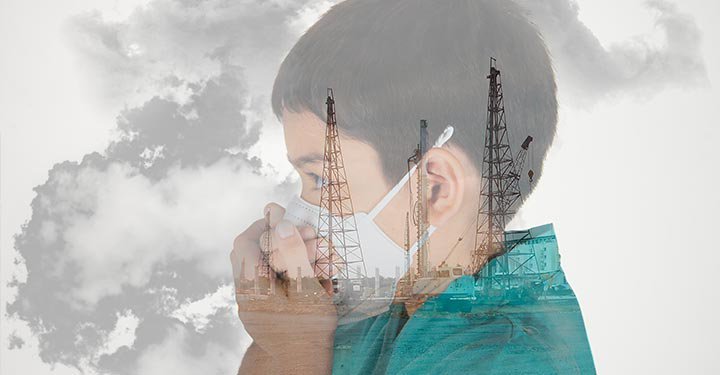
- Role-play and discuss how smoke coming out of cars is causing pollution, which in turn is making us sick. Talk about how a morning carpool can be a fun option, and how it can even help develop cooperation and planning skills in your child
- Encourage your child to save water. Ask them to turn off the tap while brushing, and when they are thirsty, ask them to only take as much water as they need to drink
- Remind them to switch off lights when not needed
- Choose toys and playthings that don’t hurt the environment, and talk about the ways old things can be used in new ways
- Read out books that talk about the environment
- A big part of environment sensitization is helping children understand “needs” and “wants” and to have and use only as much as needed, as recycling is not as helpful as reducing (buying/using fewer resources)
Engaging children in conversations and activities about protecting their environment can also help build empathy and kindness in children. Both educators and parents can build these essential skills in children through a little bit of creative thinking and by designing age-appropriate playful activities. The National Education Policy (NEP) 2020 recommends focusing on subjects like organic living, environment education, and global citizenship education. It has become critical to implement environmental education programs in preschools.
Climate change is a harsh reality for us today, and it can affect our future generations. Our children are in the front and center of it and need to be made aware of environmental issues. They have to become advocates and agents of change, instead of being at the receiving end of climate change. We all can play a role in raising a generation that is more aware and environmentally conscious.




















Comments
Edit
Comment Flag
Cancel Update