
Corporal Punishment: Violation Of Child Rights In Schools
Dr Madabhushi Sridhar
Corporal punishment has been in prevalence in Indian schools despite certain laws being in place. This Human Rights Day, understand how it violates your child's rights and the laws around it.
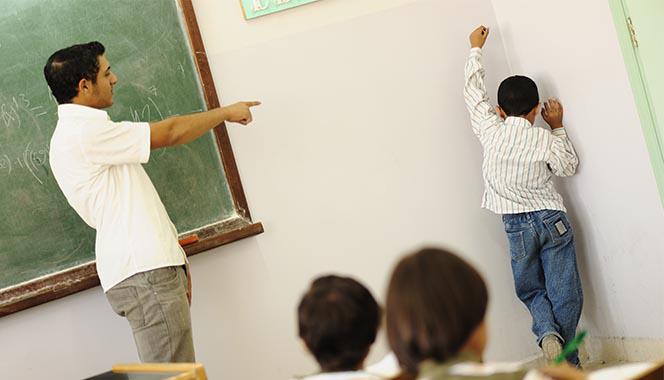
The time has come to re-examine the saying, 'Spare the rod and spoil the child'. Children are at the receiving end of the rod both at their own homes and schools from parents, teachers, and non-teaching school authorities. Several schools inflict corporal punishments on students for various reasons. How far is it justifiable? Does the law favor imposing corporal punishment at all? If it does, is the punishment confined to controlling the offensive behavior or misbehavior? Or, does it extend to every simple, technical or other activity, which cannot be categorized as evil?
Before going into the legal perspective, let's take a look at the various types of corporal punishment prevalent in schools.
Types of corporal punishment in schools
Physical punishment:
- Making the child stand as a wall chair
- Keeping the schoolbag on the child's head
- Making the child stand under the sun for the entire day
- Making the child kneel and do the work and then enter the classroom
- Making the child stand on the bench
- Making the child raise his hands
- Making the child hold a pencil in her mouth and stand
- Making the child hold his ears by looping the hands behind the knees
- Tying the hands
- Making the child do sit-ups
- Caning and pinching
- Twisting the ears
Emotional punishment:
- Getting someone from the opposite sex to slap the child
- Scolding, abusing, and humiliating
- Labeling the child according to his misbehavior and sending him around the school
- Making the child stand at the back of the class to complete the work
- Suspending the child for a couple of days
- Pinning a sheet of paper on the child's back and labeling her, "I am a fool," "I am a donkey," and so on
- Taking the child to every classroom and humiliating her
- Removing the shirts of the boys
Negative reinforcement:
- Detaining the child during the break and lunch
- Locking the child in a dark room
- Asking the parents to meet the teacher or asking the child to get explanatory letters from the parents
- Sending the child back home or making him stand outside the school gate
- Making the child sit on the floor of the classroom
- Making the child clean the premises
- Making the child run around the building or the playground
- Sending the child to the principal
- Making the child teach the class
- Making the child stand until the teacher comes
- Giving oral warnings and writing letters in the school diary or calendar
- Threatening to give the TC (Transfer Certificate)
- Forbidding the child to participate in games or other activities
- Deducting the marks
- Treating three late-comings as equal to one day's absence
- Giving excessive imposition
- Imposing a fine
- Not allowing the child to enter the class
- Making the child sit on the floor for one period, day, week, or month
- Placing black marks on the disciplinary charts
Why corporal punishment should be prohibited
Corporal punishments are envisaged for adults only in criminal cases. So, however great a civil wrong maybe, corporal punishment cannot be given. Even in cases of malpractice in examinations, the codes and rules do not talk about caning or hitting. So, children cannot be subjected to physical punishment for indiscipline or academic underachievement.
India, being a signatory to the United Nations Convention on the Rights of the Child, is under an obligation to remove cruelty towards children by prohibiting canes from schools. It is an important element of child protection rights as envisaged by the Convention to lay down a national policy and legislation on the use of corporal punishment in schools.
Having stated this, let's take a look at the existing provisions in the law that address the issue of corporal punishment.
Current legal position
Law and legal systems are expected to protect children from abuse at home, at schools, and at systems of administration of justice duly considering their childhood, innocence, and incapacity to understand.
- Children below seven years are exempted from criminal liability. Their act is not treated as an offense at all. This means that no corporal punishment can be given even under the penal provisions based on the principles of doli incapax.
- A similar exemption is also extended to children aged more than seven years but less than twelve under Section 83 of the Indian Penal Code (IPC).
- In essence, a child cannot be subjected to ordinary methods of physical punishments, including imprisonment for offenses, owing to his age and incapacity to formulate a malicious intention. Thus, a student who has committed a wrong, by not doing homework or violating a dress code, should not invite any corporal punishment.
- Section 88 of the IPC protects an act that is not intended to cause death or done by consent in good faith for a person's benefit. A teacher chastising a pupil falls under this clause. A headteacher who administers in good faith a moderate and reasonable corporal punishment to a pupil to enforce discipline in school is protected by this section. So, such an act is not a crime under Section 323.
- Section 89 of the IPC protects an act by a guardian or by consent of a guardian done in good faith for the benefit of a child aged less than 12 years. However, the same section says that this exception will not extend to causing death or attempting to cause death or grievous hurt.
- These provisions also extend to teachers having quasi-parental authority, i.e., consent or delegation of authority from parents, of course, with exceptions. Using excessive force, causing serious injury, and the purpose being very unreasonable can turn the act of the guardian or teacher, with the consent of the guardian, into an offense because such incidents are outside the scope of good faith.
- Section 17 - Prohibition of physical punishment and mental harassment to a child:
- No child shall be subjected to physical punishment or mental harassment.
- Whoever contravenes the provisions of sub-section (1) shall be liable to disciplinary action under the service rules applicable to such person.
- JJ Act 2015, Section 75 punishes cruelty towards children as an offense. It says: Whoever, having the actual charge of, or control over, a child, assaults, abandons, abuses, exposes or willfully neglects the child or causes or procures the child to be assaulted, abandoned, abused, exposed, or neglected in a manner likely to cause such child unnecessary mental or physical suffering, shall be punishable with imprisonment for a term which may extend to three years or with fine of one lakh rupees or with both.
- Corporal punishment of a child is punishable under 82 of the 2015 JJ Act. Section 82: (1) Any person in charge of or employed in a child care institution, who subjects a child to corporal punishment to discipline the child, shall be liable, on the first conviction, to a fine of ten thousand rupees and for every subsequent offense, shall be liable for imprisonment which may extend to three months or fine or with both. (2) If a person employed in an institution referred to in sub-section (1), is convicted of an offense under that subsection, such person shall also be liable for dismissal from service, and shall also be debarred from working directly with children thereafter. (3) In case, where any corporal punishment is reported in an institution referred to in sub-section (1) and the management of such institution does not cooperate with any inquiry or comply with the orders of the Committee or the Board or court or State Government, the person-in-charge of the management of the institution shall be liable for punishment with imprisonment for a term not less than three years and shall also be liable to fine which may extend to one lakh rupees.
Imposing harm or corporal punishment on children in schools could be against the general principles of civil liability, which may result in payment of damages in an action for tort, i.e., a civil wrong.
- Departmental (of Education) action against misuse of authority by teachers: Any excessive or unreasonable exercise of authority may attract disciplinary action by the department against the headmaster or the teacher. However, most teachers and headmasters do not know the provisions of the Education Code and its rules, which impose an obligation on the headmaster to maintain the record of corporal punishments inflicted on students with reasons. Such a violation would attract disciplinary action.
Physical or mental punishment through humiliating methods is neither a humane act nor does it find unconditional support in the law. So, let us all strive to live up to the dictum: 'Spare the rod and save the child'.
































Comments
Edit
Comment Flag
Cancel Update