
Understanding And Overcoming Postpartum Anxiety: Signs, Symptoms, And Coping Strategies
Aruna Raghuram
You've heard of postpartum depression and you've heard of baby blues. But what is postpartum anxiety? How do you know if you have it and what can you do about it?

Nethra hasn't slept well in weeks because her 4-week-old daughter, Anusha, has yet to settle into a reasonable sleep routine. But more than anything else, it's anxiety that keeps Nethra awake at night. She keeps getting up to check on her baby. And the list of things she's worried about just gets longer. If her baby doesn't burp after a feed, she worries about it. If she cries too much, Nethra gets frantic. Not only is Nethra always anxious, but some of her fears are quite irrational. For instance, she worries that her baby is not as responsive as she should be, despite the pediatrician's assurance that she's doing fine.
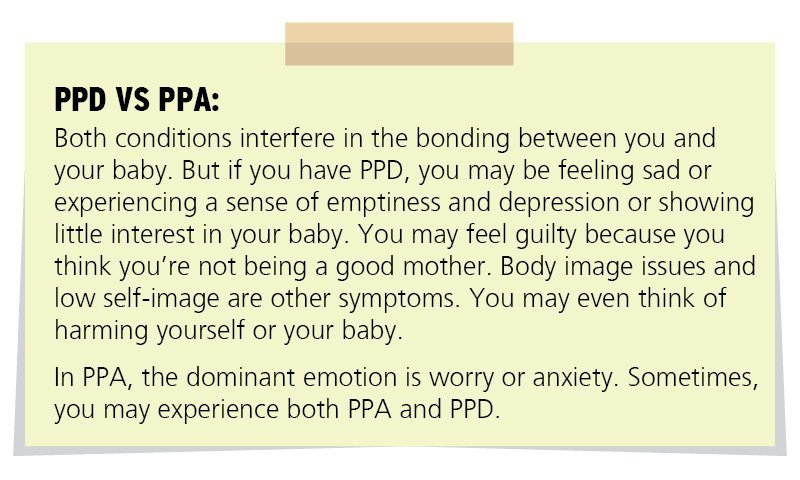
As a new mom, you expect to bask in the joys of motherhood and the extra attention you get from family and friends, not knowing that even after your baby's birth, new kinds of worries may crop up. While you may be familiar with postpartum depression (PPD), you may not be aware of postpartum anxiety (PPA), which is as common as PPD. PPA can be punishing for you and your family, and sometimes, medical intervention may be required.
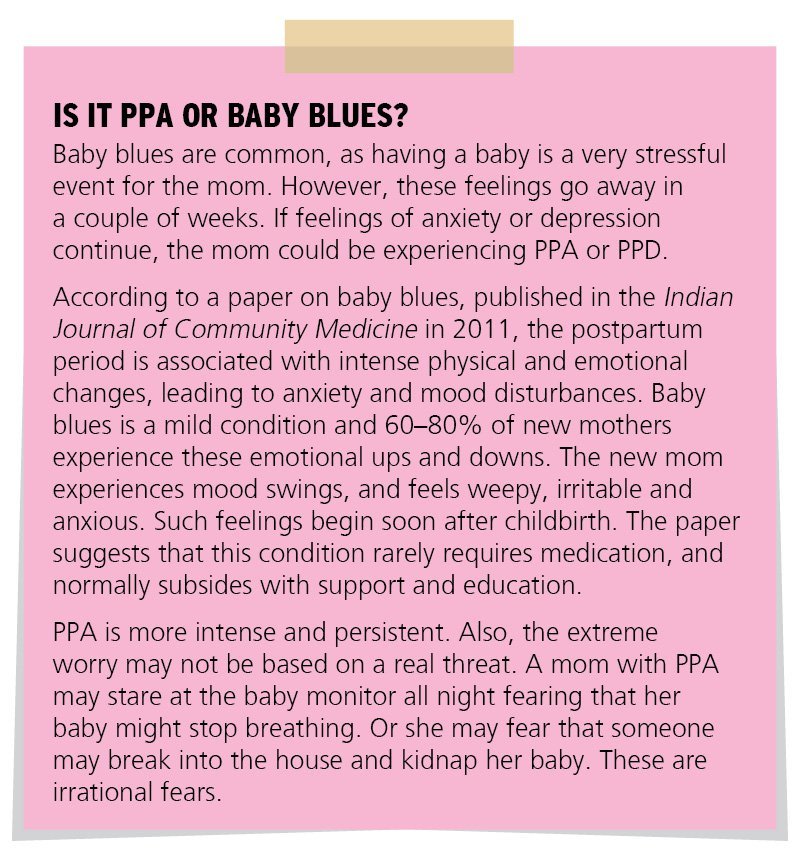
What exactly is PPA? According to the American Pregnancy Association, PPA can be identified by irrational fears and exaggerated and constant worrying. It affects about 10% of new moms.
Symptoms of PPA
PPA could manifest anytime after the birth of the baby till their first birthday. Some women may start feeling more anxious than normal during pregnancy itself. Here are some common symptoms of PPA:
- Excessive or constant worrying: All new parents worry, especially if it's their first child. This is born out of a fierce protective instinct about the baby. You may worry about your baby's health, safety, and development. But if the worry is excessive and constant, and no amount of assurances from other people alleviates it, it could be PPA.
- Loss of sleep: This is very common among parents of newborns, especially nursing moms. But if the sleep is disrupted excessively due to anxiety, it's a sign of PPA. For instance, if you can't get to sleep (even though you're exhausted) or keep waking up though your child is asleep, it could be due to PPA.
- Fears and feelings of dread: Frequent feelings that bad things will happen to your baby are a sign of PPA. One such fear many moms have is that their baby will stop breathing while asleep.
- Other signs: Constant agitation, stress about whether you will be a good parent, racing thoughts, and overthinking that affect decision-making, sleep, and communication, and drastic changes in eating and sleeping patterns, especially lack of restful sleep, are the other symptoms of PPA.
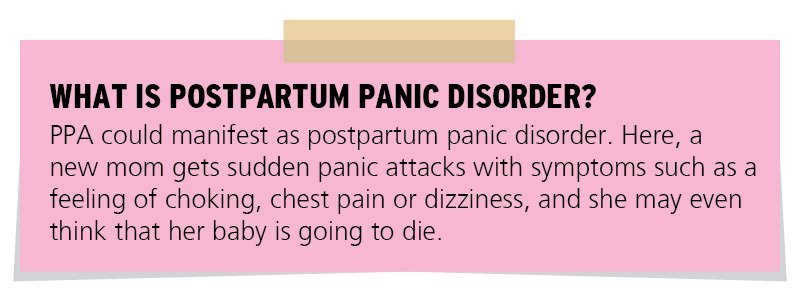
- Physical symptoms: These include fatigue, hyperventilation (breathing very fast), palpitations, dizziness, sweating, nausea or vomiting, chills and/or hot flashes, trembling, or feeling shaky.
Causes and Risk Factors for PPA
A major cause of PPA is the hormonal changes that take place right after delivery. Estrogen and progesterone levels, which have risen sharply during pregnancy, fall drastically within 24 hours of childbirth. This happens to all women, but some women may get more affected by the hormonal changes. Sleep deprivation, adjusting to motherhood, and societal pressures on women to be the perfect mom may also cause PPA.
A new mom may experience PPA if she has:
- A premature baby or a baby with health issues
- Had a miscarriage or lost a child due to stillbirth
- Intense mood swings during her menstrual cycle
- A history of anxiety disorders, depression, obsessive-compulsive disorder (OCD)
- An eating disorder
- A Type A personality or is very sensitive
- Relationship changes, especially with her partner
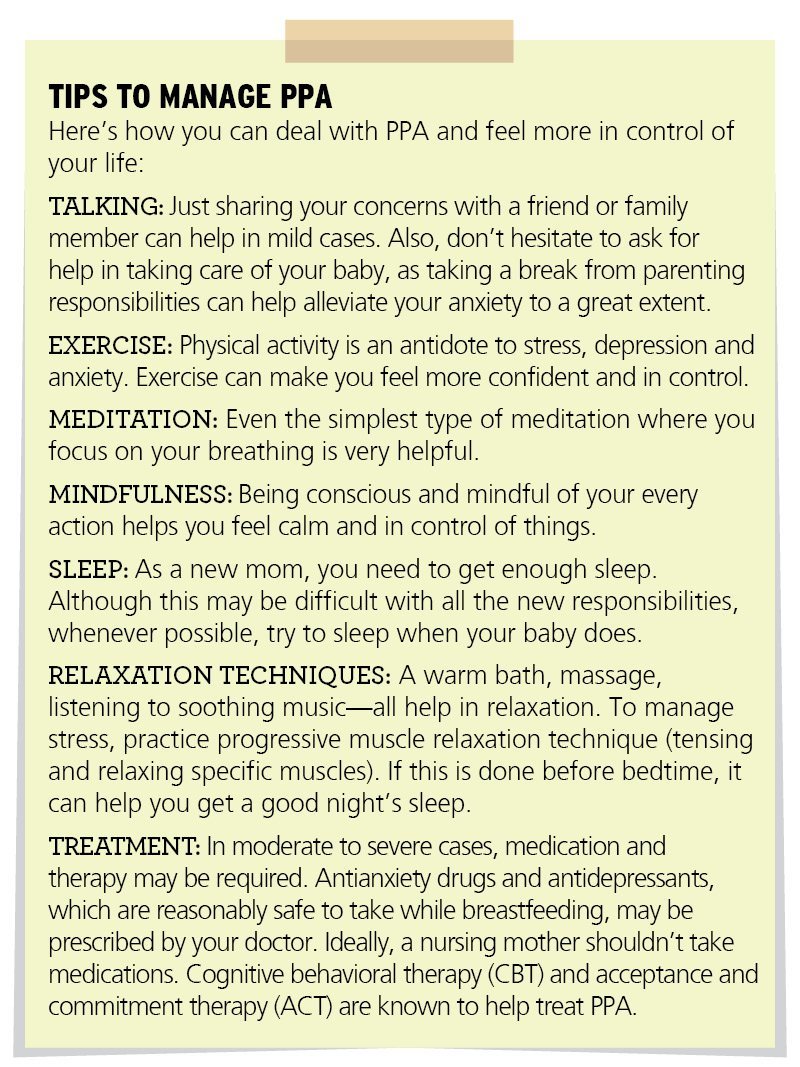
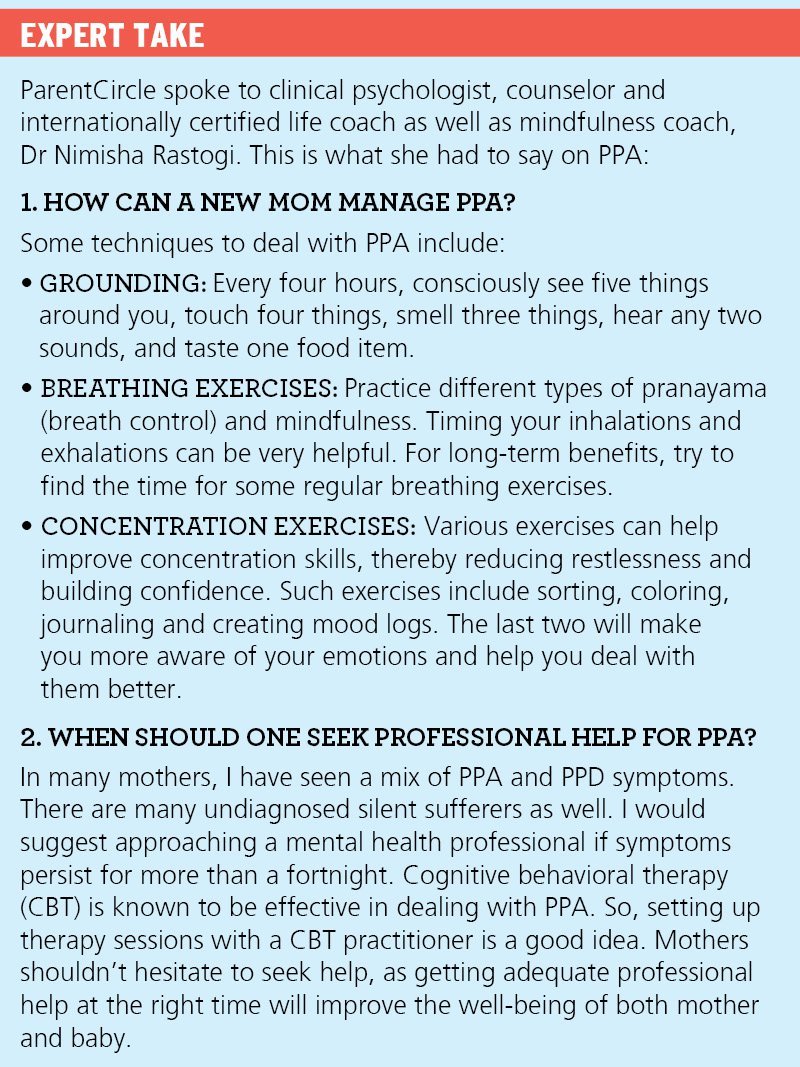
If PPA doesn't go away on its own, you may need medication and counseling. Get professional help if you're unable to cope, and PPA is disrupting your sleep and life in general to a great extent. If it's not treated, PPA can go on indefinitely and sometimes lead to mental illness. But don't let this worry you, with timely diagnosis and treatment, you'll be fine.
This article has been reviewed by Kanchan Rai, an emotional and mental well-being coach. She is the founder of Let Us Talk, New Delhi.
































Comments
Edit
Comment Flag
Cancel Update