
Children Speak On Gender Comparisons: Real Voices From The Raising Boys Campaign
Team ParentCircle
In this Raising Boys campaign article, we listen to honest children's opinions on gender discrimination, as kids aged 8 –16 share how they experience fairness, comparisons, and everyday expectations. A thoughtful read for parents who want to raise boys and girls to respect and appreciate each other’s strengths
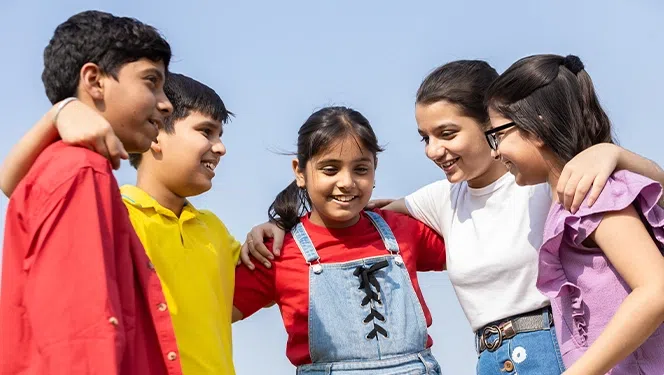
We posed a set of five questions to children in three different age groups. Some responses were confident, some contradictory, and some still searching for words. Even so, it’s clear that they learn gender expectations early, accept them as normal, but slowly begin to question them as they grow.
We present their candid, unfiltered thoughts, shaped by what they see at home, school, and the world around them.
Ages 6–9: Early ideas about play, toys, and fairness
1. Can boys and girls play the same games?
- Yes. - Advija Kulkarni, 8
- No, they cannot. - Satwik Nerella, 8 years
- Yes, boys and girls can play any games together, have fun, learn skills, share teamwork, and enjoy playing equally always. - Ramya, 8
2. Can boys and girls like the same toys?
- No. - Advija Kulkarni, 8
- Yes, boys and girls can like the same toys because toys are for creativity, fun, imagination, and happiness for everyone. - Ramya, 8
- Not many times. - Satwik Nerella, 8
3. Has anyone ever told you, “This is not for you because you are a boy/girl”?
- Yes. - Advija Kulkarni, 8
- Yes, sometimes people say that, but it is okay to enjoy things you like, no matter your gender at all. - Ramya, 8
- No one told me. - Satwik Nerella, 8
4. Do you think boys and girls can both be kind and brave?
- Yes. - Advija Kulkarni, 8
- Yes, of course. - Satwik Nerella, 8
- Yes, boys and girls can both be kind, brave, caring, strong, gentle, and helpful every day in many situations together. - Ramya, 8
5. Should boys and girls get the same chances in school and playtime?
- Yes. - Advija, Satwik, 8
- Yes, boys and girls should get the same chances in school and playtime to learn, grow, and succeed happily equally. - Ramya, 8
Ages 10–13: Becoming aware of comparisons and fairness
1. Do you think boys and girls are treated the same in school?
- Yes. Roshan, 11
- Sometimes boys and girls are treated differently in school, but everyone deserves fairness, respect, and equal opportunities every single day. Adruth Krishna, 10
2. Have you ever felt compared to someone because you are a boy or a girl?
- No, at school, they don't care about which gender you are or who you are. They focus on academics and discipline in their studies. Most girls say that boys are always being said to be the best in academics and sports. – Bhavesh, 10 years
- Yes, comparisons happen, and they can hurt feelings, so it is important to value everyone as unique individuals without labels. - Adruth Krishna, 10
3. Are some games or subjects meant “only for boys” or “only for girls”?
- No, games and subjects are for everyone. Interests depend on choice, talent, practice, and curiosity, not gender stereotype rules. - Adruth Krishna, 10
- No. - Roshan, Karthik Nerella, 11
- No, but many girls think that sports like football or cricket are meant specifically for boys and not for girls. - Bhavesh, 10
4. Do boys and girls feel the same emotions but show them differently?
- Yes, but they may express them differently because of society expectations, culture, norms. - Adruth Krishna
- Yes. For example, PT period gets cancelled, girls might start pleading with the PT teacher but boys might just stay quiet. This shows the same feeling of sadness shared by both boys and girls, but they're showing it in different ways. - Bhavesh, 10
5. How can we be kinder to everyone, no matter if they are a boy or a girl?
- We can listen, respect differences, avoid teasing, stand up for others, and treat everyone kindly and fairly every single day. - Adruth Krishna, 10
- Yes, it's a basic nature from inside either a boy or a girl. - Karthik Nerella, 11
- Being kind to everyone, regardless of gender, involves treating every person with respect, empathy, and fairness based on their individual character rather than gendered assumptions. - Bhavesh, 10
- By not comparing boys with girls. Roshan, 11
Ages 13–18: Questioning expectations, freedom, and identity
1. Do you think boys and girls are expected to behave differently?
- Yes. - Shreeja Kulkarni, 15
- Yes, society often expects boys and girls to behave differently, which can limit freedom and self-expression unfairly, emotionally, and socially sometimes. - Adhbuth Krishna, 15
- Yes, though it is not so prevalent and mostly subtle, there are times when girls aren't always encouraged to try out stuff like sports, etc., as much, and I've also sometimes seen boys facing a lot of mockery just because they were conscious or emotional, and that's not that great. Apoorva Vishwanath, - 15
- No. - Harini, 16; Apuroop Terella, 13
- Honestly, yes. Society often sets invisible rules: boys are told to be “tough” and hide emotions, while girls are expected to be “gentle” and behave properly. But when you look closely, these are just stereotypes, not truths. People should be free to act like themselves, not like a script written by tradition. – Sanvi, 15
2. Have you ever felt pressure to act a certain way because of your gender?
- Yes, I have felt pressure to act a certain way because of my gender. Sometimes I’m told not to talk loudly, not to go out alone, or to “behave like a girl," and this happens to my male friends as well, but not as often. It feels like I have to think more about safety and reputation than boys of my age. - Lasya, 16
- There is often a certain unwritten ‘rule’ that boys are not supposed to cry since they are expected to be strong physically and mentally. However, many of my friends and I sometimes feel the urge to cry due to stress, uncontrolled emotions, getting low marks, etc. However, we often think twice before doing so due to thoughts such as “What will others think?”, or “Will I face mockery from my peers if I cry?”, which compel us to hold our emotions, even though all we need is just some support from peers, teachers, or our family. - Dhruva Teja, 15
- Yes. - Apuroop Terella, 13
3. Do boys and girls get equal freedom at home and in school?
- Home, yes. School, I have seen gender discrimination. - Shreeja Kulkarni, 15
- No, not at all. As far as I've noticed, at home, the freedom to go out or stay out for long is much easily given to guys. Even when girls do go out, they're expected to dress a certain way etc. At school, girls are compelled to abide by higher standards of behavior. As ridiculous as it sounds, guys are let off more easily for something they do than girls. - Apoorva Vishwanath, 15
- No. - Apuroop Terella, 13 years
- Not really. At home, girls often face stricter rules about going out or responsibilities, while boys may get more freedom but also more pressure to “prove themselves.” At school, rules look equal on paper, but attitudes and opportunities can still tilt one way or the other. - Sanvi, 15
4. How does social media affect how boys and girls think about themselves?
- Social media can affect confidence, body image, and behavior by creating comparisons, pressure, and unrealistic expectations for boys, girls, alike. - Adhbuth Krishna, 15 years
- Social media affects how boys and girls think about themselves a lot. Girls feel pressure to look perfect and fair, while boys feel they must look muscular or confident. Such constant comparisons lower self-confidence and make us insecure. - Lasya, 16 years
- Social media leads to negative self-comparisons with filtered images in snapchat and Instagram, which lead them to depression and anxiety. - Harini, 16 years
5. What can young people do to make things fair for everyone?
- Young people can speak up, challenge stereotypes, support equality, educate others, and create inclusive, respectful communities through actions, dialogue, leadership. - Adhbuth Krishna, 15 years
- Young people can speak up and support each other to make things fair. We can challenge stereotypes, treat everyone equally, share responsibilities, and support friends who are treated unfairly. Change takes time, but that doesn't mean we don't work towards it. – Lasya, 16 years
- Nowadays, there is not much problem of gender inequality among young people in the society due to increased awareness and change of perspective in most families. However, in rural regions, this problem still persists. Thus, to make things fair for everyone, irrespective of their gender, we can... Appeal to such conservative elders (if you know any) by stating that girls and boys have equal capabilities and can be just as successful as the other. Dhruva Teja – 15 years
- I don’t know. - Apuroop Terella, 13
- We can start small: share responsibilities equally, call out stereotypes when we see them, and support each other’s individuality. Using social media to promote respect and diversity instead of comparison is another step. Fairness isn’t about big speeches—it’s about everyday actions that show equality matters. “Equality isn’t a gift someone gives us; it’s something we build together, choice by choice.” - Sanvi, 15 years
What these voices reveal about comparisons and expectations
One message stands out clearly. Across all ages, children are absorbing comparisons and gender expectations about who plays better, who behaves better, who gets more freedom, and
who is expected to adjust more.
Children have spoken. The responsibility clearly lies with parents, teachers, and communities to stop comparing boys and girls and instead, celebrate each other’s strengths.
Together, let's move from comparison to connection and from expectation to empathy.
Strengthen your approach to Raising Boys - Read expert insights that help you build empathy, confidence, and character at every stage.



















Comments
Edit
Comment Flag
Cancel Update