
Chandrayaan 3 GK Quiz: Questions and answers about ISRO's mission to the moon
Ashwin Dewan
August 23 will forever be etched in the minds of Indians all over as the date when India created history with Chandrayaan 3. Let us look at some Chandrayaan 3 gk questions and answers related to the mission
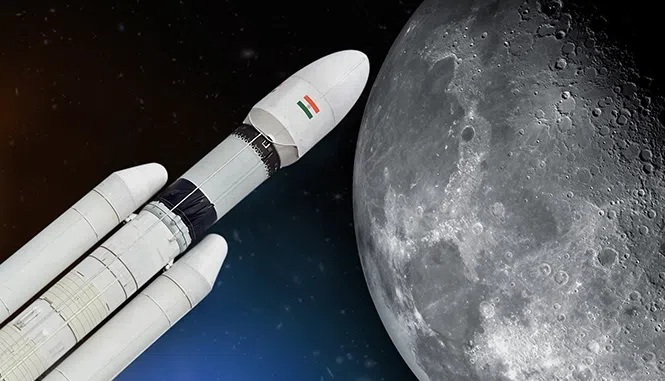
Like the rest of the country, we, at Parent Circle are over the moon … literally! Over the successful landing of India's third lunar mission, Chandrayaan 3 on the unexplored south pole of the moon. This historic soft landing has put India on the elite list of an exclusive club of nations (India being the fourth, along with the United States of America, China, and Russia) to have successfully landed on the moon.
| Note: India may be the fourth country but the first-ever to land on the south pole of the moon. |
As S. Somanath, the Chairman, Indian Space Research Organisation (ISRO) aptly summed up the mission when he said, "India is on the moon."
While India basks in this unprecedented feat and rightly so, let us take a look at some Chandrayaan 3 gk quiz questions and answers related to the mission. Go ahead, read our FAQs, and help your child know more about Chandrayaan 3.
Chandrayaan 3 GK Quiz Questions and Answers
What is Chandrayaan-3?
The third lunar exploration mission under the program of the Indian Space Research Organization (ISRO), Chandrayaan-3 was developed with an aim to display the capability to soft-land safely on the surface of the moon.
When was Chandrayaan 3 launched?
Chandrayaan 3 was successfully launched from the Satish Dhawan Space Centre in Sriharikota, Andhra Pradesh, on July 14, 2023.
When were the first and the second Chandrayaan missions launched?
Chandrayaan-1 was launched on October 22, 2008, while Chandrayaan-2 was launched on July 2019.
How many viewers watched the livestream on YouTube?
Almost 7 million viewers logged into the free video-sharing website to watch the live stream of the Chandrayaan-3 mission.
What does Chandrayaan mean?
The name Chandrayaan means "moon vehicle" in the languages of Hindi and Sanskrit.
What is the design of Chandaryaan-3?
It is a box-like structure with a solar panel on the side and a cylinder on the top.
What scientific instruments are on board Chandrayaan-3?
The instruments onboard India's third lunar mission, Chandrayaan-3, include a seismometer, a Langmuir Probe, a Thermal Probe, a retroreflector, an X-Ray Spectrometer, a Laser-based Spectrometer, and a Spectro-polarimeter.
What is ChaSTE?
ChaSTE stands for Chandra's Surface Thermophysical Experiment. It is the name of Chandrayaan-3 equipment designed to measure surface thermal properties on the moon.
How much did the landing of the spacecraft on the moon cost?
Contrary to popular belief that it must have cost a humongous amount, here is an interesting fact. The third mission in the Chandrayaan series, the Chandrayaan-3 project was developed at an estimated cost of INR 615 crores.
How do space missions work?
Any space mission, for that matter, consists of two parts – the rocket (carrier) and the spacecraft (satellite). The rocket transports the spacecraft into space and self-destroy after transportation while the spacecraft continues to operate.
What is the objective of Chandrayaan-3?
The aim of Chandrayaan-3 is to study the chemical and mineral composition of the lunar surface and, at the same time, to ascertain the composition of elements such as magnesium and aluminum in the soil and rocks present.
In short, gain a better understanding of the Moon's evolution.
What is the total weight of Chandrayaan-3?
The total weight of Chandrayaan-3 is about 3,900 kilograms. The propulsion module equals 2,148 kilograms while the lander module equals 1,753 kilograms.
How is Chandrayaan-3 different from Chandrayaan-2?
As per ISRO, Chandrayaan-2 had a lander, a rover, and an orbiter. Chandrayaan-3 has only a lander and a rover.
Does Chandrayaan-3 have an orbiter, lander, and rover?
As explained in the previous question, Chandrayaan-3 has a lander and a rover.
Name the director of the Chandrayaan-3 mission.
Senior scientist, Ritu Karidhal, is also known as the 'Rocket Woman of India.'
When did Chandrayaan 3 enter lunar orbit?
Chandrayaan 3 entered the lunar orbit on August 5, 2023.
When did the Vikram lander get separated from the propulsion module in Chandrayaan-3?
The Vikram lander got separated from the propulsion module on August 17, 2023.
Name the chairman of ISRO when Chandrayaan 3 launched.
S.Somanath, was the current chairman of ISRO when Chandrayaan 3 was launched.
Who is the Mission Director of ISRO?
Mohanakumar is the mission director of ISRO.
Who is the vehicle director of Chandrayaan 3?
Biju C. Thomas is the vehicle director of the Chandrayaan 3 mission.
Who is the project director of Chandrayaan 3?
P Veeramuthuvel is the project director of Chandrayaan 3.
Who is the woman associate project director of Chandrayaan 3?
K Kalpana is the woman associate project director of Chandrayaan 3.
What is the weight of the Pragyan rover?
The weight of the Pragyan rover is 26 kilograms.
What is the mission life of the rover module of Chandrayaan-3?
1 Lunar Day (14 Earth Days).
What is the name of the authority that assigns the SATCAT number?
United States Space Command.
What were the coordinates of the landing site on the moon on which the Chandrayaan-3 lander was expected to land?
69.367621°S 32.348126°E
How many wheels are there in the Pragyan rover?
The Pragyan rover has 6 wheels.
What is the mission life of the lander module of Chandrayaan-3?
1 Lunar Day (14 Earth Days).
How many throttle-able engines does the Vikram lander have?
The Vikram lander has 4 throttle-able engines.
What is the design of Chandrayaan-3?
A box-like structure with a solar panel on the side with a cylinder on top.
What is the name of the rocket used in Chandrayaan 3?
The name of the rocket is LVM3 M4.
Which is the main rocket engine that was used for Chandrayaan-3?
CE-20 Cryogenic Engine is the main rocket engine.
Which fuel was used in Chandrayaan-3?
The fuel that was used in Chandrayaan 3 was liquid hydrogen and liquid oxygen.
What is the Chandrayaan-3 sleep mode?
After 14 days of lunar research and experiments, Chandrayaan-3's Vikram lander entered sleep mode during the lunar night.
Name some companies that played an active role in Chandrayaan 3.
MTAR Technologies played a crucial role in Chandrayaan-3 by making essential components like engines and booster pumps. Godrej Aerospace contributed by manufacturing key engines and thrusters, such as the L110 for the core stage and the CE20 engine thrust chamber for the upper stage.
What were some of the companies that invested in Chandrayaan-3?
- Launch Pad & Infrastructure: Supported ISRO's space missions with advanced launch facilities.
- Rocket Powerhouse: MTAR Technology's legacy in crafting rocket engines and core pumps for ISRO.
- Lunar Expertise: Crafted payloads for Chandrayaan 3, exploring the moon's mysteries.
- Mission to Mars: Hand in hand with ISRO, developed lander technology and mechanical support equipment for Mars exploration.
Will Chandrayaan-3 return to Earth?
Chandrayaan -3 is not designed to return to the earth. However, the Vikram and Pragyan lander will stay on the lunar surface.
Why is Chandrayaan-3 taking 40 days?
Chandrayaan-3's extended journey to the Moon was due to its efficient fuel usage and a deliberate choice of a slower lunar approach. This cost-effective mission sent the spacecraft on a longer but more economical path by looping it around Earth before heading into deep space.
How is Chandrayaan-3 controlled?
Chandrayaan-3's landing was reliant on pre-programmed computer logic for the crucial 15-minute descent process. The lander's systems were pre-loaded with the necessary instructions for precise control and navigation.
What is the speed of Chandrayaan-3?
1.68 km/s.
Which metals are used in Chandrayaan-3?
The metals used were cobalt base alloys, Nickel base alloys, and Titanium alloys.
How many modules did Chandrayaan-3 contain?
Chandrayaan-3 spacecraft consisted of three modules - the lander module, a propulsion module, and a rover module.
How much distance did Chandrayaan-3 cover?
Chandrayaan-3 journey spanned a distance of 3.84 lakh kilometers all on its own.
Which Russian Spacecraft was expected to land on the moon before Chandrayaan 3 but crashed on 19th August 2023?
Luna 25.
How can one participate in the Chandrayaan 3 Maha quiz?
You can participate in the Chandrayaan Maha quiz by visiting https://isroquiz.mygov.in/.
How can one download the Chandrayaan 3 Maha quiz certificate?
You can download the Chandrayaan 3 Maha quiz certificate by visiting https://www.mygov.in/task/join-chandrayaan-3-mahaquiz-mygov-win-upto-rs-625-lakh/.
How many questions are in the Chandrayaan 3 Maha quiz?
There are 10 questions in the Chandrayaan 3 Maha quiz.
What is the time duration of the Chandrayaan 3 Maha quiz?
The time duration of the Chandrayaan 3 Maha quiz is 300 seconds or 5 minutes.
What is the cash price of the Chandrayaan 3 Maha quiz?
1st price: ₹1,00,000
2nd price : ₹75,000
3rd price : ₹50,000
Next 100: ₹2,000 each
Next 200: ₹1,000 each
August 23, the day on which Chandrayaan-3 landed on the moon will be known as …
National Space Day as declared by Prime Minister Narendra Modi.
What do you mean by launch window?
The term "launch window" refers to the time period in which a particular mission must be launched. Chandrayaan-3, for example, took off at 2:35 p.m.
How many days did Chandrayaan-3 take to reach the moon?
After a successful launch on July 14, 2023, Chandrayaan-3 touched down on the lunar surface on August 23, 2003 making it over 40 days.
What is the name of the lander and rover of Chandrayaan-3?
The lander is named Vikram (after Vikram Sarabhai, the founder of India's space program) and the rover is called Pragyan (a Sanskrit word for wisdom).
What name has been given to the landing spot of Chandrayaan-3?
Shiv Shakti is the name given to the Chandrayaan-3 landing spot
What is the SATCAT No. (Satellite Catalog Number) assigned to Chandrayaan-3?
57320
Which agency is behind the development of the Lander Hazard Detection and Avoidance Camera (LHDAC) used in Chandrayaan – 3?
The Space Applications Centre (SAC) located in Ahmedabad supplied the LHDAC used in Chandrayaan-3.
Welcome Buddy! Why is this welcome message significant?
Chandrayaan-2 welcomed Chandrayaan-3 with this welcome message.
There is an instrument on Chandrayaan-3 that will help determine the possibility of life on the moon? Name it
The name of the instrument is Spectro-polarimetry of HAbitable Planet Earth (SHAPE)
How long can Pragyan stay on the moon?
Pragyan can stay on the moon for approximately 14 Earth days. This is equal to one day on the moon.
There you go. We are sure that you have many doubts cleared with these FAQs that try to cover almost all possible questions related to the successful Chandrayaan-3 mission.
Enhance your child's intelligence with our 50 GK questions and answers that can help boost their General Knowledge Quotient
The Dot Me and My World program for kindergarten children enhances their understanding of science and social studies concepts as they explore and discover their world.





























Comments
Edit
Comment Flag
Cancel Update