
Unique Christmas Traditions From Around The World That You Should Know About
Kerina De Floras
Author
There is a lot more to Christmas than the plum cake and the Christmas tree! Celebrate the festival this year by letting your child learn about these unique Christmas traditions from around the world
- 2.7K
- 1
- 2
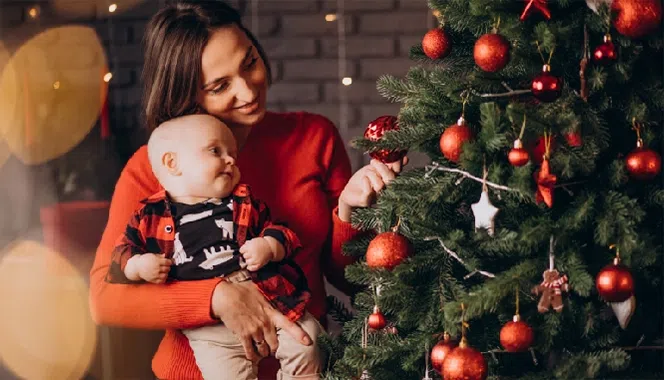
What comes to your mind when you think of Christmas? To many of us in India, it is all about the rich plum cake, wine, Christmas ornaments, midnight service in the church, Santa Claus, carols, firecrackers, and scrumptious desserts. While some of these traditions are followed by people all over the world, there are a few countries that follow unique traditions at this time of year.
Some people do not even celebrate it on December 25! A few Orthodox churches in Russia, Serbia, Jerusalem, Ukraine, and other countries follow the 'Julian' calendar, so they celebrate Christmas on January 7. Other than this, people also follow a variety of traditions on Christmas eve, the day before Christmas.
Want to take a trip around the world and learn more about the traditions and customs followed during this season? Hop on your favorite chair along with your child and grab a cup of hot chocolate as we take you through some of them.
Philippines - The Giant Lantern Festival
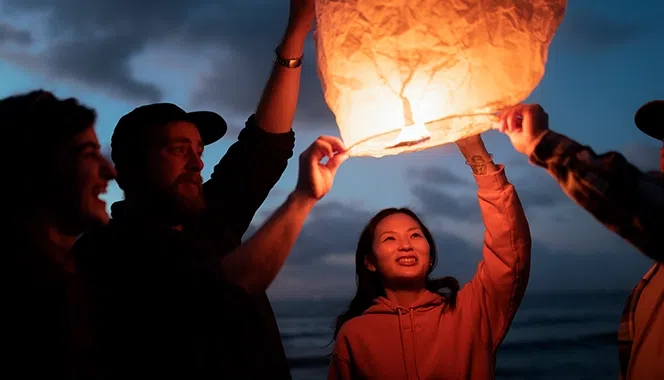
In the Philippines, the Christmas countdown begins at the start of September! This countdown from September to December, in what they call the 'Ber' months, is an important tradition of the Filipinos. An eye-catching tradition in this country is the giant lantern festival celebrated in the city of San Fernando, also known as the Christmas Capital of the Philippines. This festival features giant 'parols' or lanterns, which are believed to represent the Star of Bethlehem. With lanterns about six meters in diameter, you can imagine how lit up the city would be!
Christmas eve is an important part of the celebrations and many people stay up all night up to Christmas Day. In Philippines, Christmas celebrations continue till the First Sunday in January when Epiphany or the Feast of Three Kings is celebrated.
Christmas feast
On Christmas eve, people attend the midnight service in church and indulge in the traditional 'Noche Buena' feast. Hamn (cured pork leg), lechn (spit-roasted pig), quesa de bola (cheese balls), pasta, lumpia (spring rolls) and fruit salad are the main features of the feast.
Italy - The Presepe
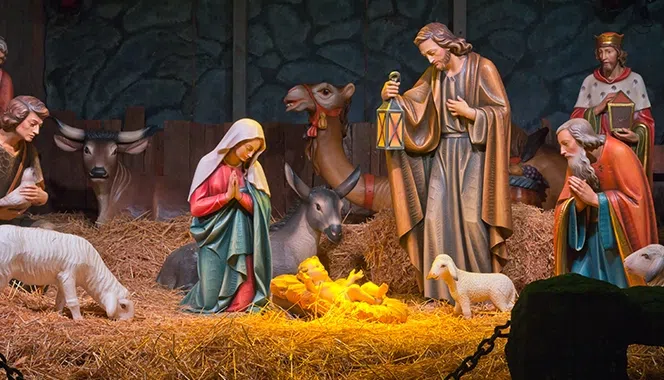
Christmas in Italy is an extravagant affair. A huge Christmas tree is put up and adorned in front of the popular St Peter's cathedral in Vatican City. The midnight service here is held by the Pope, and people throng from all over the world to catch a glimpse of it. In Rome and southern Italy, zampognari or bagpipe players travel from the nearby mountains and play their folklore carols on the streets. None of these, however, can beat Italy's depiction of the nativity scene. Elaborate models of houses, villages, and landscapes along with figurines of people are put up in front of churches, in town halls, and in homes. These intricate works of art are mostly handmade, and the city of Naples has streets devoted to workshops for these figurines.
Christmas feast
While people refrain from eating meat on Christmas eve, the dinner on Christmas day is lavish. Stuffed capon, roast lamb or beef, and pasta in brodo (pasta in broth) are favorites, but a mandatory item on every menu is the sweet panettone - a cake with candied fruit, chocolate, raisins, and nuts.
Venezuela - Roller skating
Christmas is one of a kind in Venezuela, with firecrackers and bells sounding at the crack of dawn to usher people to the service at church, starting on December 16. On December 24, people attend a midnight mass, called 'Miso de Gallo', meaning the rooster's mass in Spanish. It is believed that the service got this name as the rooster was the first to call worshippers to honor newborn Christ. What is unique about these services is how people attend them-they roller skate! Yes, people in the country, especially in the capital city of Caracas, roller skate to the early morning church services, and roads are usually closed to traffic to make it safer for people to skate.
Christmas feast
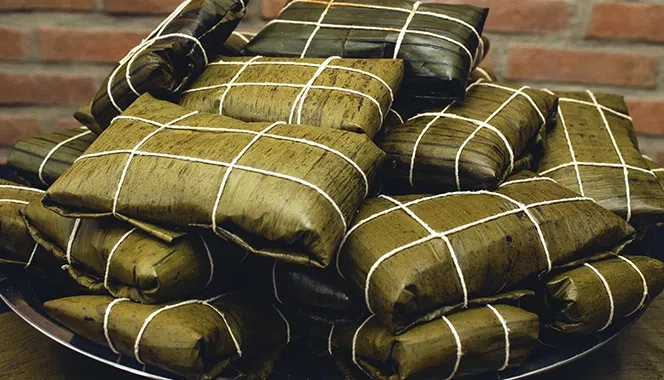
The most important dish in their Spanish Christmas feast is hallacas, also called tamales. These are traditional Venezuelan meat pies with a cornmeal crust, wrapped in banana leaf and steamed. Other typical dishes include pan de jamon, a loaf of bread stuffed with ham and raisins, dulce de colchinito, a dessert made with brown sugar and papaya and ponche crema, a drink made with Venezuelan rum, condensed milk, eggs and sugar.
Japan - Kentucky fried chicken
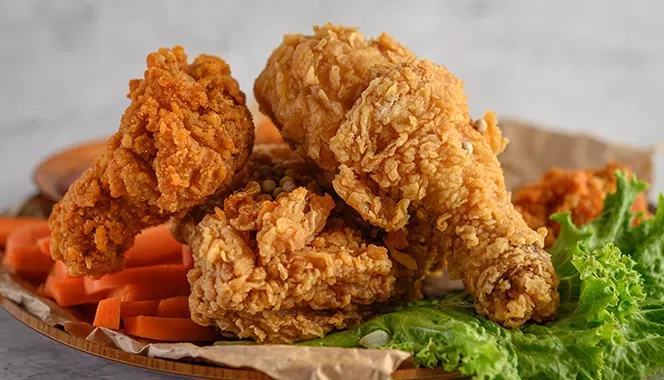
Christmas has been celebrated in Japan only for the last few decades and is considered more a time of joy, rather than a religious celebration. Most of the Western traditions are followed here-couples go out on a date, the towns are decorated and lit up, and Christmas trees adorn the streets. Apart from these, Japan has a very unique Christmas tradition-rather than feasting on traditional glazed ham or roast turkey, the Japanese feast on fried chicken from the popular American fast-food chain, KFC! In the 1970s, when Japan did not have many traditions around Christmas, this fast-food chain introduced a holiday party bucket, asking consumers to eat their fried chicken for Christmas! Today, the Japanese have to pre-order their fried chicken from KFC stores around the country, owing to the huge demand.
Christmas feast
Apart from the fried chicken feast, the Japanese love their Christmas cake too. The Japanese Christmas cake is not the typical fruit cake in other countries. It is called the 'kurisumasu keeki', a light, spongy cake with whipped cream filling and frosting, topped with fresh strawberries.
Sweden - The Yule Goat
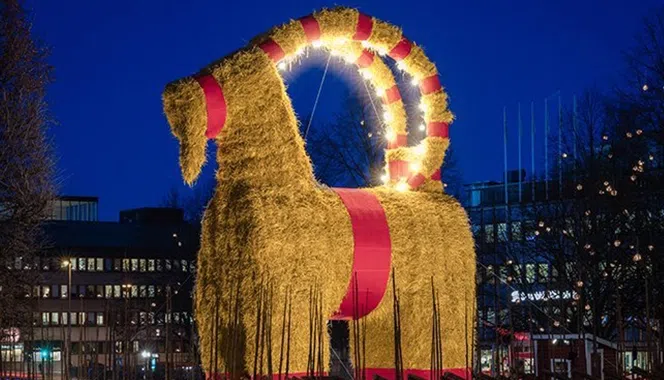
In Sweden, the Christmas season begins with St Lucia Day on December 13. It is a day to commemorate Saint Lucy, a martyr who brought food and aid to Christians in hiding, with a candle-lit wreath to show her the way. Young children dress up like her on this day, in a white robe with a red sash around the waist and a crown. Christmas eve or Julafton is the main day of celebration when people feast on the traditional julbord, a lavish buffet. In Swedish culture, the yule goat is an invisible spirit that looks over them during the season. In fact, the yule goat is also Sweden's most unique Christmas tradition. Since 1966, a huge Yule goat is built at Castle Square in the city of Gvle, every year during the Christmas season. This goat made of straw is almost 13m tall. This tradition however has taken a turn now, with people trying to burn it down for fun. 'Tomte' or the Christmas gnome, is Santa's counterpart in Sweden, and the one who delivers gifts during the season. Now, that's a unique tradition!
Christmas feast
The traditional julbord has five to seven courses, where the first three are usually fish. The fourth is a selection of cold sliced meats, the most important being julskinka, the Christmas ham with mustard. The fifth course has warm dishes like Swedish meatballs (kttbullar) and fried hotdog sausages (prinskorv). The sixth and seventh courses are a cheese plate and a dessert plate. Desserts include rosettes (struvor), dates, figs, saffron buns, different kinds of nuts, and most importantly the risgrynsgrt, which is a rice pudding sprinkled with cinnamon powder.
Australia - Beach, and Barbeque
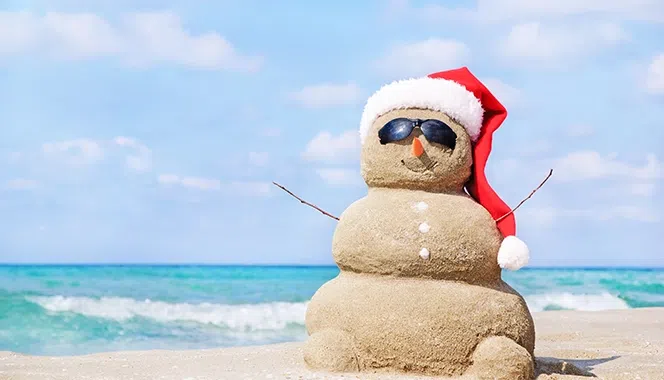
Unlike other countries, Australia celebrates Christmas in the summer! As it is the hottest time of the year on the island, people usually spend time at the beach or going camping. Being summer, even Santa is seen in lighter clothes, suitable for summer. Homes often feature the 'Australian Bush', a native tree with small green leaves and cream-colored flowers. These flowers turn a deep shade of red in a few days, making them popular decorative items. The Aussies also attend a Carols by Candlelight service, where famous Australian bands and singers perform carols. Popular sporting events held on the day after Christmas is the Boxing Day cricket test match and the Sydney to Hobart Yacht Race.
Christmas feast
Traditional Christmas lunches for the Aussies include ham, roast turkey or chicken, salads, and roast vegetables. Christmas crackers (decorations that make a snapping sound when pulled open, and often contain a small gift and a joke) are also pulled before eating. Owing to the weather, people have started opting for cold meats, seafood, and salads, or barbeques on the beach.
Iceland - Yule Lads
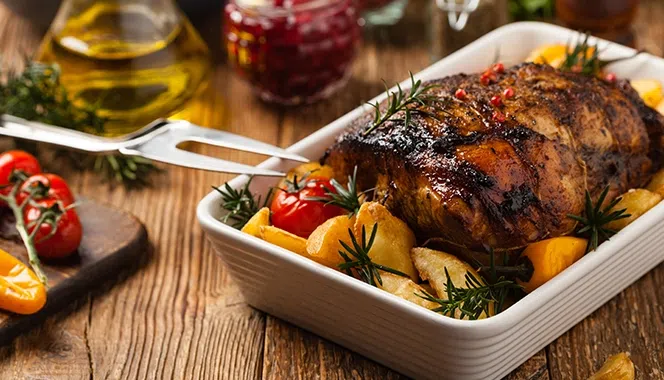
In Iceland, Christmas actually goes on till January 6. Now, wouldn't we all love an extended holiday season? Thirteen days before December 24, little children leave their shoes by the window, believing that 13 Yule lads or jlasveinarnir can leave small gifts in their shoes. The Yule lads are believed to be the sons of two trolls, Grla and Leppali, who live in the mountains. Each of the Yule lads is known for a different kind of mischief, like stealing meat, peeping through windows, slamming doors, and more. Traditionally, they wore Icelandic woolen clothing, but now they wear red and white suits.
On December 24, people attend the church service, usually at 6 p.m. They then return home for a family meal. It is also traditional for people to exchange books as gifts during Christmas and read it with a cup of hot chocolate or jolabland, a fizzy drink of orange soda and brown ale. Thirteen days after that, people light bonfires and put on a show of fireworks to celebrate the new year. This celebration is called Epiphany Day.
Christmas feast
The main meal during Christmas in a traditional family dinner is the hangikjt, a leg of roast lamb, or rjpa, a game bird. An Icelandic specialty is the laufabrau, a flat thin bread made with sheets of dough cut into delicate patterns and fried.
If all that did not make you dream of a magical Christmas, we don't know what will. Soak in the goodness of the season and teach your child about traditions across countries, and ring in the new year with a lot of cheer and joy.






















Comments
Manikandan D Dec 24, 2021
Bharani M Dec 22, 2020
Edit
Comment Flag
Cancel Update