
Exploring A Career In Archaeology For Children: A Complete Guide For Curious Young Minds
Kannalmozhi Kabilan
Does your child like 'digging' out the past? Then, encourage them to pursue a career in archaeology. Here's all you need to know
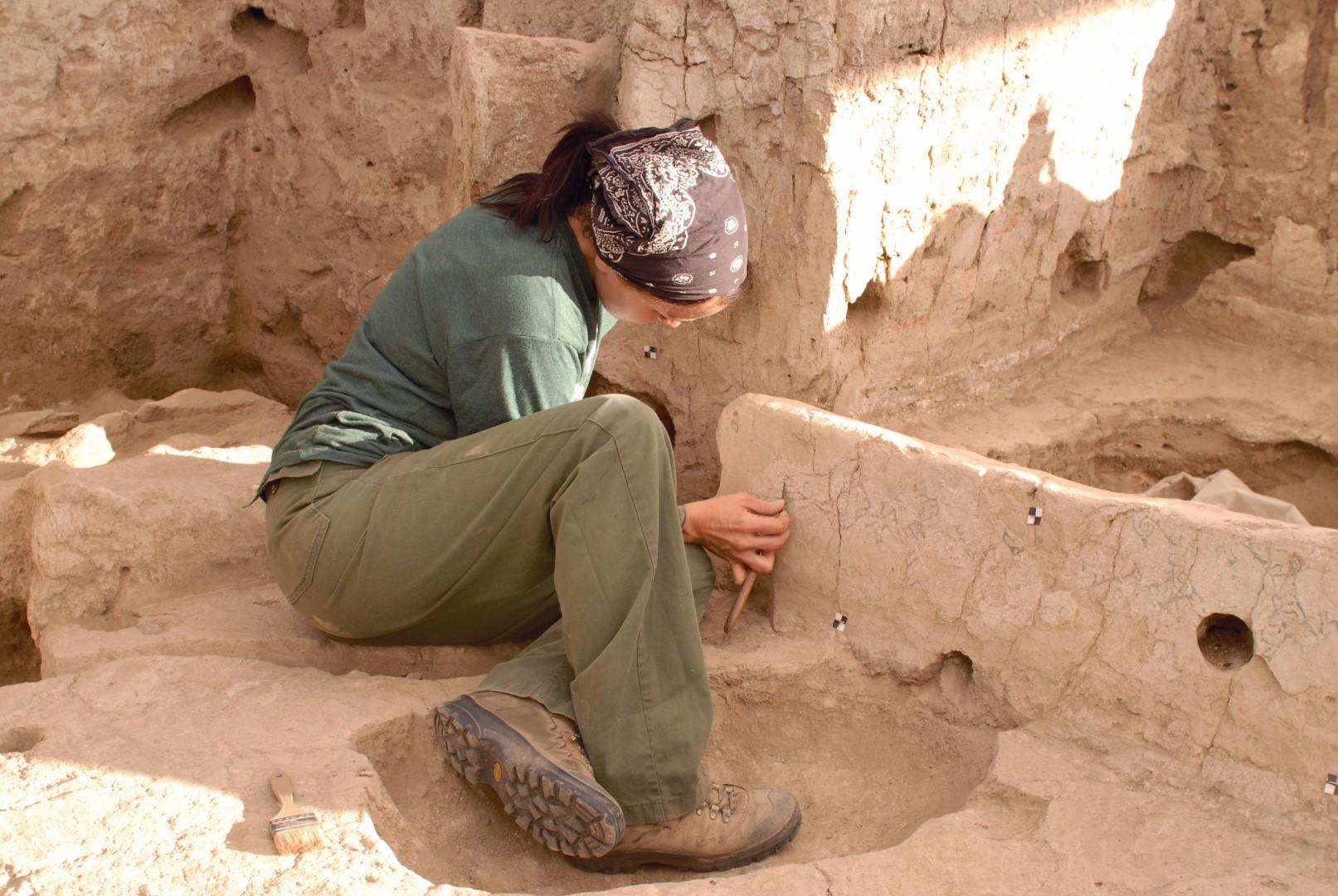
It was archaeology that gave us the first glimpse of the dinosaurs, the first inkling of kings and kingdoms, and the first idea of life as it used to be. It is archaeology that keeps us glued to the 'History Channel'. To your child, archaeology is probably just an Indiana Jones movie. But, perhaps, it could make for an interesting career choice. If you'd like that, here's what you need to know.
A subfield of anthropology, archaeology is the study of the human past through the excavation and analysis of material remains. In the big picture, archaeology is a multidisciplinary study that works closely with other branches of the arts and science like history, ethnology, geography, geology, linguistics, palaeontology, semiology, and many more. Says Bhuvan Vikrama, Superintending Archaeologist, Archaeological Survey of India (ASI), Delhi. "Archaeology is about finding our roots and knowing our culture." In totality, archaeology is also about unearthing civilisations and artefacts that lend credence to civilisations.
Why study archaeology?
To the layman, archaeology is mostly digging up bones and excavating mummies. While digging and excavation are a part of archaeology, what comes after is why it is still necessary and continues to be a fascinating field of study in the modern era. "Archaeology is not mere excavation; it is piecing together our past," says Bhuvan. "Excavation is an important part, but how well we understand what we find, our interpretation, and dissemination of information becomes more important. Understanding the technological, anthropological, and social developments of ancient cultures helps address the issues of the modern world. For example, studying the water harvesting systems of ancient Gujarat and the Harappa Civilisation has been very beneficial for us today," he adds.
Spotting the budding archaeologist
There are no obvious signs that would help you identify the latent potency for archaeology in your child. But the presence of certain complementary qualities could aid you in directing their interests towards the subject.
- Curiosity and inquisitiveness
- The need to know the complete background of everything
- The willingness to discover the new and the old
- The eagerness to not just know, but to understand
- The aptitude to accumulate and analyse information
What to study?
Your child can begin with a basic Bachelor's course in Archaeology or History and follow that up with a Master's in Archaeology or Ancient History. Several universities offer PG and Diploma courses in Archaeology; adding that to the qualifications will certainly help. "The Institute of Archaeology (the academic wing of ASI) offers a specialised diploma course in Archaeology. However, only 15 seats are available every year. Admission is through a country-wide entrance exam and personal interview," says Bhuvan.
Some of the specific courses available in the field are:
Diploma and Postgraduate Diploma Courses:
Diploma in Indian Archaeology
P.G. Diploma in Manuscriptology and Editing
P.G. Diploma in Archival Studies and Museology
Master’s Degree Programs:
M.A. in History, Ancient Indian Culture, and Archaeology
M.A. in Archaeology and Heritage Management
M.A. in Museology and Conservation
M.Sc. in Archaeology
M.Sc. in Archaeological Anthropology
Doctoral Programs:
Ph.D. in Ancient Indian History
Ph.D. in Archaeology
Specialisations in the field
The world of archaeology offers a vast range of sub-fields and offshoots to specialise in. Being a multidisciplinary field of study, archaeology offers the best chance to integrate several subjects of interest.
- Archaeobotany: Also known as Palaeoethnobotany, it is the study of the remains of plants from excavation sites. It helps to better understand the use, modification, and exploitation of the environment of past cultures.
- Archaeometry: It is the application of scientific techniques to archaeological study. It helps date finds, study artefacts, deduce information from organic and inorganic remains, and locate potential excavation sites.
- Archaeozoology: This field of archaeology studies the remains of fauna. It helps get a better picture of the ecology of the period and the relationship between animals and humans over time.
- Battlefield Archaeology: This is the study of a site where a battle had taken place. It seeks to study the ancient conflicts and warfare technologies. It's a relatively modern branch of archaeology.
- Classical Archaeology: The specialised study of the civilisations of Ancient Greece and Ancient Rome is termed classical archaeology. This remains one of the most popular fields in the spectrum.
- Cognitive Archaeology: With the application of semiotics and psychology, cognitive archaeology is an attempt to study the thought systems, symbolic structures, and abstract ideas of ancient cultures.
- Cultural Resource Management: It is the process of conserving and managing the traditional and cultural arts of the society.
- Environmental Archaeology: A subfield of archaeology, it studies the relationship between humans and their environment in the past. It's an attempt to understand the impact of humans on the natural world and takes the help of the fauna, flora, and the landscape of the region to understand the relationship.
- Ethno Archaeology: It is the study of people and cultures of the past and is performed by reconstructing the traditions of the society. It also helps understand the materials of the past world, how they were made, and for what purpose.
- Experimental Archaeology: This is the practical wing of archaeology, which helps test archaeological hypotheses through elaborate reconstruction of ancient societies.
- Geoarchaeology: Through the application of geography, geology, and other earth sciences (nature of soil sediments, rock structure, etc), geoarchaeology studies the excavation site to add to the archaeological information.
- Marine Archaeology: It studies the relationship between humans and the surrounding water bodies. It uses the remains found in and around water bodies, wrecks, sites on the shore, goods believed to have been transported by ship, and more to create a better understanding of human interaction in the past.
- Prehistoric Archaeology: It is a study of life before historic records. It relies heavily on excavation and on-site discoveries.
- Urban Archaeology: It is the study of materials of ancient towns and cities that had a long-standing human habitation.
An education in archaeology need not limit your job opportunities to the field. You could use your knowledge in archaeology to enter several associated fields of expertise. A career in heritage tourism, journalism, civil services, etc., are viable options too.
Endless endeavours to explore
Considering different fields of specialisation, archaeology offers a vast range of job opportunities. In India, ASI is the largest employer of archaeologists. The organisation is involved in several archaeological fields including excavation, conservation, epigraphical studies, museum management, antiquity collection, underwater archaeology, horticulture, and many more. Union Public Service Commission or State Public Service Commissions are the routes to getting an entry to a position in the organisation. Museums are a good place for an archaeology graduate. Teaching at universities is also an option for anyone with a postgraduate degree in the field. Research and paid fellowships are also promising career paths.
Building a career
A sound education backed by great bouts of energetic passion is important to build a worthy career in the field of archaeology.
Problem-solving coupled with logical and analytical thinking are some of the most valued skills in the field. Good communication skills go a long way in ensuring one's growth. This is one of the fields where patience is as vital as persistence. Says Bhuvan, "Knowledge of Sanskrit or any ancient language will come in handy. Being technologically savvy is an asset too."
Despite being a study of the past and all things ancient, archaeology is a field that's constantly evolving and keeping pace with modern times. It's sure to be a promising area of growth and excellence for your child. Archaeology is the closest we've got to time-travel; a thousand years from now, it will be the best purpose for our accumulated possessions. In many ways, archaeology is more than just a career choice; it's a philosophical undertaking, a poetic endeavour. So, come decision time, be sure to give this oldie a chance.
Where to study?
The Institute of Archaeology is the mother of all universities for studies in Archaeology. However, nearly 44 colleges in India provide a course in Archaeology with multiple specialisations. Some of the best universities for this stream of study are:
- Delhi Institute of Heritage Research and Management, New Delhi
- Department of Ancient Indian History, Culture and Archaeology, A P S University, Madhya Pradesh
- Indira Gandhi National Tribal University, Madhya Pradesh
- Institute of Rajasthan Studies, Rajasthan
In terms of global options, here are the top universities for Archaeological studies:
- University of Cambridge, UK
- University of Arizona, USA
- Harvard University, USA
- University of Michigan, USA
- University of California-Berkeley, USA
- Brown University, USA
- Boston University, USA
- Yale University, USA
- Columbia University, USA
- University of Sheffield, UK






























Comments
Edit
Comment Flag
Cancel Update