
Let’s Make A Mess: Meaning, Benefits, Activities And More About Messy Play
Sidhika Goenka
If you’ve ever smiled at your child’s messy hands and worried about the clean-up too, this warm, parent-friendly guide from an expert explains what messy play really means, the benefits of sensory play for young children, and simple, everyday activities that help build your child’s creativity, confidence, and early learning skills
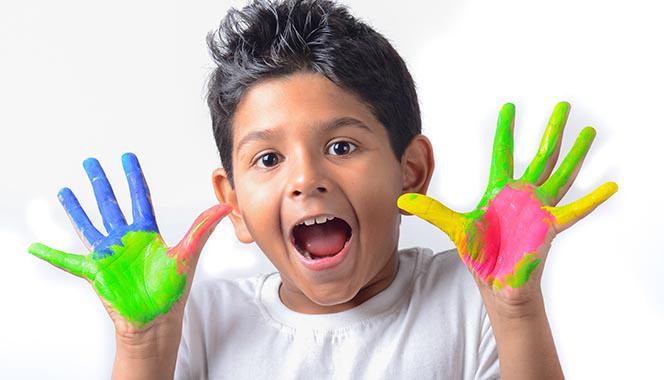
Let’s make a mess: A parent’s journey with messy play
Excuse the mess; the children are making memories!”
This simple quote, hanging on a door in my house, is a continuous source of inspiration for me in my parenting journey!
Honestly, I never knew that a big part of parenting is cleaning up your child’s mess. And never did I expect to be okay with a mess, to embrace it and even enjoy it. When I had my baby, I expected the mess but didn’t know how to deal with it. Most often, I was a tired mom, running behind an active toddler and trying to clean up his mess. To make things worse, I didn’t have any household help.
Every time I gave my 2-year-old puffed rice, I would see him crunching it between his fingers and playing with it. The quote hanging on my door was a constant reminder that mess was essential for my son’s growth, and that young learners make a mess. Despite knowing this, I would frown, my mind racing with thoughts like "Who’s going to clean it up?" Messy play always ended in temper tantrums, power struggles, and crying spells!
My toddler loves unrolling toilet paper and wrapping himself with it, or making little balls and running to flush them down the toilet! Instead of getting upset, I try to focus on the benefits of such messy play. This activity helps him understand that he can make balls of toilet paper and that they can be flushed. And the best thing is, this kind of play helps him burn off energy!
Also, my older children still seem to enjoy the messy play. My 4-year-old squishes thermocol to make 'snow.' My 7-year-old still loves ripping the newspaper into small pieces and showering it on us to make us feel special.
Seeing my children having great fun gave me a sudden insight: Why not make a mess together and teach them to clean up after play?
I created a messy corner in my house, which would be the most fun place for my children. They now know where their “laboratory” is, and they allow themselves to go berserk once in a while with paints, clay, sand, and even mud! This place stocks everything, ranging from colored rice, slime, shaving foam, toothpaste, kinetic sand, and play-dough to trays, utensils, pots, pans, whisks, and scoopers.
I don’t stop them anymore. I join them once in a while and enjoy dipping my feet in the mud or my freshly manicured nails into the paint because it awakens my senses; it makes me distinguish between gooey, gloopy, and lumpy!
The child within me feels alive, my imagination soars, and I create what I feel. I have also created a sensory table for my children, where they can bring leaves, mud, soil, water, or flour and dunk their hands and feet into it.
What is messy play?Messy play is any hands-on activity that allows children to explore different textures and materials using their senses. Activities such as playing with sand, water, paint, dough, mud, or cooked pasta encourage creativity, curiosity, and learning through exploration. |
How children experience messy play differently from adults
A child’s brain functions differently from ours. When we look at a pile of leaves in our garden, our first thought is to rake them up. But your child’s first thought is how they can jump into that pile of leaves and scatter it all over themselves and the garden.
What counts as messy play
We all know that children love to eat by themselves and spill their food on the table and the floor! They start experimenting with food, making concoctions of different things on their plate. As parents, we often say, “Don’t play with food.” But for a 3-year-old, this kind of messy play is about exploring what’s on their plate through their senses.
Any activity involving toys, food, or other materials that makes your child, or the play area, dirty is considered messy play. During messy play, children use all their senses in their exploration and often manipulate materials with their hands. For example, when your child is mixing rice and curry on a high chair tray or playing with paints, lentils, buttons, or sand, it is messy play.
Why messy play is important for young children
Children love getting messy, from jumping in muddy puddles and squishing jelly through their hands to smearing lotion or food all over their faces! Messy play helps your child explore the world around them and be more curious. Needless to say, it’s also great fun for your little child!
Developmental psychologist Dr Kathy Hirsh-Pasek's research shows that children learn best when they actively explore, experiment, and play. Hands-on experiences such as messy play encourage curiosity, flexible thinking, and deeper learning.
The American Academy of Pediatrics highlights that play is essential for healthy brain development and helps children build language, social, emotional, and problem-solving skills.
Why experts recommend messy play
Jean Piaget, the Swiss psychologist, believed in discovery learning, which means that children learn best through “doing and actively exploring.”
Improves problem-solving and thinking skills
According to Piaget, problem-solving skills cannot be taught. They must be discovered. So, messy play is one of the best ways to experiment and find solutions.
Benefits of messy play for children
While squeezing dough or scooping up grains, children learn to use the muscles in their fingers, wrists, arms, toes, and shoulders to make small movements.
Builds fine and gross motor skills
When children jump in puddles, throw fistfuls of sand, or build clay sculptures, they use the larger muscles in their arms and legs to make bigger movements, which support balance, coordination, and strength.
Strengthens sensory awareness and curiosity
During messy play, children explore their environment through their senses. This enhances their senses of smell, touch, and taste. For example, you can give your child a small bowl of brightly colored rice. Allow your child to touch the loose grains against their skin, see the vivid colors as they mix, or hear the sound of grains sprinkled over a plastic container.
When playing with sand, clay, or water, children learn about ratios to make the mixture moldable.
Playing with ice and water can teach children about cause and effect. And squishy bags are perfect for sensory play. Put some gel or paint into a zip-lock bag and let your child squish or press the bag for a sensory experience.
Supports balance, focus, and self-control
Pouring water from one container to another helps children focus on a task and improves their control and balance.
Builds confidence, language, and self-expression
Sensory play offers children the opportunity to express themselves without rules, so they feel safe experimenting and creating.
Messy play supports language development. Messy play encourages children to use new words to describe textures, colours, shapes, and actions, thus helping them build vocabulary and communication skills. When children see the gooey slime falling from their hands or when they feel the colored rice grains in their fists, they’ll make plenty of sounds to express their joy and surprise.
Encourages independence and emotional regulation
Children learn to spend hours alone just with slime or sand, role-playing, and creating stories. Messy play can also have a calming effect and help children regulate their emotions. The feeling of putting their hand through a bucket of rice can be calming.
How to plan for messy play at home
With some guidelines, messy play can be a priceless experience for your child and a great bonding experience, too.
To encourage messy play, set aside some time and a designated area (high chair or a “messy corner”) where your child can get messy.
Safety and supervision guidelines for messy play
- Choose non-toxic play materials, and check for choking hazards.
- Supervise your child’s play at all times.
- Make sure they wear aprons or other mess-friendly clothes.
Creating an easy clean-up routine
- Establish a clean-up routine. Make it clear that as soon as play is over, your child has to help you with the clean-up by putting away their toys or washing the paintbrushes. Tell them that toys should be off the floor and the messy corner should be cleaned.
- If your child wants to include Lego blocks and small things like beads in their messy play, spread a small cloth on the floor and let them play on it. Once play is over, they can pick up the cloth, pour the contents into a box, and clean up!
Organising messy play materials
Categorize sensory play toys and keep them in boxes. Keep certain items (e.g., paper, scissors, glue, paints, and crayons) together in the same container. Keep boxes of varying sizes to accommodate toys of different sizes.
Three simple messy play ideas for daily routines
- When you’re cooking in the kitchen, give your child some dough. Let them mold it into different shapes.
- As you’re doing the laundry, give your child some detergent to make bubbles in the water.
- In the shower, take a bucket of water and put drops of food coloring in it. Show your child how the color of the water changes. You can add different colors to show how they mix and create new colors.
Six easy messy play activities for preschoolers
1. Shaving foam and toy tracks
Give them a tray and squirt some shaving foam on it. You can add some food coloring and let them drive their toy trucks and cars through the foamy tracks.
2. Homemade slime and number play
Make homemade slime with water, glue, and detergent, and form numbers.
3. Play-dough and mirror symmetry
Place a mirror on the table and let your child make things with play-dough. This will help them explore the world of symmetry, and they’ll be filled with wonder when their creations appear to double their height!
4. Magic potion sensory play
Let your child make their magic potion with soap, food dyes, water, and lotion. Use this activity for conversation and ask questions such as “What would you use the magic spell for?” and “What would you want to have?”
5. Snow tray and winter animals
Children love playing with snow. Use snow powder in a tray to create Antarctica and teach them about winter animals, hibernation, and the winter season.
6. Cornflour slime for solid and liquid concepts
Make slime to help your child learn about concepts such as solid and liquid. You will need:
- 2 cups of cornflour
- 1 cup of water
- 2 drops of food coloring
- A large container
While mixing the ingredients, let your child explore the texture and talk about how it feels—sticky, slimy, cold, or powdery.
A gentle reminder for parents about messy play
When I see my toddler playing with spaghetti and wrapping it around his hand, rather than putting it in his mouth, I am sometimes tempted to react. I want to warn him about the mess that he is making. It takes a lot of patience and control to calm myself down, observe him immersed in their play, and let the learning happen. My child is a happy and messy baby, and I become a happy spectator! Why messy play is a powerful parenting tool
Messy play is a great way to help your child explore, experiment, create, and learn. Try to let go of perfection, be prepared and willing to allow messy play. The 'controlled mess' is a useful parenting tool that provides a win-win for you and your child!
What you can do right away
- Create a corner for messy play and keep some paints, flour, sand, and rice in it.
- Give your child some homemade clay, and let them make shapes with it and tell you a story.
- Give your child a tray of sand and let them trace letters or numbers on it. Place a newspaper underneath the tray for easier clean-up.
- Make some ice paints and watch your child paint with melting colors.
Sidhika Goenka is a strength-focused psychologist, parenting expert, happiness coach, educator, and professional storyteller. She works closely with children and families, helping them build confidence, emotional wellbeing, and positive parent-child relationships through play-based learning and practical parenting strategies.
Trusted sources:
- Jean Piaget – Learning through exploration.
- Dr Kathy Hirsh-Pasek – Play-based learning and creativity.
- Harvard Center on the Developing Child – Executive function and brain development.
- National Curriculum Framework for the Foundational Stage (NCF-FS 2022) – Indian context supporting play-based, experiential learning.
This article was featured in the March 1, 2026, edition of The Free Press Journal
Last updated on: February 06, 2026
The Dot Me and My World program for pre-primary children enables their cognitive and scientific thinking skills and higher order thinking abilities. The program also enhances their sensory development through stimulating learning experiences.































Comments
Edit
Comment Flag
Cancel Update