
How To Encourage Curiosity In Children: 8 Simple Ways To Make Learning Fun
Chitra Satyavasan
Curiosity encourages children to explore, ask questions, and discover the world. Here are eight simple ways parents can nurture their child's natural curiosity

Lewis Caroll's most fantastical gift to children, 'Alice's Adventures in Wonderland' begins with a bored Alice spotting a White Rabbit muttering how late he is.
This strange sight of a talking rabbit is nothing compared to what follows: the rabbit actually took a watch out of its waistcoat pocket, looked at it, then hurried on... Alice started to her feet, for it flashed across her mind that she had never before seen a rabbit with either a waistcoat-pocket, or a watch to take out of it. Burning with curiosity, she ran after the rabbit across the field and was just in time to see it pop down a large rabbit-hole under the hedge.
In a moment Alice went down after it, never once considering how in the world she would get out again.
Forget Alice. If we encountered a talking rabbit on the road on our way to work, wouldn't the risk-taking, adventurous ones follow it, led by our curiosity?
That is a classic example of what curiosity can do to children: give a child a puzzle, or an unusual piece of information, and they may not be satisfied until the mystery makes perfect sense. The thrill of exploration and discovery can absorb children, while they may forget their immediate surroundings.
We are all born scientists, as we are all born curious. The world is an endless source of wonder to your child: Where does the sun disappear at night? Why are some oceans blue, and some green? How do bridges bear so much weight?
Therefore, curiosity may well be another word for natural inquiry.
What propels curiosity?
"Curiosity is a search, a hunger for information, especially when things don't fall into a pattern. It can answer a child's how, what, when, where, and why questions. Children want to know why something is happening, or they may seek factual information like the height of Mt Everest, or get to the heart of how things actually work. When a child wants to 'know' on their own, learning becomes thrilling," says Sriram Naganathan, founder of Ignite Minds, an education service firm based in Chennai.
'Curiouser and curiouser'
It's curious, but curiosity is not easy to measure.
"For example, curiosity has been measured by the number of questions a child asks, or whether or not a child engages in specific exploratory behavior, or whether or not he has a preference for uncertainty. I will not say that any of these are 'the' way to measure curiosity, but each is a way of looking at it from a specific viewpoint," says Jamie Jirout, Ph.D., a researcher at the Department of Psychology, Temple University, Philadelphia.
You may have noticed how a baby tugs at the gold chain glittering around your neck. Researcher Jamie Jirout continues to study children's curiosity and questions. She co-authored a 2024 review on curiosity across childhood and different contexts.
"I believe that all children are naturally curious and that some children are more curious than others... Curiosity is both motivated by individual differences and by children's environment," she says.
The exploring toddler
Uma Shankar, Director of the Centre for Montessori Training, Chennai, is amazed by preschoolers' curiosity and believes children are born explorers.
"If they see any object, they need to put it in their mouth to learn about it. They want to feel, touch, and taste objects they can hold, and enjoy sensory experiences. Just open your bag in front of your child, and they will walk up to you, peek into it, and take out the contents one by one!" says Uma with a smile. Note: Young children often explore through their senses, including touching, handling, and mouthing objects. To ensure safety, parents and caregivers must keep small objects out of reach of babies and toddlers.
Uma wants parents to answer children's questions, keeping their age in mind.
"Once a mother told me how her son wanted to know where he came from. She wondered how to answer, so she asked what had aroused his curiosity. To this, her son replied that his friend had come from Chennai and he wanted to know where he came from!" says Uma.
Why curiosity is important for children
It is best to forget that adage about how curiosity killed the cat. Moreover, it probably applies only to those prowling felines. For children, curiosity is a boon that ignites the creative spark. Though your child's umpteen questions may annoy, parents admit curiosity is desirable.
"While there is a generally held and intuitive belief that curiosity is important, there isn't much empirical support for it, though I think curiosity is important. I have found curiosity to be related to children's question-asking, and both curiosity and question-asking to be related to children's ability to deal with uncertainty in the world and find effective ways of resolving that uncertainty." - Jamie Jirout.
Curiosity is also a desirable trait in adults. Innovation in the workplace or among entrepreneurs often begins with curiosity.
Does curiosity decline with age?
Not necessarily. How curiosity is expressed can change as children grow, and their interests and opportunities for exploration may vary. However, it doesn't necessarily mean that they become less curious.
Curiosity is also a desirable trait in adults. Yet, many adults seem to lose the childlike wonder with which they once viewed the world. Otherwise, why do so many self-help and management books encourage us to rediscover our inner child and look at the world with wonder and fresh eyes?
As chemist Carlo Parravano, then Chair of the Division of Natural Sciences at SUNY Purchase, observed in the New York Times’ Education Life supplement in 1990:
"From the first ball they send flying, to watching the ant that is carrying a crumb, children use science's tools - enthusiasm, hypotheses, tests, conclusions-to uncover the world's mysteries. But somehow students seem to lose what once came to them naturally."
What kills curiosity?
"Fear of adult or parent disapproval can be another reason," says Uma. "Children are constantly thinking. Sometimes they choose to share their curiosity with the adults, while at other times they don't, fearing parental disapproval."
"It is hard for children to be curious if they don't feel safe exploring and asking questions. At the same time, children must also face some uncertainty and learn to be comfortable with that uncertainty, while learning how to resolve it." - Jamie Jirout.
Therefore, curiosity must be encouraged throughout childhood and adolescence to ingrain it in the adult psyche.
Promoting and preserving curiosity in children
Children need to feel safe and comfortable as they explore and encounter unfamiliar or puzzling things, as these experiences can spark their curiosity.
"There are individual differences in children's interests. Children may be more curious about subjects they are interested in, and will probably try to get information in various ways to explore those subjects further. They may read books, visit museums, talk to content experts, and search the Internet. They are most curious when they are challenged with a problem or question. But they will act further or explore further only if they are in the comfort zone." - Jamie Jirout.
Uma shares: "Once my then 8-year-old grandson asked his father, 'Appa, you tell me that when you were growing up, there was no TV or computer. What will I get to tell my children?' This shows how he is already imagining the future! We assured him that new technologies will be developed by the time he is a father and that he can tell his son that these things did not exist when he was a child!"
Sriram adds: "If you think that the child is feeling too shy to ask questions, you can voice these questions aloud to preserve the child's innate curiosity.
Suppose you visit Mahabalipuram or the Ellora caves with your child. After admiring the beautiful architecture that has withstood the ravages of time, you can ask your child: "There was no electricity or sophisticated engineering tools some 1,600 years back when these grand structures were carved. How did the craftsmen transport these stones and take measurements to build them? What was it like living in Mahabalipuram in ancient times?"
This way, you can embark on a learning journey together. It is natural that when you both imagine together, your child will truly enjoy learning. But he advises against overloading your child with excess information.
8 ways to keep curiosity alive
Uma Shankar, Sriram N, Jamie Jurot, and Dr Perry suggest tips to nurture your child's curiosity:
1. Encourage your child's interests: You can begin by asking your child to find out which is the oldest object in your house. If it turns out to be a cupboard, ask where it came from, who brought it into the house, and the like. This way, they will discover a story.
2. Answer questions with enthusiasm: Respond to your child's questions thoughtfully. If you are not sure of the answers, find them in books, from experts, or by researching the internet. Help them feel comfortable not knowing something, and also help them realize the excitement of resolving uncertainty.
3. Redirect interests: If your child enjoys playing with water, instead of saying 'Don't,' give her some water and containers, and allow her to play in an area that can be messed up. Show her acceptable ways of learning.
4. Ensure a safe environment: Safety should be your prime concern when children are exploring their environment. Use socket covers or other appropriate child-safety measures. Keep medicines, cleaners, sharp objects, and hot surfaces out of a young child's reach. Supervise children around water.
5. Give children stability: Young children thrive in calm, predictable environments, with regular mealtimes and bedtime routines. Since they cannot yet tell time, familiar routines help them understand what to expect. According to a resource from Penn State's Better Kid Care programme, drawing on the work of Dr Bruce Perry, stress can reduce children's opportunities for play and exploration. Children who experience abuse, neglect, violence, natural disasters or war may find it harder to feel safe enough to explore. A stable, supportive environment can help them regain that sense of security.
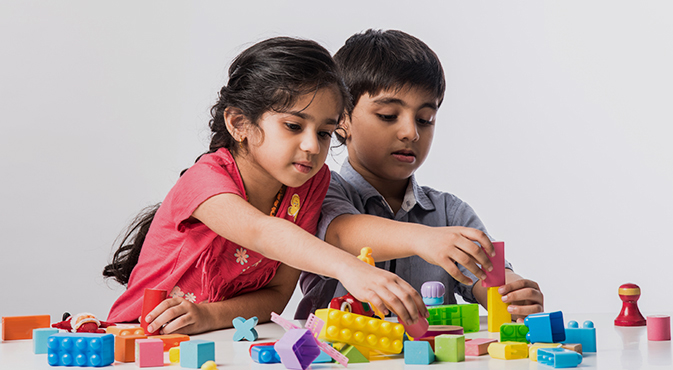
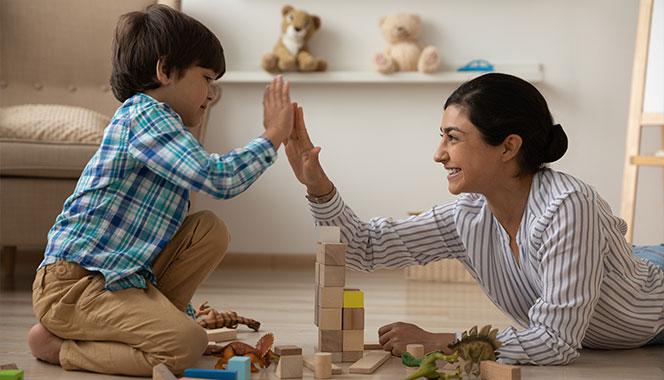
6. Choose play materials intelligently: Though video game consoles may be a rage, kids need play materials they can manipulate. Blocks, boxes, puzzles, water, and art materials can be an immense source of fun and learning for your child.
7. Allow children to collect things. Encourage children to collect items that interest them, such as seashells, miniature cars, sports-related items, or pebbles.
8. Provide them with tools for exploration: Give them magnets, a bucket, a magnifying glass, measuring tape, sand, clay, water, and measuring cups for their investigations.
Curiosity is a child tinkering with questions: How does a mobile phone work? What binding agent can we use when baking an eggless cake? So, the next time your child asks, "Why doesn't it snow in Chennai?" perhaps you can look up different climates and regions and discover something new together!
Chitra Satyavasan is a freelance writer in Chennai. This article has been validated by ParentCircle.
Need more information? Trusted sources:
- Jamie Jirout, Natalie S. Evans and Lisa K. Son (2024) – Curiosity in children across ages and contexts.
Nature Reviews Psychology – Curiosity in children across ages and contexts.
Yuyan Xu et al. (2023) – Childhood unpredictability and the development of exploration.Proceedings of the National Academy of Sciences.
Last updated on: November 18, 2026


























Comments
Edit
Comment Flag
Cancel Update