
Adoption Readiness In India: Emotional, Legal And Financial Preparation Every Parent Needs
Kerina De Floras Felix
author parentcircle author parentcircle author parentcircle author parentcircle author parentcircle author parentcircle author parentcircle author parentcircle author parentcircle author parentcircle author parentcircle author parentcircle
Adoption begins in the heart long before it becomes a legal process. This article on adoption readiness in India blends a real parent’s journey with expert guidance to help families reflect deeply and ask the most important question: Are you ready to adopt a child?

Adoption begins with love, but readiness is what makes the journey steady. With practical advice, you can move from "I hope we can" to "We're ready!"
Adoption in India today: What has changed for families
Adoption in India has undergone a quiet but profound transformation. For generations, the joint family was our in-built safety net. If a child lost their parents, an aunt, uncle, or grandparent would step in, often without a second thought. It wasn't labeled 'adoption' back then. It was just family showing up for each other.
From joint families to formal adoption systems
Today, things are different. Families are nuclear and smaller. Formal adoption processes in India are now regulated by strict laws, such as those administered by the Central Adoption Resource Authority (CARA).
Choosing adoption to build a family by choice
We are seeing a shift where couples are choosing to adopt, not just because they face fertility challenges, but also because they genuinely want to build a family this way. It's no longer just about making room at the dinner table for a child. It's also about creating a bond with a child who shares your heart.
"Are we ready?" The question every prospective parent asks
When excitement and fear show up together
While the whole process can feel exciting, it can also be overwhelming and scary. One minute you're looking at things to buy for your child, and the next you're wondering if you're capable of parenting a child who has a history you don't know about yet. If you feel a mix of thrill and terror, know that it's completely normal. But before you dive into the paperwork, pause and ask: "Are we ready?"
A parent's story: Choosing adoption with intention
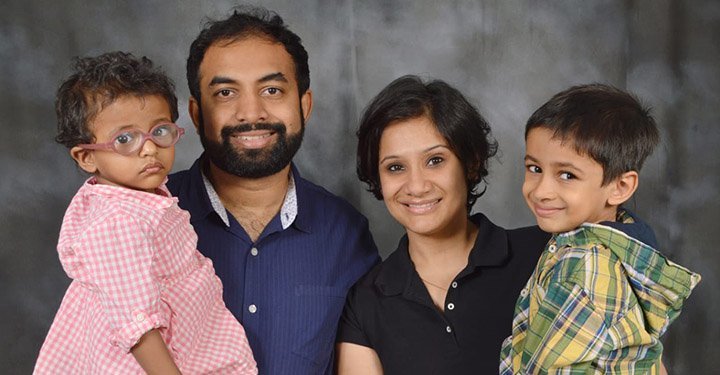
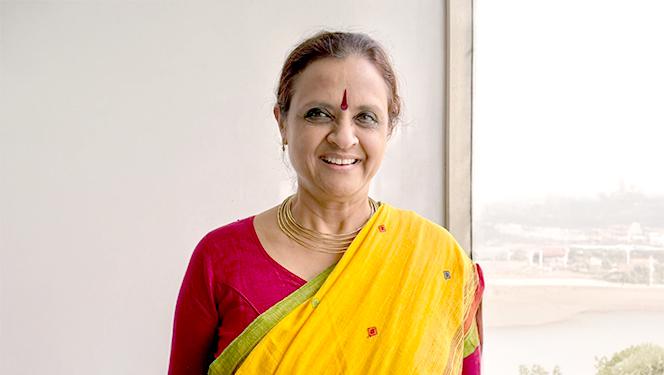
To help you answer that, we sat down with two women who know this journey inside out. Vidhya Srinivasan, a branding consultant, knows exactly what you're feeling. She and her husband, Sreeni, are raising their biological son, Vasisht, and their adopted daughter with the help of their supportive family. We also spoke with Dr. Saras Bhaskar, Adoption Counseling Specialist and founder of the Chennai Counselors' Foundation, who has guided countless families through this transition.
Wanting to adopt and waiting for the right time
Vidhya didn't stumble upon adoption. It was a journey of love (and a lot of prep). "I always wanted to adopt," she says. When she met her husband, Sreeni, she expressed her desire to adopt a child. Luckily, he was on the same page, too.
But life and the law had other plans. At the time, regulations required couples to be in a stable marriage for at least five years before adopting a child. "We told my in-laws about our plans when we were close to that five-year mark," Vidhya recalls. "My mother-in-law suggested we have a biological child first."
Following that advice, Vidhya and her husband welcomed their son, Vasisht. But the dream of adoption didn't fade; it just waited.
Preparing siblings and extended family
When Vasisht turned one, they applied to adopt their second child. The couple even involved their son in the decision, and he was just as excited as they were! They wanted their adopted child to enter a warm, welcoming home, and not just a new house. To ensure this, they also sensitized their immediate circle—grandparents, friends, and extended family.
Building relationships, not just parenting roles
Dr. Bhaskar says that this preparation is a crucial first step. She suggests a powerful mindset shift for prospective parents: "Move from 'building a role' to 'building a bonding relationship." What does that mean? Building a role focuses on the tasks or responsibilities of being a parent—the provider, the protector, and the authority figure. It's about checking boxes: Do they have clothes? Are the school fees paid? And so on.
Building a relationship, on the other hand, focuses on the emotional connection with your child. It's shifting your focus from 'I am the parent' to 'I am here to connect with you.' It encourages open communication and fosters trust, ensuring the child feels safe, not just 'looked after'.
What adoption readiness really means and why it matters
Understanding the legal journey and long waiting periods
Adoption is often misunderstood as a simple event, but the road to adoption involves a lot of paperwork and, of course, a long wait. In India, the process is centralized through CARA. It typically includes registering online, uploading documents, and a home study by a social worker to assess your readiness, followed by a waiting period.
Vidhya's journey wasn't straightforward. "It took a really long time because the process is fairly intricate," she admits. "At the time, prospective parents had to choose specific states. Since adoptions in Tamil Nadu were slow-moving, we widened the search to other states. That's when things got real. Each state has its own way of operating. For example, in Madhya Pradesh, one could get judicial custody immediately, but Maharashtra had different rules," she explains.
Because they were adopting from outside their state, they had to obtain a No Objection Certificate (NOC) and navigate a maze of legal requirements. It got to the point where Vidhya packed her bags and moved to Mumbai, where she would adopt a baby girl. For a month, she worked out of her company's office. She spent all her waking hours at the adoption home, just so her daughter could get used to her before the court hearing in January.
Standing up for your child in social and family settings
Dr. Bhaskar notes that readiness isn't just about handling the paperwork; it's also about handling the pressure from people around you. "Parents often face dilemmas and family pressures. They may wonder, 'Why go through all this trouble?' or 'What if the child doesn't adjust to our family?' Conservative families might struggle to accept a child who doesn't share their bloodline, or they might have preferences for a boy over a girl."
Dr. Bhaskar's advice is simple. "Be an advocate for your child even before they arrive. Readiness means being prepared to stand up for your decision in social settings, schools, and even at family gatherings. It's about knowing that your 'why' is stronger than their doubts."
The legal side of adoption in India
The official route: Where to start
Central and State Adoption AgenciesCARA (Central Adoption Resource Authority): The primary body for adoption in India. Visit cara.wcd.gov.in for registration and guidelines. State Adoption Resource Agencies (SARAs): Each state has its own body to coordinate adoptions at the state level.Adoption laws every parent should knowThe Hindu Adoption and Maintenance Act The Guardians and Wards Act Note: Policies are revised regularly, so always refer to official sources for current guidelines. While CARA is secular and open to all, some private agencies also exist. All legal adoptions must ultimately be processed through the centralized system to be valid. |
Emotional readiness: Preparing your heart and mind
Although Vidhya felt emotionally and mentally ready, she still built a safety net around herself. She looped in a friend for moral support and involved her son early in the process so that he was always a part of the journey. They treated it like a mission and even gave it a code name, Project Akanksha ('Akanksha' translates to 'desire'). They entrusted him with the 'secret' about his baby sister coming home.
Being on the same page as a couple
Dr. Bhaskar's advice? Press pause if you and your partner are not on the same page. If you're adopting after struggling with infertility, make sure you've processed that first. "Adoption shouldn't be a way to replace a biological child you couldn't have. No child can compete with a memory or a 'what if.' Parents need to heal from that sadness first. This is where counseling support helps. It prevents you from unknowingly passing your own stress or unresolved trauma onto your child," she says.
Responding with empathy instead of reacting
Counseling sessions also teach you how to respond rather than react. What does that look like? Let's say your child throws a tantrum or rejects a hug. A parent who reacts might get angry or feel hurt. An emotionally ready parent will understand that the child may be scared or even upset and respond with calmness, a soft tone of voice, and emotional support, rather than shouting.
Talking to children about adoption and identity
Dr. Bhaskar also notes that 'identity' questions can surface differently for adopted children. This happens even in happy homes. The adopted child might wonder, "Who do I look like?" or "Where do I get my talent from?" Keeping the communication open helps the child navigate these questions without fear. Vidhya started with a simple story about a postman delivering her daughter to the wrong address, but as her daughter grew old enough to understand, she told her the truth: "You have two mothers. One gave birth to you, and one takes care of you."
Quick TipsCheck your 'why'Make sure both you and your partner are 100% on board.Agree on the storyDecide how you will tell your child they are adopted. Being aligned on this prevents confusion later.Practice calmRole-play with your partner. Tantrums in children aged 2 and 4 years are normal, so avoid attributing them to adoption. If your child throws a tantrum in the supermarket, what will you do? Agreeing on a calm plan now will save you from panic later. |
Financial readiness: Planning beyond adoption fees
Planning for the unexpected
"We had to set aside money because we really didn't know how much it would cost," says Vidhya. Since they chose an interstate adoption, the costs added up fast—travel, hotel stays for a month, and lawyer fees. She suggests keeping a buffer of 3-5 lakh, just in case. She also points out that some agencies might ask you to make a fixed deposit in the child's name, which they can access when they turn 18.
Budgeting for hidden and long-term costs
Dr. Bhaskar warns against considering only the agency fee. There are 'hidden' costs, like home-study visits, background checks, and psychological evaluations for parents. A psychologist assesses the parents (and sometimes other family members) to ensure everyone is mentally ready for this commitment.
Quick TipsList it outWrite down all potential costs—travel, fees, documents, and the child's deposit.The 'Readiness' CostFactor in the fees for your own psychological evaluations and home study reports.Emergency FundKeep some savings aside specifically for your child's future health or therapy needs. |
Lifestyle readiness: Making space for a new life
Shaping routines around a new life
Adopting a child means your schedule will shift. Vidhya took a month off and eased back to work. A flexible workplace helped her balance work and her kids. "My kids are a part of everything I do, even my work. Sometimes I take them to the office after school, and I ask my colleagues not to think twice about bringing their kids too. My family, especially my mother-in-law, pitched in too."
Creating routines and daily connection time
Dr. Bhaskar emphasizes that consistency is key. A child who has moved from a home or foster care needs predictability to feel safe. Establishing simple, steady routines, like a fixed dinnertime or a bedtime story ritual, helps anchor them. One of the most powerful tools she recommends is 'connection time.' You need a deliberate, daily habit where you focus entirely on the child. No phones. No agenda. No teaching. In the first few weeks, this is crucial. It could be 20 minutes of floor play, reading together, or just cuddling. This builds the bond slowly and steadily. It helps your child feel seen and heard.
Quick TipsSafety firstHandle physical safety checks like stairs and electrical points before the baby arrives.Routine rulesPlan a tentative daily schedule so you aren't figuring it out on day one.Connection blockMake time every day for 'connection time.' |
Supporting sibling relationships in adoption
The sibling bond
If you already have a child, you may worry that your first child will feel jealous. Vidhya's experience shows that preparation is everything. As her son, Vasisht, was part of 'Project Akanksha,' he felt responsible, not replaced.
Today, the bond is stronger. "Vasisht jokingly calls his sister a 'fraud' because she can charm her way into people's hearts and even get them to do what she wants!" shares Vidhya. Seeing them grow up together helped Vidhya realize that they weren't the ones doing the child a favor by adopting her. "Our daughter is the one doing us a favor. She is the missing piece that completes our family," she says happily.
You don't have to do adoption alone
Why is support so important? Because parenting is hard. Adoptive parenting has additional layers of complexity. You might doubt yourself. Am I doing this right? Is this behavior normal? Vidhya had her close friend, Rangashri, her listening partner, whom she could call whenever she had doubts. This was her informal support.
Building your support system before your child arrives
Dr. Bhaskar advises building a mix of both informal support (friends and family) and formal support (therapists, social workers, parent support groups). Don't wait until you are overwhelmed. Build your village before the baby comes home.
It is easy to get lost in the checklists and rules. Remember, no parent is ever completely ready. We all figure it out as we go. The most important thing isn't being perfect. It is being willing to show up, learn, and grow with your child.
The adoption readiness checklist for parents in India
Here's a quick self-check to sum up everything you have thought about. This isn't a test of perfection, but a way to honestly assess your preparedness.
|
Preparing for adoption: Are you ready to adopt a child?
Adoption isn't about being perfect. It's about showing up with love and doing the practical things that help a child feel safe. Remember, readiness grows as you go. So, take one small step and build from there. If you feel ready, you've already taken the first step toward one of the most beautiful journeys of your life.
Planning to adopt in India? Read the complete rules for adopting a child and stay fully prepared.


























Comments
Edit
Comment Flag
Cancel Update