
When Too Many Activities Hurt Your Child – And How To Strike A Balance
Aruna Raghuram
You pack your child's life with cricket practice, dance classes, music lessons, and swimming workouts. Did you ever stop to think that too many activities could backfire on you and your child?

Ritu is worried about her 11-year-old daughter Ananya, who seems irritable, tired, and sleepy these days. She is struggling to get used to extra classes and keep up with her homework assignments. Every weekday, Ananya has some extracurricular activity or the other. On Mondays it is French, on Tuesdays and Thursdays, it is art, while on Wednesdays and Fridays, she learns Carnatic music. Ananya is very fond of music, but lately, her interest seems to be waning. Ritu is beginning to wonder if it is all too much for her daughter. Is she not getting enough time to relax? Is she overscheduling Ananya?
Generally, parents enroll their children in art, music, dance, and language classes, as well as sports coaching, so that their talents flourish and they get to make new friends, and also because of competitive compulsions.
There are many reasons for overscheduling:
- Parents feel that their children need to spend their free time usefully by being engaged continuously in some activity or the other.
- They want to keep their children busy so that they can do their work, be it professional tasks or domestic chores. Also, parents need undisturbed time.
- Some parents feel hobby classes will help their children connect with their peers.
- Parents want to reduce their children's screen time entertainment.
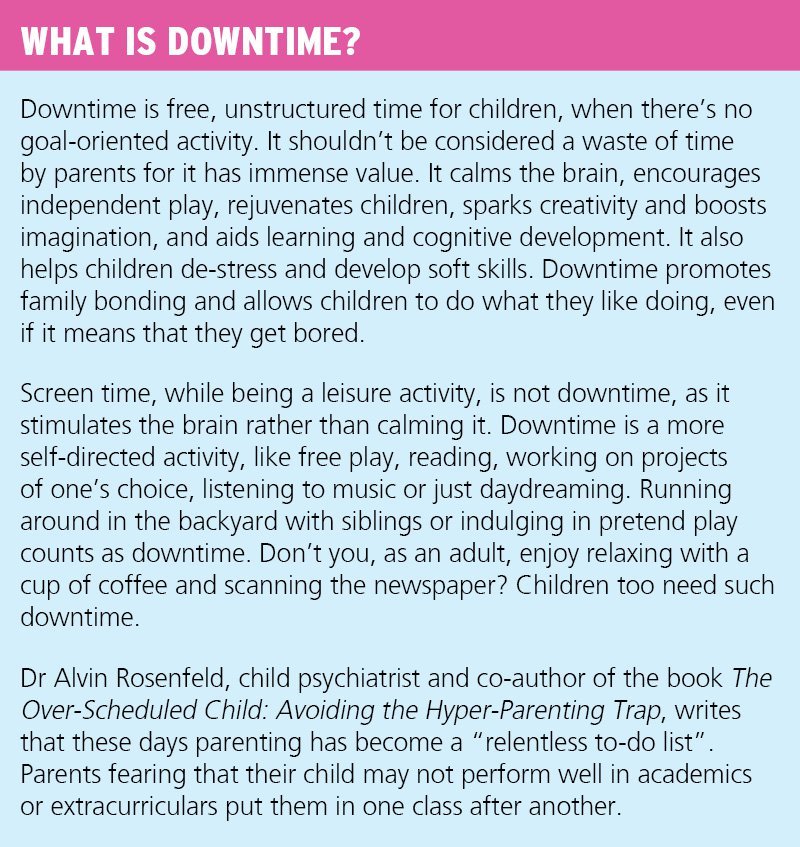
However, keeping a child continuously engaged has its negative aspects. Children need time to play and bond with family, and also require downtime to boost creativity. It's important to provide them with reassuring routines. But that doesn't mean every minute has to be filled with an activity.
Screen time, while being a leisure activity, is not downtime, as it stimulates the brain rather than calming it.
According to a 2014 study by the University of Mary Washington published in Psychological Science, parents may wish to enroll their children in numerous, structured activities that might enhance their physical, cognitive, and social abilities. However, enrollment didn't necessarily lead to skill development or happiness. It reflected an adult's anxiety, not a child's need. The study added that by enrolling children in multiple activities, parents were depriving them of the opportunity to participate in unstructured play which has several benefits.
8 signs that your child is overscheduled
- There's a drop in academic performance
- They fall sick more often (stress can impact the immune system). They often complain about headaches or tummy pain.
- Their energy levels are low, and they are always tired.
- They complain about having to do an activity.
- They lose interest in something they loved earlier.
- They seem moody and irritable, probably because of stress.
- They aren't sleeping well.
- They have stopped connecting with friends.
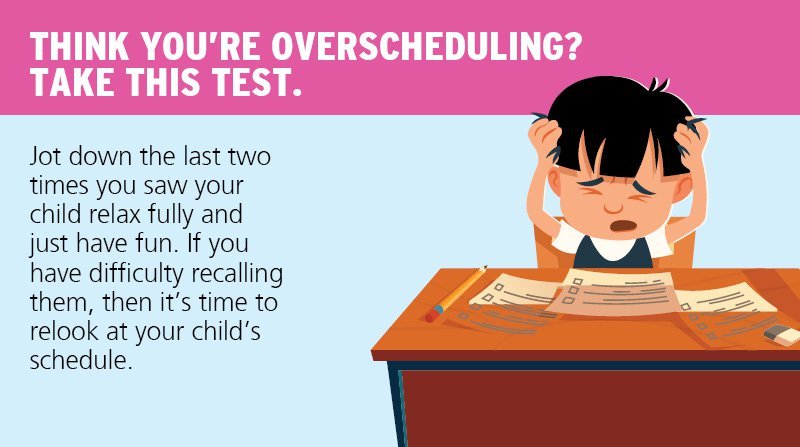
Dangers of overscheduling
Overscheduled children tend to have sleep problems and don't eat well. In the long term, children who are continuously busy with structured activities may develop physical ailments, anxiety, and depression. Also, according to research, if there are too many structured activities in a child's life, the development of executive functions (mental skills such as memory, flexible thinking, and self-control) may be hampered.
Tips to avoid overscheduling
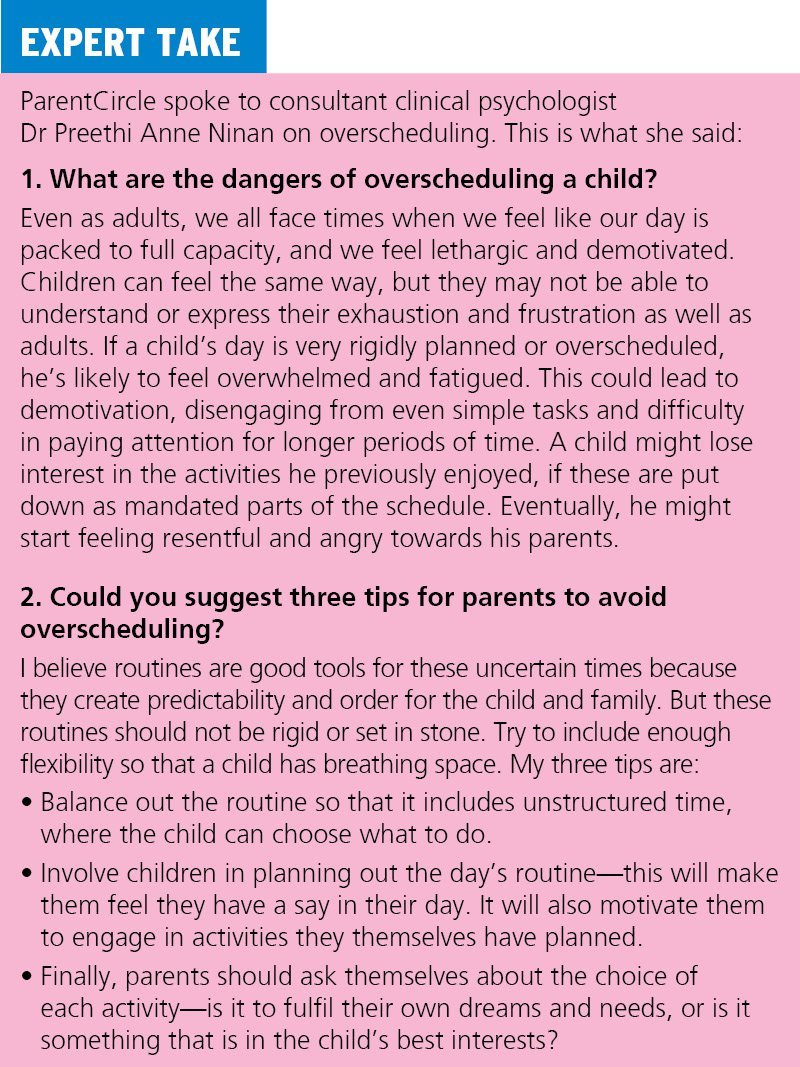
If you want to step back and avoid overscheduling, here are some ideas:
- Identify priority activities. Sit down with your child and ask them about the top three activities they want to engage in. If they want to take up something new, drop an old activity. The activities should be appropriate, keeping in mind the age and interests of the child.
- Ensure sufficient downtime. If you are not the kind to slow down, it is best to schedule downtime. Set aside time in your child's schedule for relaxation and play.
- Make screen time productive. You could sign in for a virtual tour of a museum or zoo. Or, engage your child in a session where books are read aloud or stories are narrated.
- Emphasize the importance of physical activity. Include outdoor activities or yoga classes to ensure your child gets sufficient exercise.
- Set up playdates with friends or cousins. This is a good thing to do if you're worried your child is missing out on socializing.
- Review their schedule regularly. Check for the warning signs mentioned above. If you feel your child is struggling to cope with their schedule, let go of an activity after consulting them.
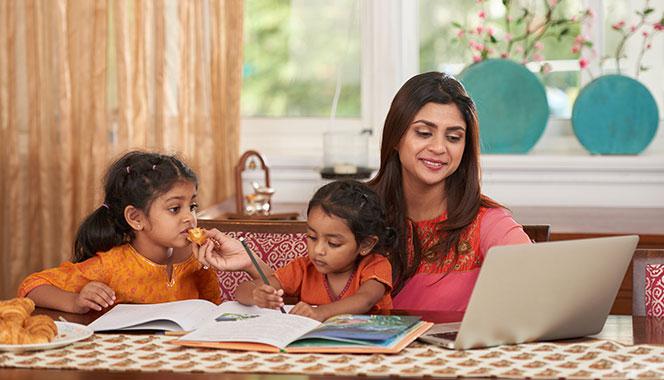
The primary goal of parenting is to make your child feel secure and loved. This can be done by listening to your child and allaying their fears. Also, spend as much time as possible talking, playing, and doing chores with your child. It's a good idea to reduce structure in parenting, not tighten it.




























Comments
Edit
Comment Flag
Cancel Update