
What Makes a Child Prodigy
Amrita Gracias
Does your child display prodigious skills unusual for his age? Find out if just exceptional talent can make a prodigy and the challenges that are involved in parenting one.
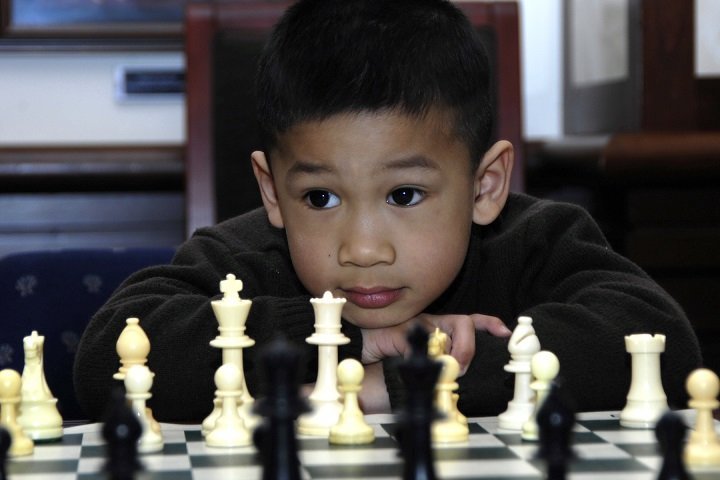
Mozart, Srinivasa Ramanujan, Nadia Comaneci, Gary Kasparov, Tiger Woods - What do these famous people have in common? Well, they are all child prodigies in their respective fields.
A child prodigy generally displays exceptional skills and adult abilities at a very early age in one or more domains, like music, maths or science. He possesses intense knowledge of the subject or area of interest, which is often unusual for his age. When it comes to a gifted child, he may be intellectually superior to his peers; his performance can be stated to be above two to three years of his age. On the other hand, a child prodigy, performs as well as an adult professional in the same field. "Child prodigies may be advanced by about five or six years than their peers and show the highest level of giftedness," says Dr Devasena Desai, Pune-based Consultant Psychologist and Gifted Counsellor.
A few research studies suggest that genetics is largely an influencing factor in child prodigies and affects some basic cognitive abilities. In fact, it has been observed that prodigies are born with innate capabilities. However, a gifted child or a prodigy cannot rely only on his gifts but also show dedication and practice over time to express his innate talents. "Genetics does influence these proficiencies. Perhaps the genetic pool from a grandparent or an immediate maternal or paternal family member could be a contributing element, but nurturing is also a significant factor that aids in bringing out certain gifts or talents," says Dr Desai.
Characteristics of a child prodigy
- Large working memory: A child prodigy is known to have a larger working memory compared to a normal child. Working memory refers to an enhanced cognitive system responsible for carrying out mental operations involved in complex tasks. A prodigy, therefore, has the ability to hold information in memory while simultaneously controlling and processing other incoming information.
- Advanced cognitive skills: Although the child's physical growth is normal, he exhibits poor social and emotional behaviours that may not be age-appropriate. However, his exceptional cognitive skills are far more accelerated compared to normal children of the same age.
- Complete commitment: He has a keen commitment to his area of interest and an ability to intensely focus for extended lengths of time. This collaboration of continued motivation, determined practice and innate ability enables him to further develop his skills and master his talent at an early age. Ellen Winner refers to this as the 'rage to master'.
- Extraordinary skills and talent: A child prodigy most often has extraordinary skills in one particular domain; but, at times, he can display talent in other areas as well. This varies from child to child and depends on other factors like access to areas of interest and resources pertaining to it, parental support, commitment to acquire skills, education and a healthy environment for proper social and emotional development.
Influencing factors
A prodigy generally demonstrates the relevant skills by the age of 10 or 11, or even as early as three to five years. However, a supportive environment is essential to nurture his intrinsic capabilities. Moreover, if the child's talent is not explored enough, then there are chances that he may not master the skills altogether. Factors like parental pressure and expectations can also influence a child's success regardless of his high intellect.
Parenting a Prodigy
Parental observation of the child's general behaviour and academic performance can initially help identify a bright child. "Parents are usually the first to identify that their child is exceptionally talented. They know that their child has extraordinary skills when compared to other children," says Dr Desai. However, formal IQ testing by a clinical psychologist can confirm that the child is intellectually gifted or exceptionally talented. Dr Desai explains that a prodigy, unlike other children, can, for example, spend several hours with mathematical problems or calculations while a normal child would rather be out playing and unable to concentrate for long on simple tasks. Her precocious knowledge urges her to unceasingly seek and learn not only by reading or asking questions that are highly advanced for her age, but also being able to manipulate thought processes.
Parenting a prodigy comes with its own challenges. A child prodigy needs the same love and care as any other child at the physical and emotional levels. "Parents can extend this support by, perhaps, hiring a special tutor or mentor who can coach the child in the skill he is talented in," says Dr Desai. "It is also a huge challenge for parents to be able to fulfil demands like providing books or other requirements such as arranging for experts to help the child master his skills. Sometimes, the child may not fit into a regular school as he might be bored with the curriculum. Then, he will have to be home-schooled," she adds.
It is normal for child prodigies to face adjustment problems at school as they see themselves as somewhat different from their peers. They are often misunderstood, and this can result in bullying or even being excluded from other regular activities. "These children are also extremely emotional; and, they are unable to understand when to stop demonstrating their skills if peers don't understand these special abilities," explains Dr Desai. These situations can lead to prodigies feeling unaccepted and unsettled in stereotype settings at school.
Are prodigies born or made?
There are conflicting views regarding children being moulded into prodigies. Some psychologists insist that a genius is born and that his intrinsic proficiencies are a gateway to his outstanding skills and performance. Others, however, believe that a child who is given the right opportunities to learn, and who is determined and committed enough to pursue her interests, can always acquire these capabilities.
Parenting a child prodigy is an entirely different trajectory altogether. To nurture a special talent, parents must provide ample support. At times, it can seem like raising a child with special demands - it entails your complete devotion and dedication. Be sure to avoid unwanted compulsions that might instead take away the thrill of accomplishing something extraordinary.
Hope you liked this article. To get expert tips and read interesting articles on a wide variety of parenting topics, subscribe now to our magazine.


























Comments
Edit
Comment Flag
Cancel Update