
Experts In The Fields Of Health, Psychology, Cinema, and Medicine Share Valuable Parenting Tips
Team ParentCircle
How can you help your child build resilience and truly understand their thoughts and feelings? Do you rely on your maternal instincts when faced with uncertainty? Additionally, how can you effectively teach your child hygiene and safety? Read what the experts have to say. And if you want more, listen to the complete video interviews.
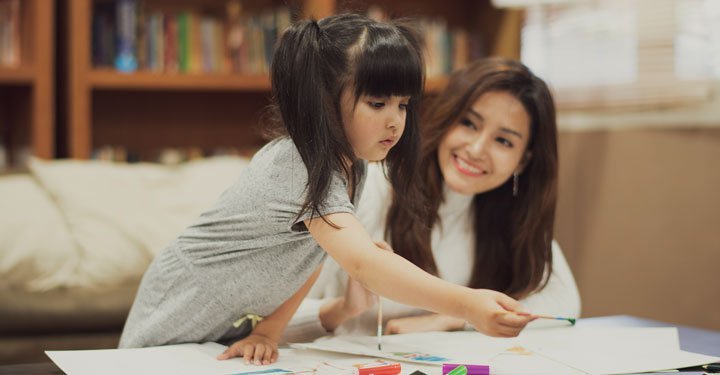
The most important emotion is love
Luke Coutinho Holistic Health Expert
When I am home, I spend time with my seven-year-old daughter every single day. My day revolves around her. I get back home two hours after she gets back from school. So, I get two hours with her before her bedtime. Though I travel extensively, I make sure my trips are short. Family means everything to me and with the lockdown, we have got a lot more time together!
It is very important to me that I instill the right values in my daughter. I teach my daughter that the most important emotion is love. I teach her the same thing my father taught me—the more you give, the more you get. I am also teaching her that our life on this planet is a gift. Have fun, be naughty, do what you want, but add some value to this journey called life. I teach her these things through stories, and she loves stories. But, I do not want my daughter to see only the perfect things in life. For instance, I want her to see me angry at times. Because that's what life is. Children need to see us fight and forgive one another. It's not a perfect life out there and children need to know that. We have to teach our children emotional stability and intelligence. Not emotional weakness.
Luke Coutinho is a renowned holistic nutrition expert. In this special Father's Day interview, he talks about his personal life, the challenges he faced immediately after his daughter was born, his views on family, and more. For the complete interview: https://www.youtube.com/watch?v=5offNTy0qgc
Children are great imitators
Dr. V. Ramasubramanian, Infectious Disease Specialist
Getting your child to wear a mask or asking him to stay away from people is not easy. It can only happen with consistent education and practice. Explain to your child why he is being asked to take these steps. More importantly, make sure you adhere to physical distancing and wear a mask when you step outside. Then, it's easier for your child to follow these steps. Children are great imitators.
Children have to get used to the habit of using the hand sanitizer or washing their hands with soap frequently. Children need to be given a small bottle of sanitizer to take to school (whenever it restarts). We also need to train children not to take their hands near their face, especially in public, without using sanitizer. These are habits that can be inculcated, with frequent reminders.
Dr. Ramasubramanian is the Director of The Capstone Clinic, and Consultant for Infectious Diseases and Tropical Medicine at Apollo Hospitals, Chennai. For more tips on how to keep your family safe and the important do's and dont's to handle this pandemic, check out the complete interview: https://www.youtube.com/watch?v=TjjkGNTE4Jo&t=600s
Go by your motherly instinct
Esha Deol Actor
Life after kids is beautiful, a new start for any woman. It's a new life given to you as you have a little someone to look after and you are responsible for them. There is so much to look forward to after having children of your own.
Here are my three biggest takeaways from my journey as a mother:
- Let your children develop their own personality. Do not force them to learn or do something that they are not inclined to.
- Introduce a lot of variety in the food that you give your children. This way, they will look forward to eating happily.
- Go by your motherly instinct when it comes to your child. I don't think there is anything more accurate than a mother's instinct.
Esha Deol is a well-known actor, an accomplished Odissi dancer, a doting mom to two little girls, and author of Amma Mia, her debut book, published by Penguin Random House. For the complete interview: https://www.parentcircle.com/interview-with-bollywood-actress-esha-deol-on-motherhood-and-parenting/article
Put yourself in your child's shoes
Dr. Nithya Poornima, Clinical Psychologist
While addressing behavioral challenges in children, it is important to see what is the emotion that is fueling any particular behavior. Is it frustration? Is it fear? Is it boredom? When we are able to identify the emotion behind the behavior, it allows us to respond more effectively. Parents often need to don the hat of a scientist and try to find out what actually is happening with the child. One way to do that is to put yourself in your child's shoes and ask what you would do if you were in your child's place.
Once parents have identified the emotion, let's say anger or frustration, they could find ways of allowing the child to express this emotion in a safe way—scribble widely on a sheet of newspaper, become wild cats or little lions. As adults, we often say, "Stop this behavior." But it's important for us to help children to safely get their frustration out. These are some initial exercises that parents will need to take before they set out to address behavioral challenges.
Dr. Nithya Poornima is a renowned clinical psychologist from NIMHANS, Bangalore, and a member of ParentCircle Advisory Board. For more on how you can take care of your child's mental well-being during this time of crisis, check out the complete interview: https://www.youtube.com/watch?v=Tn-kg8Ck3yc

























Comments
Edit
Comment Flag
Cancel Update