
Speech And Language Development Milestones In Children: What Parents Should Know
Shalini S Narayanan
Parentcircle author...................................................................
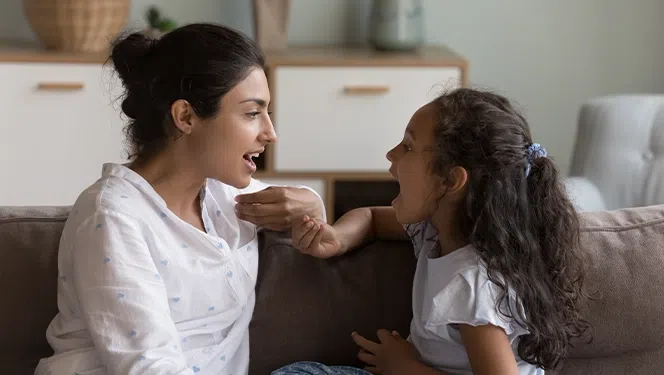
Is your child talking as expected for their age? Here’s what parents need to know about speech and language milestones, signs of speech and language delay in toddlers, and when to worry about speech delay
| Note: This article draws on developmental guidance and research relevant to child speech and language development. Milestones are broad guides, not diagnostic tools. Children develop at different rates, but persistent concerns about your child's communication are worth discussing with a pediatrician or speech-language pathologist. |
A mother of a two-year-old reached out to me and said,
"My child can understand everything. My child can follow instructions. My child is only saying five or six words."
Then she asked, "Is this normal?"
This is not the only parent who has asked me this question. I have received many such queries from parents, and this makes me realize that awareness is still lacking.
Even though so many resources are available online, parents may not always be accessing the right information. Well-meaning people advise to "wait and watch," but simply waiting without understanding what is happening can delay the support a child may need.
So, before we understand what to do, let's first understand what to expect.
Why speech and language milestones matter
The early years are an important period for communication development. Young children learn much more than just how to say words. They learn to understand what others say, communicate their needs, use gestures, respond to people, and gradually put words together to express their thoughts.
Knowing the broad milestones for your child's age can help you know what to look for and recognize when you may need professional guidance.
Milestones are guides, not deadlines. Children develop at different rates, and reaching a milestone a little later does not necessarily mean something is wrong. What truly matters is your child's communication pattern and whether their skills are progressing over time.
Speech and language: What's the difference?
Parents often use speech and language interchangeably, but they are different.
Speech refers to the sounds we use to produce words.
Language is how we understand and communicate meaning. It includes the words we understand and use, the sentences we form, and the gestures we use to communicate. So, we need to look beyond how many words a child says.
What should you expect at different ages?
The following milestones provide a broad picture of how communication develops during the early years.
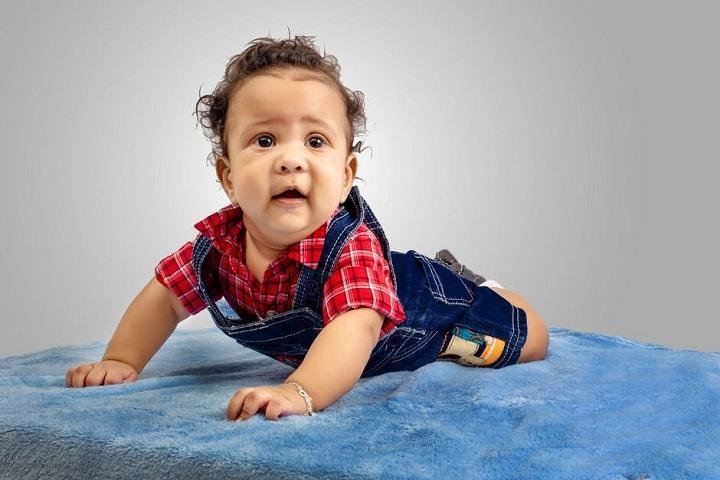
Around 1 year
You may notice your child:
- Babbling and experimenting with different sounds
- Responding to familiar voices and sounds
- Using gestures such as pointing, waving, or reaching
- Beginning to use meaningful sounds or words
- Understanding some familiar words and simple requests
These early gestures and interactions are also important forms of communication.
Around 18 months
Your child may:
- Use several meaningful words
- Understand simple instructions
- Point to request something or draw your attention to something
- Use gestures along with sounds or words
- Begin using words to communicate their needs and interests
At this age, communication still combines words, sounds, gestures, and actions.
Around 2 years
Many children begin to:
- Use a growing vocabulary
- Combine two words, such as "more milk" or "mummy come"
- Follow simple instructions
- Use words to ask for something or communicate their needs
- Talk about familiar people and objects
Indian developmental research identifies the emergence of two-word phrases around 20–24 months. Some Indian developmental data also refer to vocabulary size at this age. However, word count shouldn't be a single defining factor. Understanding language, using gestures, interacting with others, and communicating needs are also important.
So, if your two-year-old still uses only a few words, you may consider discussing your concerns with a professional rather than assuming they will catch up.
Around 3–4 years
In the preschool years, children’s language becomes increasingly complex. You may notice them:
- Using longer sentences
- Asking questions
- Talking about people and experiences
- Using language during pretend play
- Joining ideas together while speaking
- Beginning to tell or retell simple stories
- Engaging in longer back-and-forth conversations
Indian developmental data identify the use of three-word sentences around three years and increasingly complex sentences and storytelling around four years.
The important thing is to observe how your child's communication is developing; not to compare your child with another child of the same age.
When should you take note?
One of the most important things I want parents to understand is this: you do not have to wait until your child is significantly behind before asking for help.
Consult your pediatrician or a speech-language pathologist if:
- Your child is not acquiring new communication skills over time.
- Your child is not using words or word combinations expected for their age.
- Your child has difficulty understanding simple instructions.
- Your child rarely uses gestures, pointing, or other ways to communicate.
- Your child's speech is very difficult to understand for their age.
- Your child does not seem to respond consistently to sounds or voices.
- Your child loses communication skills they had previously acquired.
Don't overlook hearing
Hearing plays an important role in speech and language development.
If you have concerns about your child's communication, your pediatrician or speech-language pathologist may recommend a hearing assessment as part of the evaluation.
Identifying hearing difficulty early can help ensure that your child receives appropriate support.
What does "wait and watch" really mean?
"Wait and watch" is advice parents hear quite often.
But watching a child's development does not mean doing nothing. Monitoring should be active. It means knowing what skills you are looking for, observing your child's progress, and ensuring those skills develop.
In some situations, a professional may recommend observing a child's progress for a period of time, especially when a child is developing steadily, and there are no other concerns.
If you are concerned about your child's communication, do not hesitate to ask for an assessment.
An assessment is not a label
When parents hear terms such as assessment or speech and language therapy, they may feel overwhelmed and reluctant.
And this is what I want every parent to know:
Getting an assessment does not mean you are labelling your child.
An assessment helps professionals understand the child's communication profile and whether they need further evaluation or support.
A speech or language delay also does not automatically mean that a child has autism or another developmental condition.
For a child under three needing support, it does not always have to be one-to-one speech and language therapy sessions. Sometimes, modifying the environment, using the right strategies, and using language-modelling techniques during everyday routines can make a significant difference.
For many young children, parenting guidance from a speech-language pathologist forms an important part of support. You learn what to do at home, how to do it, and what to try if a strategy does not work for your child. That’s it.
What parents need to remember
It’s natural to worry if your child is not talking as much as you expected.
Start by looking at the whole picture. Does your child:
- Understand what you say
- Point or use gestures
- Try to communicate with you
- Learning new skills
- Becoming increasingly interested in interacting with others?
If you are still concerned, it’s okay to ask rather than wait for someone else to tell you that something may be wrong. Nor do you need to panic.
The mother who reached out to me did exactly the right thing. She asked a question because something about her child's communication concerned her.
Every child develops at their own pace, and I say this as a parent. It means knowing enough to understand what's happening with your child and being confident enough to seek guidance when you need it.
Awareness is not about panic or fear. Awareness is knowing what to look for and utilizing your child's window for support.
About the author
Shalini S Narayanan is a Pediatric Speech-Language Pathologist and Founder of Speech Kalaa. She works with children with speech, language, and communication needs and supports parents with communication-supportive strategies for everyday interactions.
Need more information? Trusted resources:
- Indian Academy of Pediatrics (IAP) — developmental guidance for parents
- Government of India, Rashtriya Bal Swasthya Karyakram (RBSK) — child development and screening resources
- INCLEN Trust International — Indian research on developmental milestones
Coming up in Part 2
What happens after you seek help? We explore what a speech and language assessment involves, who can assess your child, whether every child needs therapy, and what parents can do at home to support communication.
Published on: October 30, 2026





















Comments
Edit
Comment Flag
Cancel Update