Navratri
Navratri
Postpartum Hair Fall: What No One Warns You About
Becoming a mother changes you in ways no one fully prepares you for. The sleepless nights, the endless laundry, the overwhelming love and then, somewhere around the fourth month postpartum, the hair fall.
No one warned me about that part.
I remember standing in the shower one morning, looking at the clump of hair in my hand and thinking, “Is this normal?” My ponytail felt thinner. My hairline looked different. And every time I brushed my hair, it felt like I was shedding a small animal.
Apparently, postpartum hair thinning is very common. During pregnancy, high estrogen levels keep hair in the growth (anagen) phase longer. After delivery, hormone levels drop, and all that “extra” hair enters the shedding (telogen) phase together. So the dramatic fall makes sense biologically but emotionally, it still hits hard.
I did what most of us do: I went down the research rabbit hole.
Phase 1: “Let’s try everything”
I started with more “minimal” formulas. I tried serums from brands like Minimalist — lightweight, ingredient-focused, very science-forward. They had well-known actives like Redensyl, Anagain, Procapil. I liked that they were transparent about percentages and didn’t make unrealistic promises.
For a while, I rotated between a few different serums. Some felt nice on the scalp but were sticky. Some absorbed well but didn’t seem to do much. Some had impressive ingredient lists but didn’t disclose active concentrations clearly.
That’s when I started digging deeper into something I hadn’t really paid attention to before: active molecule concentration.
It’s easy to say a product “contains Redensyl” or “has plant stem cell extracts.” But what percentage? At what concentration is it clinically studied? Is it part of a synergistic blend or just a token addition for marketing?
A serum with 1% of a growth active may not perform the same way as one with a clinically validated 3% or higher especially when we’re talking about postpartum hair, where follicles are temporarily shocked and need real support.
Understanding what actually works
As I read more, I learned that certain actives have specific mechanisms:
- Redensyl works by targeting hair follicle stem cells and dermal papilla cells.
- Procapil is often discussed for helping reduce DHT impact and strengthening hair anchoring.
- Anagain (pea sprout extract) supports the reactivation of the growth phase.
- DHT blockers can help in cases where androgen sensitivity plays a role.
But here’s the thing: hair growth is not just about one hero molecule. It’s about how those molecules are combined, at what strength, and whether the formula supports scalp health overall.
Postpartum hair fall is not purely hormonal or purely nutritional. It’s systemic. Your body has just done something miraculous and traumatic at the same time. Recovery needs to be holistic.
When I shifted my approach
After a few months of switching between different serums, I realized I wanted something that didn’t make me choose between science and traditional care.
That’s when Kesh King Gold Hair Growth Serum felt like the right fit for me. It combines clinically studied actives with deeper scalp nourishment rooted in Ayurveda something that felt more aligned with what my postpartum hair needed.
Before this, I had also tried science-forward serums like Minimalist and custom-focused brands like Bare Anatomy, both of which I genuinely appreciated for their ingredient transparency and modern formulations. But personally, I was looking for a balance between clinical science and traditional scalp care, which is why Kesh King stood out for me.
What initially caught my attention wasn’t flashy marketing it was the formulation philosophy. It combined multiple growth actives (around 21% growth-focused actives in total) with Ayurvedic herbs that have traditionally been used for scalp nourishment.
Now, I’ll be honest that I was a bit skeptical. “Ayurveda + science” can sometimes just be a tagline. But when I looked into the ingredient deck, it wasn’t just oil extracts thrown into a base. It included clinically studied actives like Redensyl, Procapil, Anagain and others. alongside a blend of 21 Ayurvedic herbs.
That balance intrigued me.
Why concentration matters (in simple terms)
Think of active ingredients like keys. If you have a key but it’s poorly cut or too small, it won’t open the lock effectively. Similarly, if a serum includes a growth molecule at too low a concentration, it may not stimulate follicles meaningfully.
On the other hand, when clinically validated concentrations are used — and when multiple pathways are targeted (stem cell activation, DHT moderation, scalp microcirculation, follicle nourishment) and the outcome tends to be more consistent.
I also appreciated that the serum was dermatologically tested and free from silicones, parabens, added alcohol, and unnecessary fillers. Postpartum scalp can be sensitive, and the last thing I wanted was irritation.
What I personally noticed
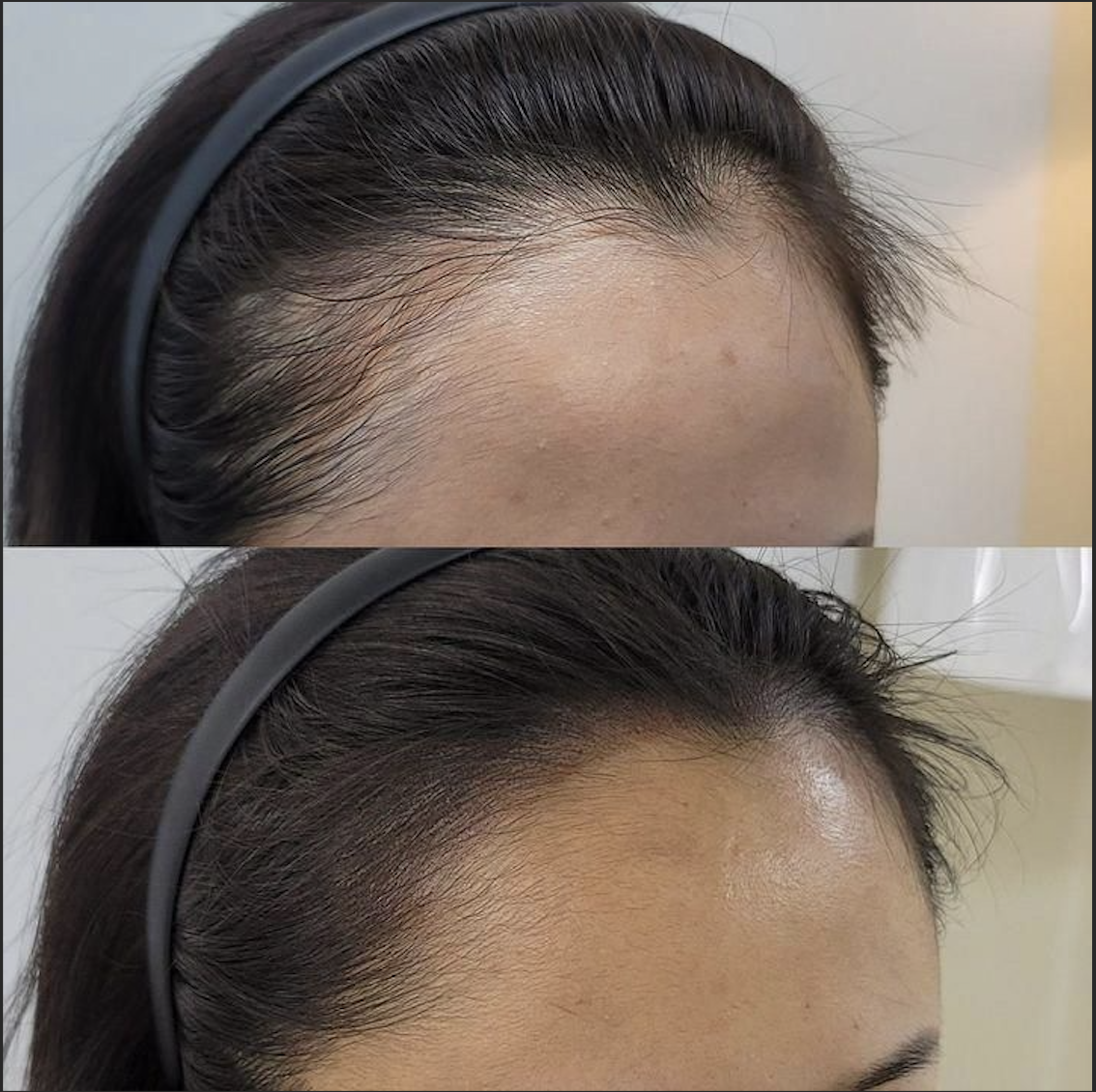
I didn’t expect overnight miracles and I didn’t get them. The shedding phase still ran its course (which, honestly, is normal and biological). But around 8–10 weeks in, I started noticing:
- Baby hairs along my hairline
- Less hair on my pillow
- My part looking slightly fuller
- Less breakage during combing
It felt gradual and real and not dramatic, but reassuring.
To be clear, I don’t think there is one “magic” serum for everyone. Some women might do perfectly well with a simpler, minimalist formulation. Some might benefit more from pure peptide-based solutions. Others might focus on nutrition and iron supplementation first.
For me, what made the difference was choosing a formula that addressed multiple mechanisms stem cell stimulation, DHT moderation, and scalp nourishment while also respecting traditional herbal knowledge that has supported hair health for generations.
The emotional side of it
Postpartum hair thinning is more than cosmetic. When your body already feels unfamiliar, watching your hair thin can feel like losing another part of yourself.
What helped me wasn’t just a bottle on my shelf. It was understanding what was happening biologically. It was being patient. It was choosing products thoughtfully instead of impulsively.
If you’re in that shedding phase right now JUST BREATHE. It’s common. It’s temporary. Support your scalp. Look at active concentrations. Don’t get swayed by just one trending ingredient. And most importantly, give your body grace.
Motherhood takes a lot from us but it also slowly gives us back strength in ways we don’t expect.
And sometimes, that strength starts with tiny baby hairs growing back along your forehead.
























Comments
Edit
Comment Flag
Cancel Update