
Essential Financial Planning Rules To Follow And Preparing For Future Uncertainty
Dr AV Senthil
In times of uncertainty, it's essential to reassess your financial planning and ask yourself if you are saving enough for unexpected challenges.

Many years ago, the world experienced one of the worst economic crises in history—the 2008 Financial Crisis. It shook many of us, and we hoped it would be a rare, once-in-a-lifetime event. Then, almost a decade later a global health crisis hit, impacting us both medically and financially. In such uncertain times, it’s crucial to reflect on our financial planning and ask ourselves one key question: Are we saving enough for unexpected challenges?
Here, we share some simple rules to help secure your family’s financial well-being.
1. Take a periodic snapshot of your income and expenses
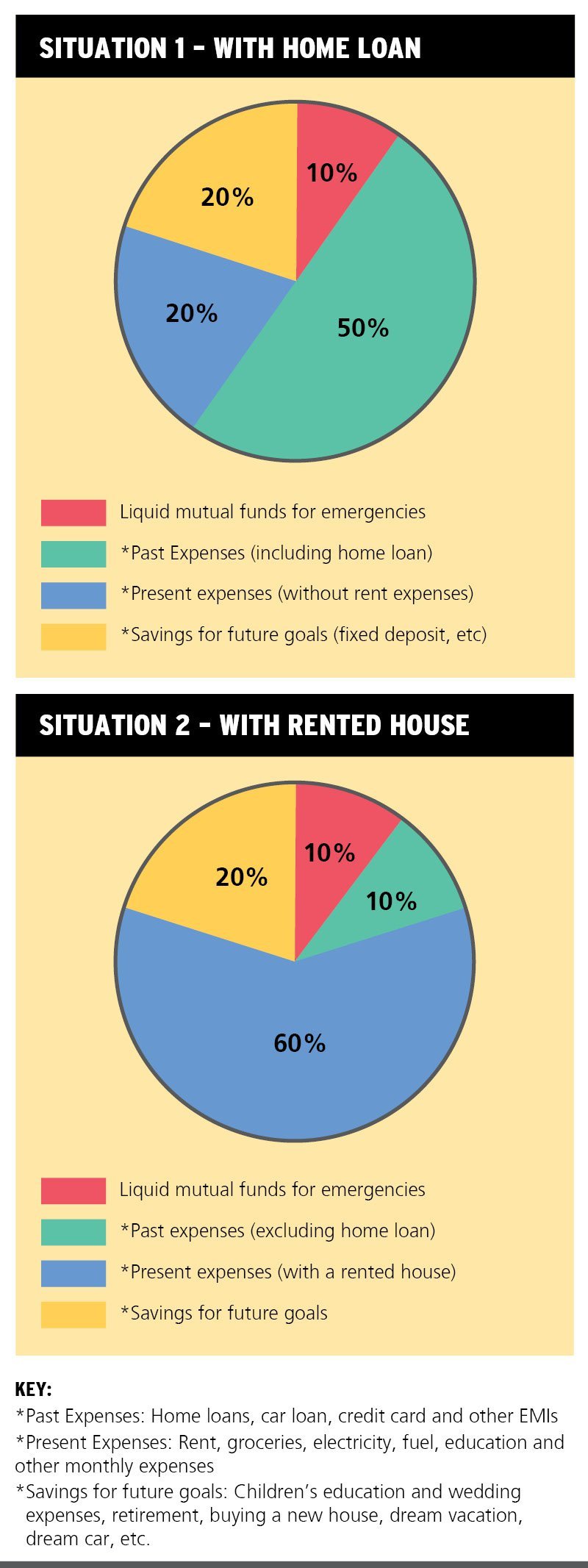
Do this once a month. In the worst case, once in three months. Ensure your cash outflows (expenses) are capped to a maximum of 90% of your cash inflows (income). The remaining 10% should be saved in liquid mutual funds to handle emergencies (for example, job loss, a pink slip, an epidemic, or a natural calamity). You can also group your cash outflows into three categories: Past, Present, and Future.
a. Cash outflow for your past actions: From your monthly income, you may be paying for those commitments that you signed up for earlier. This could include EMIs related to education loans, housing loans, credit cards, personal loans, and car loans, to name a few. Ensure that your past commitments are capped to a maximum of 50% of your cash outflows if they include home loan EMIs. Otherwise, it should just be about 10% to 15%. Education and home loans help us to create assets and income streams, whereas all other loans are a drag on our financial situation.
b. Cash outflow for the present: This is required to run the family. It includes groceries, electricity, fuel, education, and other monthly expenses. If it includes rent, then this component can be 60%. If there is no rent component, then this should be a maximum of 20% to 30%.
c. Cash outflow for your future: This is the most important outflow. You need to save and invest your money in safe products like bank fixed deposits, mutual funds, RBI Bonds, and post office schemes. This will help you save for future goals that can include your children's education or marriage, your retirement (building a nest egg), buying a new house, your dream vacation, your dream car, etc. Save a minimum of 20% of the total cash inflows towards this, every month. You can invest in equities (stock market) if the duration of your goal is long. Invest in Mutual Funds after consulting a Financial Advisor.
2. Term Insurance
You are responsible for the well-being of your family. Your loan commitments shouldn't become a burden in case of an emergency. As a financial planner, I suggest that parents take a term insurance after taking into consideration their goals, commitments, and overall financial situation. For example, a parent (aged 30 years) who has had a child in the last year, can take a term insurance of Rs. 50 Lakhs for 30 years. The monthly cost of this insurance should be around Rs. 750, for a non-smoker with normal health. This gives the required protection when it comes to children's education and marriage. Similarly, if you are recently married, it is worth taking another Rs. 50 Lakhs policy and make your spouse the nominee. If you are running your own business, you can do so by using the MWPA (Married Women's Property Act). By this, your business losses can't be adjusted with the policy and your spouse will get Rs. 50 Lakhs in case of any untoward incident.
3. Periodical Review
Discuss your financial situation with your partner, looking at all your assets and liabilities. Re-visit your cash flows and align them with your goals. It should take a maximum of 3 to 4 hours to collate all the information and do a review.
4. Will and Nomination
Please ensure you have a nominee for all your investments bank accounts, employee PF, gratuity, post office, mutual funds, demat accounts, lockers, etc. Ensure that you revisit the nominee list once in 5 years, as you need to update it, based on certain events in your life. When you have fixed assets like more than one house, then it would be a good idea to create a WILL and get it signed by two witnesses. This WILL document should also be reviewed every few years.
5. Health Insurance
The cost of medical emergencies is going up every year. The insurance provided by your employer may or may not be adequate. Also, in case of a job loss, you will not have adequate coverage for medical emergencies. One medical emergency can wipe out your savings, emergency fund, etc. Chronic or serious diseases or surgeries can cost several lakhs. Therefore, it is best to take additional health cover, say a floater cover for Rs.10 Lakhs per annum per family. For a 30-year-old parent, with two small children, it should cost Rs. 6,000 to Rs. 10,000 per annum, depending on the benefits and features of the policy.
Last but not least, keep all the information about your investments and finances in one place. Create an Excel spreadsheet and protect it with a password.
Parents whose annual family income exceeds 10 lakhs per annum should look at managing wealth as an investment portfolio. This portfolio should be diversified across asset classes like physical assets (real estate, gold) and financial assets (mutual funds, equities, fixed deposits, liquid funds, cash at the bank). During times of crisis, at least 5% to 10% of the overall portfolio should be in fixed deposits, liquid funds, and cash at the bank. With these steps, you can manage emergencies with minimum impact.
Dr. AV Senthil is a certified financial planner.



























Comments
Edit
Comment Flag
Cancel Update