
Public Display Of Affection (PDA) Between Parents: Surprising Benefits And Hidden Pitfalls For Kids
Divya Ramesh
author parentcircle author parentcircle author parentcircle author parentcircle author parentcircle author parentcircle author parentcircle author parentcircle author parentcircle author parentcircle
This Valentine's Day, let’s explore how witnessing parental affection influences children. Does it nurture their emotional well-being or create unexpected challenges?

Many millennials have not seen their parents hug or kiss each other. And when we see couples kissing in movies, we've often wondered why our parents never did any of that. Right? We tried to make sense of the discrepancy but failed to fully comprehend matters.
Fast-forward to now. Times have changed. More and more young parents are starting to embrace displays of affection in front of their kids. Is this a good trend? If so, how much public displays of affection (PDA) between parents is OK? How do you help your child feel comfortable with PDA?
Before we answer these questions, let's first hear from some young parents: Do they show physical affection for each other in front of their child? If so, how? Have their little ones asked any funny questions related to PDA? How do they celebrate Valentine's Day?
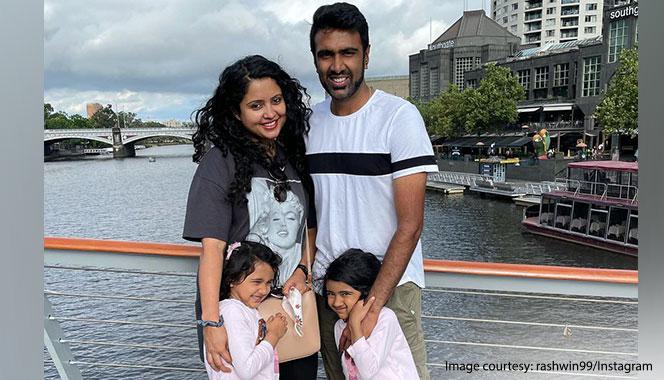
Anandana Garg, Mother of two (6 and 12 years), Mumbai
My husband and I hug and kiss each other's foreheads in front of our sons, and I don't see any harm in doing this. When I was a child, I saw my parents showing affection. Seeing them, I understood what a healthy relationship looks like. After an argument, I've seen my father hug or kiss my mom's forehead, and my mom would make my father's favorite dish to patch up. All this helped me learn that we shouldn't let small fights come in the way of a healthy relationship. So, I think it's important for us to embrace love and affection in front of our kids.
Our hugs are always fun! My younger one doesn't like to be left out. The other day, when my husband and I were giving each other a quick hug, my younger one shouted, "Bhaiyya, didn't I tell you Papa loves Mama more than he loves us?" We laughed and asked him to join us, which he exuberantly did! So, our hugs almost always end up as family hugs.
Ours is not a joint family, so it's easy for us to hug and kiss. When we travel to our hometowns to stay with our parents and our extended family, we refrain from PDA, though I feel they may be okay with it.
Any Valentine's Day rituals? Earlier, we didn't celebrate Valentine's Day, as we believed in living all 365 days with love and respect. But a couple of years after our elder son was born, my husband brought home chocolates, cake, and flowers on Valentine's Day. I don't know what suddenly made him do this, but it felt good! Since then, we've been celebrating V-Day with cake and flowers. We have told our kids that it's a special day when we celebrate our bond. But of course, for them, the day is special because they get fancily packed chocolates and cake.
Lokesh Sundar, Father of a 4-year-old, Chennai
When I was a kid, I never saw any physical affection between my parents. It wasn't just them. I haven't seen any couple from my extended family hugging or anyone putting their arm around their spouse's shoulder during a photoshoot. I grew up thinking that physical affection is something very personal and, to be honest, kind of dirty. Talking about sex and relationships and watching physically intimate scenes were considered taboo in my house. My dad always held the TV remote when the TV was on. If there was any scene that made him even slightly uncomfortable or something that he didn't want me and my sister to watch, he would switch channels the next second.
Then I moved to the US for my master's and when I saw public displays of affection there, I felt quite uncomfortable. It was all very new to me. It took me a while to understand that nothing is embarrassing or dirty about physical affection.
Even now, when my wife and I visit my parents, we avoid PDA, because we know that it would make them uncomfortable. But we do hug each other and dance together in front of our 4-year-old son in our house. I want my son to grow up in a loving environment. I want my son to be able to come to me to discuss any topic, doubt or concern however sensitive it is. This is very important to me.
Any Valentine's Day rituals? We don't celebrate Valentine's Day. It's just another day for us. We celebrate our love on our wedding day and engagement anniversary by going out for dinner or watching a movie together.
Michelle Noronha, Mother of a 3-year-old, Mumbai
Growing up, I didn't witness physical affection between my parents. This was probably because my mom worked abroad and my father and I lived in India. They would give each other a quick, customary hug whenever my mom traveled to India, but that was it. It wasn't a very open environment at home.
So, when it came to my daughter Myra, I wanted to normalize physical affection for her and help her understand that it's not bad. My husband and I hug in front of her. Earlier, she wasn't okay with it and would try to pull us apart. But we've tried explaining to her that Momma and Dada love each other and we hug and kiss to show each other the love. Now she's learnt that hugging is a form of affection. When my husband and I argue (which doesn't happen often, by the way), she plays the mediator and instructs us to hug each other. But there are still times when she tries to separate us. The other day, when my husband and I were hugging, she yelled, "Don't hug. Babies will come out!" It was hilarious.
We live in a nuclear setup, but my parents-in-law come and live with us for a couple of months every year. As we live in a 1-BHK accommodation, privacy becomes a massive issue. But we don't hold back just because my in-laws are around. My husband and I cuddle while watching a movie or kiss when we meet in the evening after work, and my in-laws are cool with it. My husband's family is a lot more open about this. It was such a welcome change for me when I got married!
Any Valentine's Day rituals? On Valentine's Day, we cook something exceptional or order food. The intensity of our celebrations has come down after Myra's arrival, but we try and do something celebratory.
Those were interesting narratives from parents! Now, let's take a look at whether the open display of affection between parents helps children:
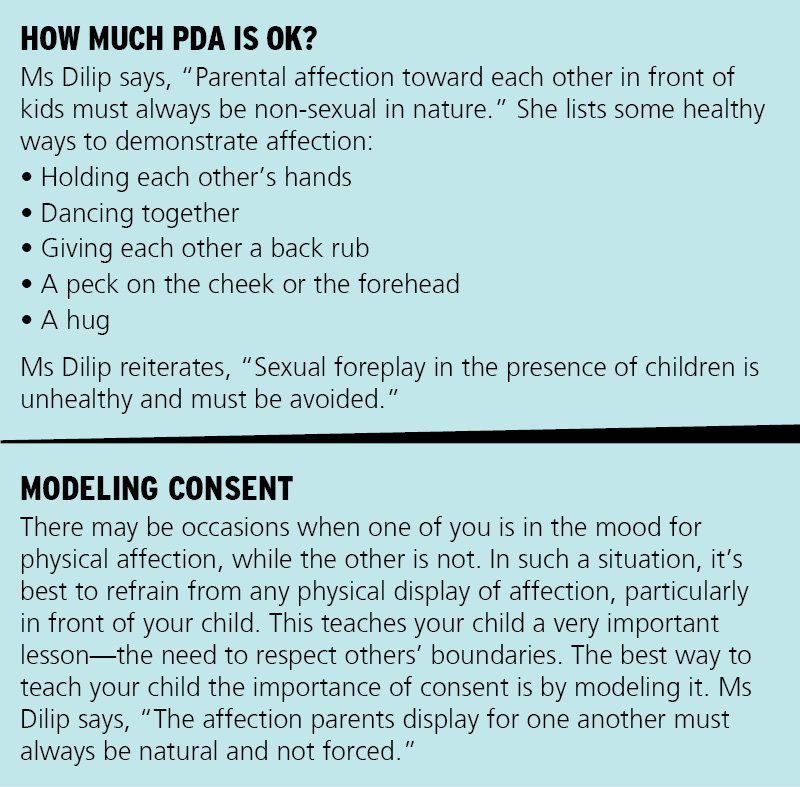
In a conversation with ParentCircle, Mina Dilip, a child psychologist based in Chennai, says, "Just like how children get negatively impacted when they witness heated arguments and fights between parents, they get positively impacted when they observe their parents being affectionate toward one another."
Here are the key benefits of showing affection between you and your partner in front of your child:
It reassures your child: Studies have shown that when children witness warmth and love between their parents, they feel safe, secure and loved.
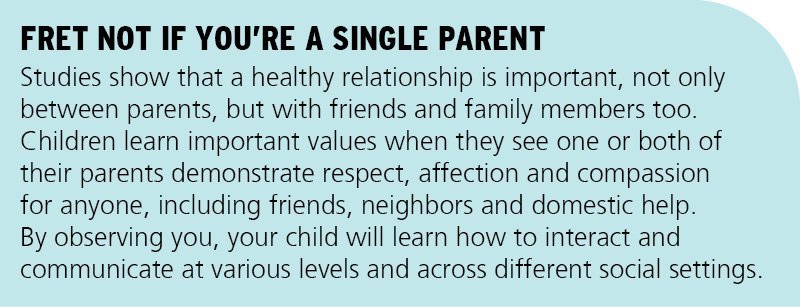
You're being a role model for your child: When your child grows up seeing you and your partner show affection for each other, you're showing your child what a healthy, respectful relationship looks like. Your child learns important values like respect, understanding, and compassion, and comes to understand how to treat other people.
Watching TV with Your Child: Dos and Don'ts
Now, let's move on from PDA between parents to PDA in TV shows and movies. Your child is going to be exposed to PDA on TV at some point. What should you do when a sex scene or a skimpily clad person appears on screen when you're watching TV with your child?
According to Ms Dilip, do not:
- make awkward comments
- switch the channel immediately
- cover your child's eyes
Doing any of the above actions will lead your child to think that the on-screen content is bad, dirty, or forbidden and they might end up feeling guilty. Instead, try these steps:
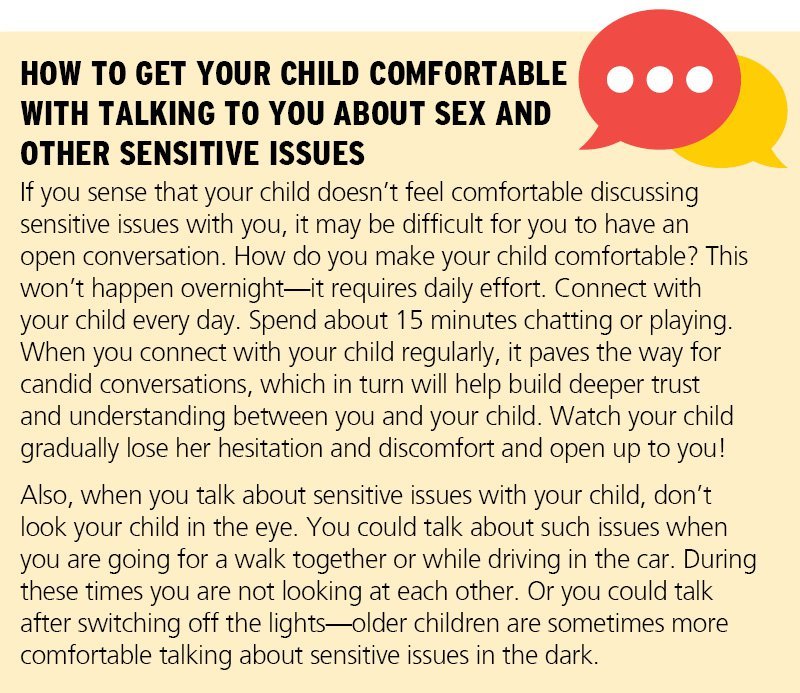
- Remain calm and refrain from making any overt comments just then. When you keep quiet about it, it may encourage your child to bring it up on their own (especially if they're young), therefore paving the way for open discussions and healthy conversations.
- Talk to your child openly and honestly if your child brings it up. But remember, you need to get comfortable with the topic of sex. To avoid any awkwardness or embarrassment, prepare yourself beforehand and educate yourself about age-appropriate sex talk.
- If your child doesn't bring it up, you could say, "What you saw on screen was a relationship between adults. The content isn't appropriate for your age yet, but if you have any questions, feel free to ask." When parents step in to clarify or demystify the situation, it reassures children by helping them address overwhelming emotions like guilt or denial. Children find such content attractive and exciting, yet wonder whether it's bad or forbidden. So an open conversation with parents helps.
- If your child is a preteen or a teen, they may hesitate to talk to you about what they saw on the screen. In that case, you can initiate the conversation. "What do you think about that show?" or "I really like the plot of the show." Discuss the show in general, and slowly and naturally lead up to that particular scene, sharing your views and then inviting your child's views on the same.
- Or, you can directly get to the point with your teen. "There was quite a bit of adult content in some scenes. If you want to talk about it, I am here."
So, here's hoping that you have many open and enriching conversations with your child this year. Remember, home is the first place where your child learns what a loving relationship looks like. So, dear parents, go ahead and celebrate and display your love for each other in front of your child. Here's wishing you a very happy Valentine's Day!

























Comments
Edit
Comment Flag
Cancel Update