
New Education Policy 2020: What Parents Need To Know About The New Reforms
Monali Bordoloi
The New Education Policy 2020 has been announced. Parents, here is what you need to know about the new reforms included in the policy

The New Education Policy or NEP 2020 brings about several significant changes to the current education system. This policy replaces the 34-year-old National Policy on Education (NPE) 1986, making this new policy the first education policy of the 21st century. Take a look at some of the important highlights of the new policy. We have also curated some interesting tweets on The New Education Policy 2020.
What you need to know about the NEP:
Main highlights of the NEP 2020.
- The NEP 2020 has renamed the Ministry of Human Resource Development as the Ministry of Education.
- The policy replaces the old 10+2 structure of school education with the new (5+3+3+4) structure. This includes 3 years in Anganwadi/pre-school and 12 years in school.
- It aims at making teaching in the mother tongue possible upto grade 5 (preferably till Grade 8 and beyond).
- There will be free access to safe and high-quality Early Childhood Care and Education (ECCE) at Anganwadis, Pre-schools or Balvatika for 3 to 6 years old children.
- For students of Grade 3 to 5 or the Preparatory Stage, the new policy suggests play, discovery, and activity-based and interactive classroom learning.
- For students of Grade 6 to 8 or the Middle Stage, the NEP proposes experiential learning in the sciences, mathematics, arts, social sciences, and humanities.
- For students of Grade 9 to 12 or the Secondary Stage, the NEP aims to bring in multidisciplinary study, greater critical thinking, flexibility. At this stage students can take subjects of their choice.
- The policy also suggests 10 bag-less days for school students. Those 10 days will be treated like an informal internship where students can learn a vocation of their choice.
- Going forward, as seen in the case of Mathematics, all subjects will be offered at 2 levels.
- To ease out pressure around board exams, the new policy aims to make class 10 and class 12 exams 'easier' as these exams are primarily meant to test core capacities of students. The new policy wants to discourage months of coaching or rote learning before exams.
- It also proposes a single regulatory body for higher education institutions. However, it would exempt law and medical colleges and common entrance tests for universities.
- The policy also wants to change the rules regarding opening up of higher education in the country to foreign universities.
- To be implemented for the 2022 session, there will be a common college entrance exam twice a year. It will be conducted by the National Testing Agency.
- The NEP proposes that there will be no rigid separation among Arts and Science and commerce streams. All undergraduate education will be liberal that will integrate the arts, sciences, humanities, mathematics, professional and vocational courses and offer choices to students. A student can now choose both history and physics as subjects of study.
- The Bachelor's programmes will be multidisciplinary with multiple entry and exits points.
- The NEP includes initiatives to promote libraries and reading habit among students. It also plans to formulate a National Book Promotion Policy which will take further measures to ensure the availability, accessibility, quality, and readership of books across geographies, languages, levels, and genres.
- It aims to promote Indian arts, languages, and culture at all levels.
- The NEP has discontinued the M Phil degree henceforth.
- The policy makes it mandatory that for teaching in schools, the minimum qualification will be a 4-year integrated B.Ed. degree. This will be implemented by 2030.
- The NEP wants to redesign the report cards for students. In future, the progress card of all students will be a holistic one, this multidimensional report card would focus on the progress and uniqueness of each student. The report card would also include self-assessment, assessment by peers and teachers.
- The new policy states that there will be no rigid separation of learning areas, like curricular, co-curricular and extra-curricular. All subjects including arts, music, crafts, sports will be part of the core curriculum.
- The NEP proposes an autonomous body, the National Educational Technology Forum (NETF). This forum will give a platform to teachers and students for free exchange of ideas. It aims to enhance learning, assessment, planning and administration of education with the help of technology.
What parents are saying about the NEP
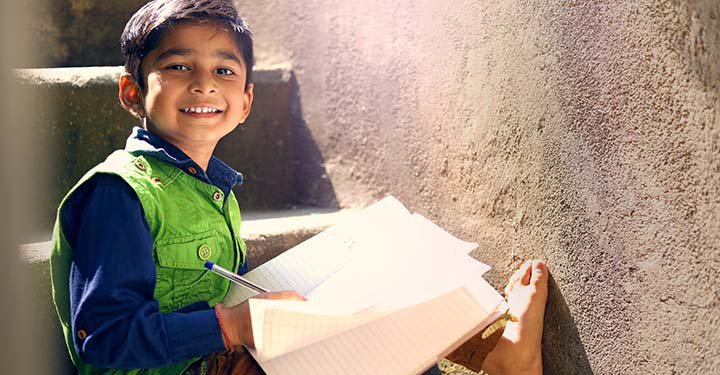
Overall, parents are welcoming the progressive reforms proposed by the New Education Policy 2020.
Sunidhi Venketesh, mother of a Grade 8 student in Bangalore says, "This new policy is the need of the hour. Why children of 21st century should follow an age-old policy? Like everything else, education policies should also change according to the changing times."
Latha M, parent of a school-going child says, "The NEP seems to be student-friendly. Now, the pressure of board exams will not be there. I am happy with the new policy."
If you want to check the NEP 2020 in detail, click here to check the PDF released by the Ministry.
Enhance your child's early education experiences with the well-rounded Dot pre-primary curriculum with an emphasis on essential skill building for successful learning.

























Comments
Parents having Kids with 2 month 1 month or 1 day less for 4 yrs are confused and are dropping their kids from school due to nep rules..nep may be beneficial to the kids but this age limit criteria should not be imposed to students who have already started there pre nursery journey in 2022-23 with the old policy..what should the parents do if they suddenly change the age limit policy like this wht should these kids do..should the parents plan n deliver the baby...no im against this age limit nep rule..
Alka Devi Mar 14, 2023
Introducing vocational training, craftmanship, or trainings that focuses on skill development in classes 9th onwards will help those students who find academics as challenge and feel left out or feel worthless.. Maybe they are good at craftmanahip or any other skill.. This skill based training may help them create self employment rather than just depend on government or private jobs.. We may actually have entrepreneurs in making.. I wish the ICSE, CBSE or any other board are all removed and one common education board is implemented and books too to be implemented prescribed by such board.. Books in pvt schools are so expensive as they implement books by publishers who offer heavy commission.. I just hope things change for betterment of the kids
Vipul gurjar Jan 19, 2023
The new education policy 2020. First of all. This policy impliment by union cabinet of india. Hasn't discuss in parliament as it fandamental rights of constitution. As per the NEP Analysis there no any government school established by union cabinet of india. As it is the NEP just sounds good but practically without good pre school it's doesn't make sense.
Edit
Comment Flag
Cancel Update