author parentcircle author parentcircle author parentcircle author parentcircle author parentcircle author parentcircle author parentcircle author parentcircle author parentcircle
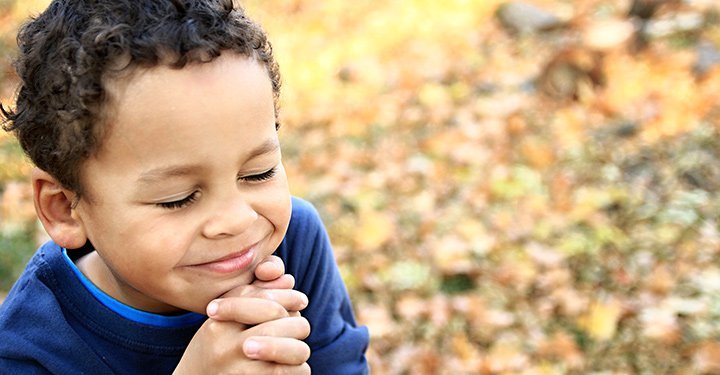
Mindfulness can help children beat stress. Then there are games to help your preschooler master the art of being fully present. Surprised? Read on to find out more about the power of mindfulness.

The Joshi family were on a road trip, a holiday they were taking after months of lockdown. Naturally, everyone was excited. They were driving to a nearby hilly destination and just about 50 km away from their hotel, their car broke down. It was almost dusk and there were no streetlights around. Pooja looked at her twin 4-year-old daughters, who were beginning to get a little bit anxious and restless. She frantically started calling the hotel for help, but her calls failed because of poor network. Sensing her panic, the twins began to cry.
Jai, their father, knew he needed to do something. "Hey girls, shush, I think I hear something. Wait ... Can you hear it too?" he said. Petrified, the girls cuddled up with each other as Pooja wondered what Jai was doing. "Is that the sound of a waterfall nearby?" he asked. Suddenly, everyone became quiet and there was utter silence. It was a waterfall indeed. He then asked the girls about other sounds they could hear and they came up with so many things-from the wind blowing to the rumbling noise in their stomach. Meanwhile, the hotel cab was sent to pick the family up. Although the cab had arrived, the girls wanted to continue the sound game!
Who doesn't want to know what their future holds? Don't we spend a lot of time thinking about our future? Mindfulness is about doing just the opposite-instead of focusing on the future, you notice what's happening right now within you and around you. It's exactly what Jai and the twins did.
Mindfulness helps us become more aware of the present. Although parents and teachers often tell children to "pay attention," there's a need to check if children are equipped with the skills to be fully present in the moment. With more and more people (including children) struggling with mental health issues like stress, anxiety and depression, it's clear that we need to find better ways to fulfill our social and emotional needs. This is especially true for children.
Mindfulness can be a key pathway that leads to self-awareness and emotional stability. Let's take a look at what mindfulness means, how it works, and whether preschoolers can and need to practice it.
Mindfulness is a tool that helps to bring you in sync with the present moment. When we breathe in and out slowly and are aware of our breath, we're breathing mindfully. When we look at our plate, notice the colors of the food and taste it with complete awareness, we're eating mindfully. When we talk to someone with full awareness of what impact our words can have on them, we're speaking mindfully. It can be described as the process of perceiving the present moment by immersing our senses in it.

Like adults, children have multiple things to do in a day. Learning new things, completing given tasks, making decisions and prioritizing-these are all things that even they do on a daily basis. Mindfulness can help children respond better to their daily busy schedules and stress. It helps improve cognition, attention and focus. A series of studies published in the journal Psychological Assessment by Greco and colleagues in 2011 that mindfulness is positively correlated to quality of life, academic competence and social skills. A review in The Journal of Children's Services in 2013 that when mindfulness is practiced regularly, it improves one's mental well-being, mood, self-esteem, positive behavior and even academic learning.
Some of the benefits of mindfulness include:
As you can see in the scenario mentioned above, Jai simply brought his children's attention to what was happening around them at that moment. By doing so, his children navigated in a calm way through a stressful situation, which otherwise could have led to a traumatic experience. He was able to turn a negative situation into a positive one.
In moments like these, when your child gets alarmed, mindfulness can help him press the snooze button on this alarm and prepare him to respond better to the situation. Even in situations that don't necessarily pose any threat, mindfulness can help your child be more focused and motivated. It can even make everyday tasks more joyful.
In his book Planting Seeds: Practicing Mindfulness with Children, Zen Master Thich Nhat Hanh writes,
"Every human being has the capacity to be mindful, so it is not something strange. We all have a seed of mindfulness in us. If we keep practicing, that seed will grow strong, and any time we need it, the energy of mindfulness will be there for us."
Mindfulness is something that parents can nurture in their children from a young age.
1. The Breath Game
This game is about mindfulness in breathing. Our own Vedic texts-and even today's scientific research-show that deep breathing is beneficial to the mind, body and soul. Have your child begin or end the day with a simple mindful breathing practice such as this one. Try to make it a daily habit. Here's how to breathe mindfully:
This is a very popular technique, for the right reasons. When you breathe mindfully, your mind becomes focused, undistracted by fleeting or disturbing thoughts. This helps calm the mind. This game doesn't need a special place or a special time-it can be done in the car, in the bed, in the garden.
2. The Slow Race
This is just like any other race except in this race, the slowest player wins. You can play this game in the neighborhood park. Following are the steps:
There's no better place to practice mindfulness with your child than in nature. A simple nature walk can turn into a mindful experience. Go for such walks often and really pay attention to the sounds, the wind, how the ground feels, what the weather is like. As a next step, have your child focus on one particular thing, like the chirping of a bird or the wind blowing through his hair. This will help him with overall concentration. Being mindful in nature can also help him appreciate and be thankful for all the good things nature has to offer.
3. My Emotional Pebble
Mindfulness can help a child regulate his emotions, if practiced regularly. In this activity, your child gets to talk about her emotions without any inhibitions as she realizes what she's feeling at the moment. To do this, all you need is a pebble.
You can use anything as a mindfulness object-a ball, a favorite toy or even a cushion that the child can hold. This is a simple way to include mindfulness in the everyday routine.
4. I Know What I'm Eating
Mindful eating is helpful for developing a healthy relationship with food. It also makes eating more joyful. Play this simple game at mealtimes to help your child practice mindfulness.
5. My Silent Time
This is a game your child can play even when she's doing another activity. For instance, if she's coloring a picture, she can do it silently. You can continue doing your work next to her, silently. Here's how you can play this game:
In her book The Conscious Parent, author Shefali Tsabary writes,
"It's helpful to encourage our children to sit in stillness, so that they learn to exist in a state of quiet without the need to converse. Periods in the car are great opportunities to create such a space. To this end, it may be beneficial not to take gadgets or videos in the car."
As parents, we may feel the need to always fill the silence. While a conversation has its own place in our day-to-day lives, we must remember that silence can be magical too.
In the ocean of life, we are all navigating our own ships. And if we place our awareness at the helm and use our senses to anchor the ship once in a while, we're journeying mindfully. If this metaphor is too much to absorb, let me try and put it simply- mindfulness makes you fully aware of the present and when you practice mindfulness often, you begin to experience the present with more awareness.
Like most other skills, mindfulness can be nurtured in your child from an early age. Just get your child to practice it using engaging games and see him take to mindfulness naturally.
In a nutshell
What you can do right away
Also read:
Mindful Parenting Interview With Wynn Burkett
Choose To Be Healthy: Mindful Eating For Active Kids
4 Mindful Parenting Strategies To Connect With Your Teen
About the author:
Written by Saakshi Kapoor Kumar on February 2, 2021.
Saakshi Kapoor Kumar holds a Master's degree in Psychology from Ambedkar University, Delhi and is working as a Senior Associate-Special Projects (Content Solutions Zone) at ParentCircle.
Reviewed by Meghna Singhal, PhD on February 5, 2021
Dr. Singhal is a clinical psychologist and currently heads the Content Solutions Zone at ParentCircle. She has a doctorate degree from NIMHANS (Bangalore) and holds a post-doctorate in parenting from the University of Queensland (Australia).
Join our Circles to share, discuss and learn from fellow parents and experts!
Looking for expert tips and interesting articles on parenting? Subscribe now to our magazine. Connect with us on Facebook | Twitter | Instagram | YouTube
Comments
Rajesh R Feb 10, 2021
Edit
Comment Flag
Cancel Update