
Managing Online Classes And Work-from-home: Less Stress And More Connection
Team ParentCircle
Are you having a hard time balancing work-from-home and your child's online classes? Arundhati Swamy, family counselor and head of Parent Engagement Programme at ParentCircle, shares some practical tips to keep you going
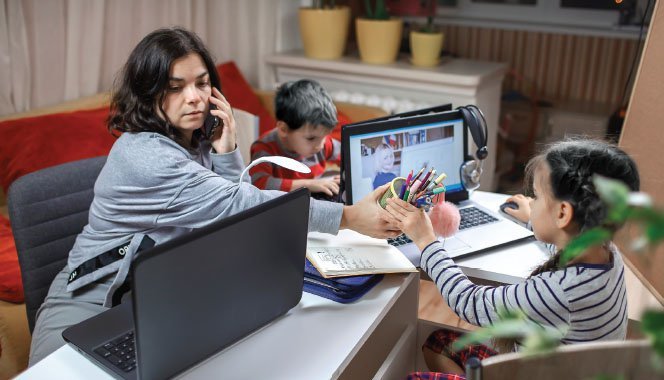
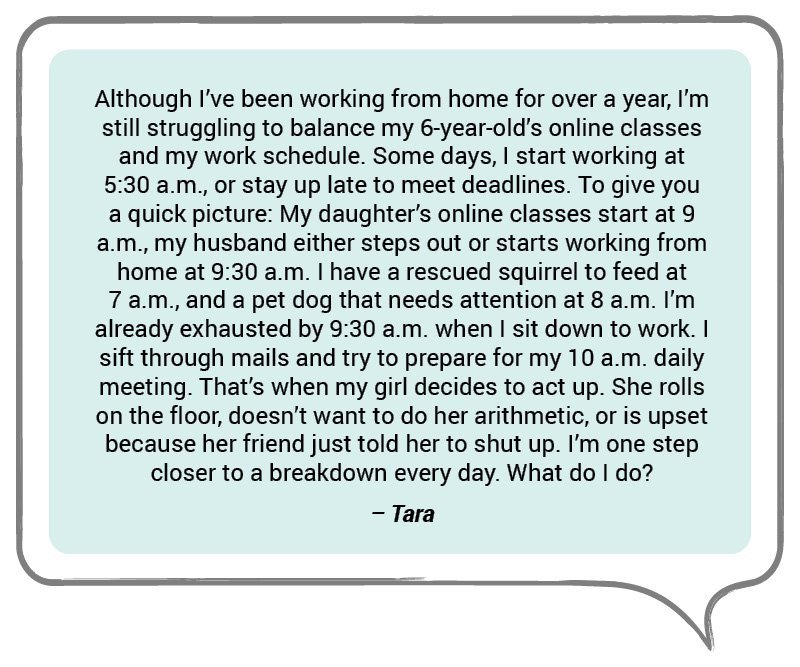
Tara, it looks like your stress levels hit the roof between 7 a.m. and 10 a.m., much like the early morning rush you managed every day when the kids went to school and you went to work. But kids going to school have their advantages. Each of you goes off to different locations, free to focus on the tasks at hand. And now, you find yourself available 24/7 to everyone at home. It seems like you have to attend to everything.
Here's a thought: What happens when we treat everything as urgent and important? Well, we approach every task as an emergency, trying to manage everyone and everything. Very much like trying to put out a fire! The brain releases cortisol, the stress hormone that raises our heart rate and blood pressure. We raise our voices, feel irritable, and panic. For example, while feeding the squirrel, if your child snuggles up to you, it may be her way of connecting with you. But in urgent mode, you're probably thinking, "I don't have time for this," so you sternly instruct her to get ready for her online class.
In this background, let's imagine what our children's mornings are like. They wake up to a hectic atmosphere, charged with tension. They, too, are emotionally stressed with feelings of hurt and disappointment. So, when something upsets them during the online class, they are ready to erupt. We, too, are ready to erupt, as we are also stressed.
Tara, as your morning routine and tasks are unlikely to change for some time, here's the first strategy for dealing with them.
How about thinking of your morning tasks as being important, not urgent? It would immediately take the urgency out of the morning chores. A huge relief, right? No cortisol, no stress. Now you can go about your work in a more calm, controlled manner. You can snuggle with your child for a few moments to connect with her, and ask her for help in feeding the squirrel. You would make practical adjustments like delegating work (trusting your husband and other family members to do a good job) or rescheduling less important tasks. Now, visualize this scenario. How does it make you think and feel? Wouldn't it be worth a try?
The second strategy is to recognize the valuable help at hand. Your bubbly 6-year-old would love to show off the things she can do on her own. "I can do this," or "I know how to feed pets," or "I can make a sandwich!" What better time than now to entice her into being your smart assistant, or even the chief and let her take charge in her way. Besides, everyone benefits when you delegate chores:
- By helping out, your child feels responsible and imbibes a family value.
- When she feels good about herself, her self-esteem will grow.
- When you feel less hassled and more relaxed, you will start your work feeling calmer and more focused.
Now, let's come to the matter of her tantrums, which are probably her way of seeking your attention. Try to understand her need for your attention by doing this little exercise:
- Find some quiet time and a quiet place.
- Imagine yourself when you were a 6-year-old, the school you went to, your classroom, the teachers, friends, snack time, playtime.
- Imagine all this suddenly snatched away from you, because schools have shut down due to a pandemic.
- You're attending online classes. Your friend is being mean to you. You didn't do your math homework.
What does all this make you feel? Scared, helpless? Now, think about how you would want your parents to help you with these feelings. Well, that's exactly what your child is feeling and wants from you. This deep understanding could help you see your child with compassion. You would want to reach out and support her, say things to calm and reassure her, rather than expect her to pull herself together and settle down on her own. If she's upset while youre at a meeting, excuse yourself for a few minutes. By now, most colleagues have come to accept these little interruptions at work, especially when they know you're managing work and your child.
Here's how to prepare your child to settle down before a meeting:
- Spend 5 to 10 minutes giving your child your full attention— listening, playing or chatting. In effect, you're telling her that she is important to you.
- Tell your child about your upcoming meeting, and ask her how she could give you some quiet time. It makes her feel she's doing something important for you.
- Allow your child to keep herself engaged with things she enjoys while you attend your meeting. Let her know that she can signal you if something comes up.
- Reconnect with your child for a few moments after the meeting. Thank her for being helpful.
There are times when you may be annoyed by her disturbances. Take a few deep breaths to calm yourself. Let your child snuggle into your arms, soothe her till she calms down, and promise to talk to her about it later. Such gestures will restore her trust in you and strengthen your relationship with her. And you can return to your work feeling pleased for managing the situation!
Some of your child's emotional outbursts during the online classes may be caused by feelings of low self-esteem. Confidence would normally develop through many school experiences—classroom learning, making friends and getting along with them, playing games, taking small risks while trying to do new things, sharing ideas, and building skills.
Here are a few tips to replicate some of those confidence-building experiences at home:
1. Your child's physical health requires lots of movement to build her muscles, improve motor coordination and visual-spatial skills.
You can help by allowing your child to:
- Play outdoors (within safe limits) to burn up her energy, exercise her muscles, and sweat it out.
- Do indoor physical activities (yoga, dance, fun exercises).
- Move around during the online class, if that makes her comfortable.
2. Friendships at school play an important part in how your childs self-image develops. At this age, she wants to be liked by her peers and gain their acceptance.
How you can help
- Arrange for regular virtual meetups with her friends and their parents. The children could have a show-and-tell session to demonstrate their skills. Have a round of I like_______________ because she/he is ________ .
- Create a safe bubble for a few children to meet, play and practice their social skills.
- Permit your child to occasionally observe you at work. She could pick up several social skills from the way you interact with people.
3. At her age, your child's cognitive or thinking skills are developing rapidly. Online classes may have their limitations in meeting your child's cognitive needs.
How you can help
- Answer your child's questions with explanations. For example, a child asked why she was washed brown in her Zoom video. Her mother explained the science of light and shadows in simple terms. The child immediately opened the door to allow light to fall on her.
- Read to her, and let her read lots of books.
- Think aloud so that she listens to how you make decisions.
- To foster creativity, let her get bored sometimes. You can even ask her to create a new game or story.
- Introduce her to games that develop different skills (eg, Sudoku, puzzles, Jenga).
Tara, we hope you will find all these tips helpful. Do remember that these tips would be most effective when you and your child have a proper sleep routine.





























Comments
Edit
Comment Flag
Cancel Update