Being kind is to open our hearts, be friendly and considerate. It is a quality that comes naturally but can also be nurtured. As a parent, you can help your child become kinder to others.
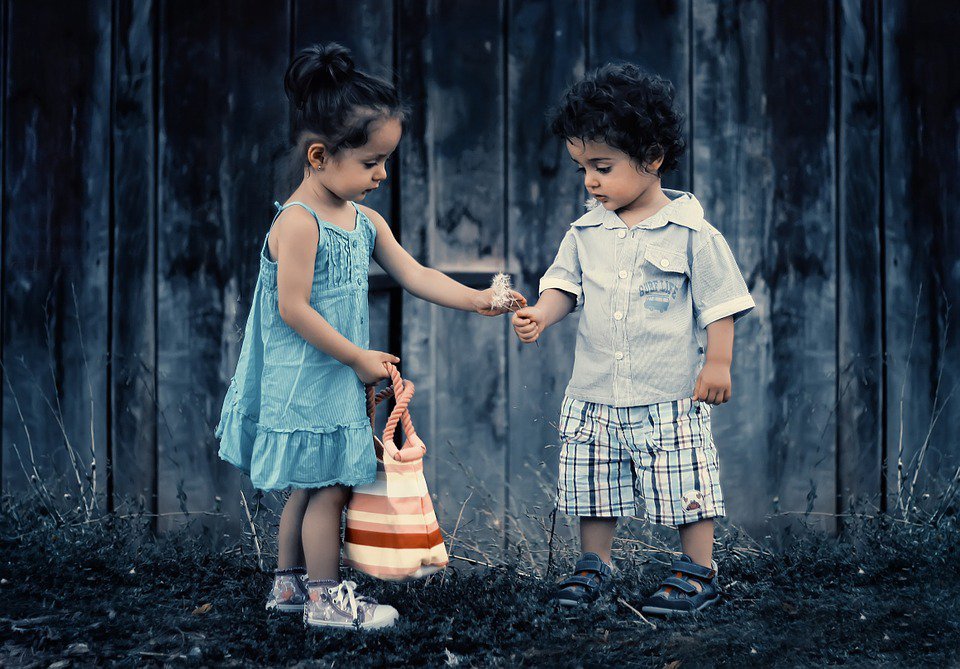
"Kindness is the language which the deaf can hear and the blind can see." - Mark Twain
While packing her school bag, Bittu noticed that her rough note was missing. Unable to find it, she went to her mother, Alka:
Bittu: (In a worried voice) Mama, my rough note is missing and I don't have an extra notebook. What should I do?
Alka: Don't worry, we will buy a new notebook our way to school tomorrow.
Next day, on the way to school, Alka and Bittu stepped into the local bookstore to buy a notebook.
Bittu: Mama, can you buy me an extra notebook and pen, too please?
Alka: Sure Bittu. But, why do you need those?
Bittu: I will give them to Uma. Her parents are poor and cannot buy study materials when she needs them. So, she always tries to save paper and ink.
Like Bittu, most children are naturally inclined towards being kind to those around them. As the world moves towards becoming increasingly self-centred, children like Bittu with the ability to empathise and lend a helping hand, stand out.
According to Maria Popova, the famous writer, thinker and blogger: "The measure of true kindness - which is different from nicety, different from politeness - is often revealed in those challenging instances when we must rise above the impulse toward its opposite, ignited by fear and anger and despair." Surabhi Katyal, a student, says, "Kindness is about not making assumptions, willingness to listen, and being patient with people."
While kindness may mean different things to different individuals, what everyone does agree with is that, kindness has the power to usher in positive change, not only in the world around us but also within ourselves.

On the surface, it does seem like kindness is all about giving and benefiting others. However, this isn't the case. Kindness also brings about benefits for you, the giver. Being kind helps us:
To help others without expecting anything in return comes naturally to most children. As parents, encourage this inherent tendency in your child, so that she continues to be kind to others.
Writer Anne Herbert coined the phrase: 'Practice random kindness and senseless acts of beauty'. The idea was to inspire the world to indulge in spontaneous acts of kindness. For example, there is a hundred-year-old tradition in Italy called caffe sospeso (suspended coffee). It started out in working-class cafes when someone would buy one coffee, but pay for two. The second coffee is kept pending, until someone who cannot afford to pay or is in need comes and asks for a sospeso. What a beautiful and heart-warming tradition!
Random acts of kindness
"A random act of kindness can be as simple as making a connect with a person - eye contact, a greeting, a smile, a kind gesture, an empathetic expression. These fleeting yet significant micro-moments alter brain chemistry and make us feel good about ourselves and about others." - Arundhati Swamy, Head, Parent Engagement Programmes, ParentCircle
These unexpected acts of kindness helps us become more empathetic and compassionate. It also gives us a feeling of being connected.
Here is how you can encourage your children to set in motion a series of positive developments their lives:
Acts of kindness can not only make the giver and the receiver feel good but also, have a cascading effect by encouraging others around to be kind as well. So, let's go and spread some kindness in the world!
About the author:
Written by Jasmine Kaur on 9 November 2018.
Join our Circles to share, discuss and learn from fellow parents and experts!
Looking for expert tips and interesting articles on parenting? Subscribe now to our magazine. Connect with us on Facebook | Twitter | Instagram | YouTube
Comments
Edit
Comment Flag
Cancel Update