The most treasured memories for any parent are those handmade "I Love You Mom" or "I Love You Dad" cards stuck to the fridge. Those wobbly figures with long hair and even longer arms hardly resemble you, but they mean more than any store-bought card ever could!
Drawing and other art activities are wonderful ways for preschoolers to explore their creativity and express their ideas. Research by Joyce Ofosua Anim, The Role of Drawing in Promoting Children's Communication in Early Childhood Education (2012), highlights how spontaneous drawing can help children communicate their thoughts and experiences. Providing opportunities to create without expecting a particular outcome allows children to explore their imagination freely.
You don't need to be an artist or invest in expensive materials to encourage your child's creativity. A little time, a few materials, and an open mind can make art a joyful experience.
Children often enjoy doing what their parents do. Sit beside your child and draw, paint, or colour together. You don't need to create a perfect picture. Let your child see you enjoy the process, make mistakes, and try again.
Give your child age-appropriate materials such as crayons, washable paints, and chalk. Try finger painting, sponge printing, or making patterns with leaves. You could also draw in sand or decorate a cardboard box.
Let your child experiment rather than insisting on how a drawing or painting should look. If your child draws a blue elephant or colors the leaves purple, do not correct them. It's part of creative exploration.
Always supervise young children and ensure art materials are safe and suitable for their age.
Instead of saying, “That's a pretty picture,” ask your child to tell you about it: “Tell me about your picture,” or “What made you choose these colours?” or "Who is this person in the picture?"
You could also make specific observations, such as, “You used so many different colours!” However, follow your child's lead. Some children enjoy explaining their artwork, while others prefer to move on to their next creation.
Preschoolers may move quickly from one activity to another. Some will spend a long time painting, while others may stop after a few minutes. It's important not to pressure your child to finish a picture or insist that they colour within the lines.
Young children's drawings develop gradually from scribbles to more controlled lines, shapes and recognisable forms. Children progress at different rates, and their drawings need not look realistic.
Offer blank paper and let your child decide what to draw. Avoid comparing their artwork with other children's work or expecting specific results by a particular age.
Art activities offer children opportunities to practise several skills:
For more information, read: Why Art and Craft Are Most Essential For Your Child’s Growth, Learning And Development
Looking for simple ways to get started? Try these activities at home:
Choose age-appropriate materials and supervise your child. Make sure there are no small objects or other materials that could pose a choking risk.
Your preschooler's artwork doesn't have to be beautiful, realistic or recognisable to anyone else. They just need the freedom to experiment, make choices and enjoy creating. So, put up those wobbly drawings, celebrate your child's efforts and make room for the next little masterpiece!
Last updated on: October 22, 2026
Related Article
Pre-schooler to Pre-teen • 8 Mins Read • 91.9K Views
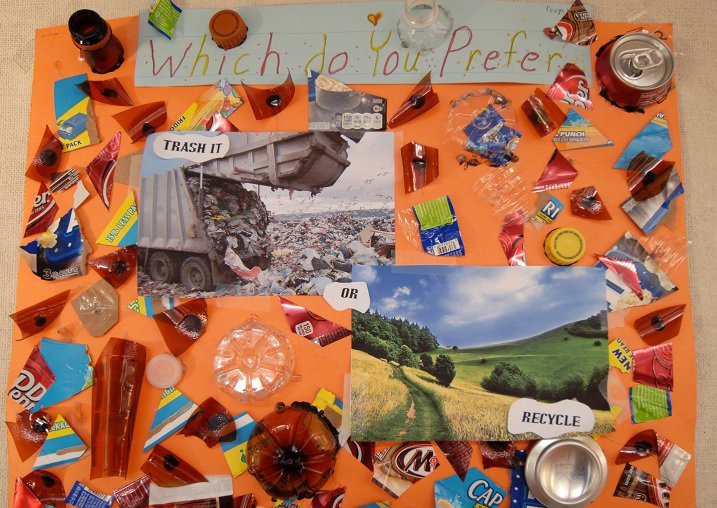
Waste is wasteful only if you treat it so. Looking for simple ways to teach your child about recycling? Try these fun, hands-on DIY projects that turn everyday waste into creative learning experiences at home



Pre-schooler • 3 Mins Read • 9.8K Views
We use colors to decorate, express our feelings, send out messages, and whatnot. Help your child learn colors to express himself in different ways.

Toddler to Pre-schooler • 4 Mins Read • 11K Views
Origami, the Japanese art of folding paper into attractive shapes, can be a great learning experience for your child. We explain the concept with some interesting do-it-yourself activities
Related Community
Share your thoughts, parenting tips, activity ideas and more
Popular

4 Mins Read • 25K Views
11 Mins Read • 5.8K Views

6 Mins Read • 8.2K Views

7 Mins Read • 5.6K Views

4 Mins Read • 11.5K Views
6 Mins Read • 1.5K Views

















Comments
Edit
Comment Flag
Cancel Update