
Worried about how to prepare for life after lockdown? There tips can help you
Dr Ananya Sinha
We try to answer the big questions on everyone's mind: What psychological adjustments will families need to make after the lockdown? And how can families adapt to the "new normal"?
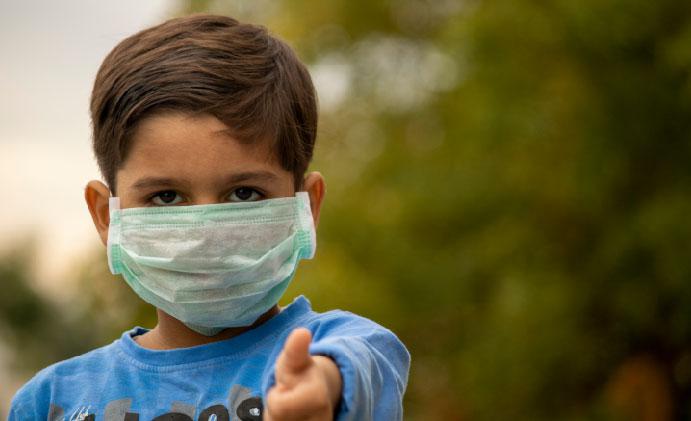
The lockdown due to Covid-19 was a difficult phase for Mihir and Pramila. They were craving to go out, and struggling to adjust to life in social isolation. However, when the government announced the possibility of the lockdown being lifted, they felt exactly the opposite. They were gripped by the fear of going out of the house and meeting people! Mihir had become particularly comfortable with his work-from-home life. The thought of taking the crowded metro to travel to office and back (in the midst of a pandemic) terrified him. Pramila, on the other hand, was more concerned about their daughter, Rhea. How was she going to prepare Rhea for the new normal?
What Mihir and Pramila feel is probably something most of us are experiencing.
The new normal
Going to the office the first time after the lockdown was quite an eye-opener for me. It felt strange to see everyone on the street wearing a mask. Even I was overcautious. Before boarding the cab, I sanitized the seat with all my might, and double-checked to see if the mask covered my face well (and kept thinking that I should have bought the face shield!). Throughout the journey, I remained in the grip of unspoken anxiety.
On reaching the office gate, the situation felt even more unusual. As I stepped in, masked security guards surrounded me, one checking my temperature standing a meter away from me, the other impatiently waiting to sanitize my hands. On the way to my cabin, I panicked at almost every step. The fear of having inadvertently touched an infected surface made me sanitize my hands a zillion times before I reached my room.
Inside the office, nothing was the same as before. All my colleagues were strictly following the social distancing protocol; the masks they wore muffled their voices and made it almost impossible to read their facial expressions. And I told myself, "Welcome to the new normal."
Psychological readjustment
Initially, many of us were skeptical about the lockdown, but we gradually adjusted to life in isolation imposed by the COVID-19 situation. So much so that we might have started enjoying it! So, lifting of the lockdown has been anxiety-provoking for many of us.
Talking to 'ParentCircle', one of the parents said, "I don't feel like I am ready to get back to my old normal. I am actually enjoying this relaxed parenthood, where I can do my office work and, at the same time, spend adequate time with my teenage daughter. Are we really ready for things to normalize?"
Psychologists call this anxiety about going back to normal "reverse cultural shock" or "reentry syndrome".
The post-lockdown life will require us to consciously incorporate various changes in our daily lives. Some of the changes we must adopt include:
- No physical contact: With the novel coronavirus still spreading, we're supposed to avoid any physical contact with those we meet outside our home, particularly in public places. So, no hugs or handshakes with anyone.
- Social distancing: Better understood as physical distancing, social distancing is the new norm. It might be a challenge to adapt to this new practice of staying at least six feet apart from those around us, not gathering in groups and staying away from crowded places. Thus, socialization would primarily happen through digital platforms, and the weekend outings would be significantly curbed.
- Following hygiene practices: We may not know much about the virus, but what we know for sure is that the virus spreads when an infected person coughs or sneezes. We may also come in contact with the virus if we touch a surface that has the pathogen on it. So, following hygiene practices, particularly those related to hand hygiene, is one of the best ways to fight the virus. Rigorous hygiene practices are, therefore, going to be a part of our daily routine for quite some time now.
- Carrying personal protection accessories: Are you used to carrying items such as a face mask, tissue paper or sanitizer in your handbag? Well, we are in a phase where we can't even think of going out without carrying personal protection accessories.
- Going digital: A large part of our life is going to get digital. Be it our work life, our children's education or our social life, the post-lockdown phase will see a steep rise in digitalization-and digital dependence is here to stay.
All these changes can be overwhelming to adapt to. The psychological readjustment that families will have to make to reintegrate back into society is huge.
Preparing for the re-entry
As the coronavirus cases rise dramatically across the country, it's clear that returning to the old normal is probably not a possibility in the near future and we will have to adapt to the new normal. So, let us explore the psychological readjustments necessary to cope with post-lockdown life:
- Reintroduce the old routine for your family: One way to prepare ourselves to go back to the pre-lockdown life is to gradually introduce the old routine for our family. So, begin by reintroducing the same morning rituals you used to indulge in earlier-set an alarm to get up at the time you used to during the pre-lockdown days, take a shower, have breakfast, exercise, get ready for work and prepare your children for school (even if online!). An attempt to restore the pre-lockdown routine will help you reintegrate with post-lockdown life.
- Catch up on your social lives: Humans are social beings and the need for social interaction is imperative for our well-being. Research has amply demonstrated that an increase in social interaction leads to less stress and better mental health among individuals. However, the focus of the COVID-19 safety plan is on physical distancing. Fortunately, we live in a digital age, and so we can keep in touch with our friends through online platforms, while we continue to maintain physical distance. When the lockdown is lifted, we may still choose not to meet, but can continue interacting through video conferencing options. Even if you decide to catch up with your friends in person, there are some safety measures you could follow, such as hanging out with a few individuals as possible (and spending time with the same people); not sharing food, drinks or utensils; not sharing bat, ball or objects passed back and forth; and avoiding singing or chanting.
- Revisit pre-lockdown memories: Another effective way to adjust to post-lockdown life is to revisit the pre-lockdown memories. Positive pre-lockdown memories will help reconnect with the normalcy of pre-lockdown life and expedite the reintegration process. It might be a good idea to browse through old Facebook posts, scroll down the Instagram page or just flip through old memoirs or albums to revisit the old memories. You may also consider talking to your family about the significant events of your life before the lockdown. If you have young children, you may engage in a project of making a "memory box". This entails reconstructing positive pre-lockdown memories using creative mediums like art and craft. It can be a fun activity for children and can also help them readjust to life after lockdown.
- Use mindfulness exercises to manage your anxieties: The COVID-19 crisis is an unprecedented situation and the uncertainty associated with it may lead to stress and anxiety. You can practice mindfulness-based relaxation exercises to manage the anxiety that may arise in the post-lockdown period.
Nupur Dhakephalkar, founder and chief clinical psychologist, Center of Mental Health, Pune, says, "Mindfulness means being aware of the present, of the here and now. When worrying thoughts come, when the mind wanders away to the uncertainties of the future, one must remember to come back to the present moment. I believe mindfulness is a powerful tool we can use right now."
Simple breathing exercises can help your child to calm down. For adults, guided meditation may be useful in reducing anxiety. This typically involves following the instruction of a mental health professional on breathing and imagery. A five-minute meditation routine, twice a day, can calm you down.
Says Dhakephalkar, "Just 15-20 slow, long, mindful breaths will create a shift in your inner experience. You can also do a grounding exercise like observing and becoming aware of five things that you can see, four things that you can touch, three things that you can hear, two things you can smell and one thing you can taste."
- Focus on what you can control: The best way to deal with the uncertainties during a pandemic is to know what you can control and what you can't, and focus on the things you can control.
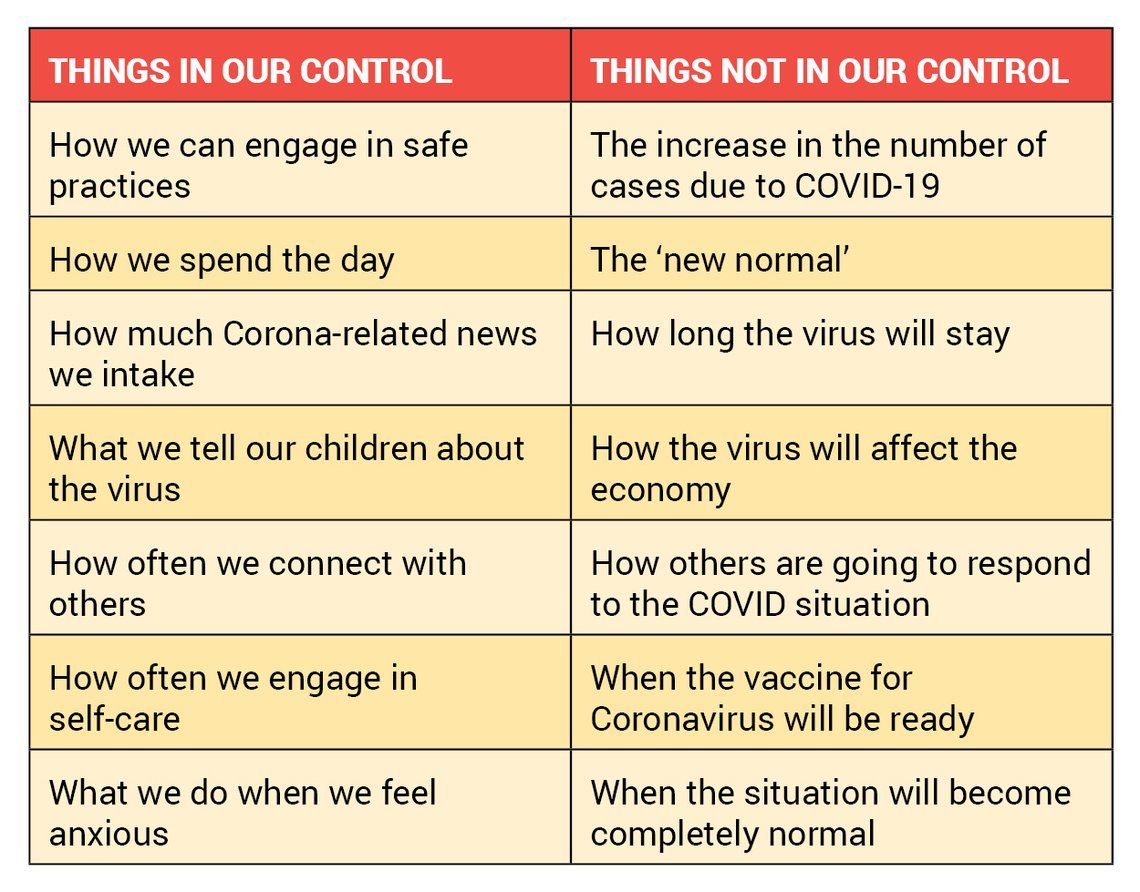
How parents can help their children prepare for the 'new normal'
For children, the new normal is drastically different from their usual normal. Going to school and having fun with peers have been replaced by limited or no access to playgrounds, no face-to-face group games, no in-person birthday parties, online classes or the possibility of staggered attendance in schools. As parents, we can do the following to help our children adjust to post-lockdown life:
1. Communicate: According to Dr Rajat Mitra, director of the Swanchetan Society for Mental Health, an NGO, communication is the key. Talk to your children about the virus. Encourage them to share their concerns and fears, and try to steer the discussion toward the positives of the new normal. You should also emphasize safety strategies and how they can be "warriors" in this fight against the "Corona monster". Ask your child to imagine what post-lockdown life would be like so that you know what your child feels, knows and hopes for.
2. Balance digital usage: Online classes and digital social interactions have significantly increased screen time for children. Also, the post-lockdown phase is anticipated to be heavily dependent on technology. So, let's focus on striking a balance between online and offline activities. As Rashmi Chari, associate director, Centre for Curriculum and Research, Bluebells School International, highlighted in one of her articles, "The rule of thumb should be-what can be done offline should be avoided online." The children can continue to get educated and socially connected using online platforms. You can arrange for online birthday parties and social gatherings, but it's vital to engage children in activities like painting, playing a musical instrument, singing or reading books. You can also give them responsibilities like watering the plants or feeding their pet fish.
3. Spend quality time with family: One of the best ways to adapt to the post-lockdown life is by spending quality time with your children. Try to increase activities which you and your children can do together-exercising, playing indoor games, cooking, cleaning, baking and so on. The children will feel engaged and it will be fun for them if these activities are designed accordingly.
4. Empathize: Don't rush to make things normal for your child. Like us, children too need their emotions to be validated. One of the best ways to do so is by empathizing with your child-"I understand you're angry, that you can't celebrate your best friend's birthday." Hold your child and say, "I know you miss the way things were. I do too!" The two most powerful words when we are struggling are "Me too". And our children need them now as much as we do.
5. Focus on the brighter side: Teach your children to notice the good around them. This doesn't mean pretending that the crisis is over and life has returned to normal. Instead, the goal is to notice the details that make our lives richer and more pleasant. Having chocolate milkshake, playing monopoly as a family, fresh bedsheets, a stack of books to read-the more our children notice the good things, the more they learn to appreciate their life.
In a nutshell
|
What you can do right away
- Introduce a routine similar to the pre-lockdown routine for your family.
- Devise a safety plan with your child.
- Make a list of activities you can do with your child during the week.
- Engage in mindfulness meditation to reduce anxiety.





















Comments
Edit
Comment Flag
Cancel Update