How to prepare for GMAT? Every GMAT aspirant asks this question. Read on to know how to prepare for GMAT, when to start preparing for GMAT, GMAT study plan, and the best GMAT exam books.
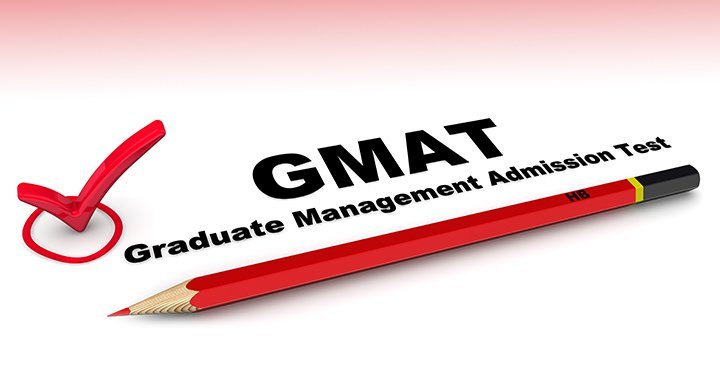
Cracking the GMAT exam is a must for anyone who desires to pursue MBA from a top business school.
Is your child planning to appear in the GMAT but doesn't know how to prepare for the GMAT exam?
Preparing for GMAT is stressful, and more so when one doesn't know how to prepare for GMAT at home.
To clear the exam with a good score, a candidate should not only know how to prepare for GMAT, but also when to start preparing for GMAT and the best GMAT exam books.
Our GMAT preparation tips focus on guiding your child towards preparing well and giving his best in the exam.
How to study for GMAT 2020
The GMAT exam tests a candidate's ability in four areas. These are:
Analytical Writing
Integrated Reasoning
Quantitative
Verbal
Preparing for the GMAT exam can be overwhelming and confusing. All the study materials and tips available may not prove helpful, if a candidate doesn't know what to focus on.
Here are a few effective GMAT preparation tips for each of the four sections of the exam.
How to prepare for GMAT Analytical Writing assessment
The GMAT Analytical Writing assessment tests a candidate's critical thinking, analytical and communication skills. It is also a test to gauge a candidate's knowledge of the English language.
In this test, the candidate must (1) critically analyse a passage that presents an argument and (2) write a response critiquing the argument. The critique should be based on reasons, and not the candidate's likes or dislikes. Also, the response must be written in simple and effective English.
While preparing for the GMAT Analytical Writing test, a candidate should focus on learning to:
Find out logical fallacies or flaws in a given argument; some examples of logical fallacies that a candidate should look for are False analogy, Appeal to emotion, Appeal to popularity, Anecdotal evidence, Black or white or False dilemma fallacy, Burden of proof and Red herring fallacy
Understand the various types of fallacies used in a given argument by reading in detail about persuasive reasoning and fallacies; also, the candidate should browse the Internet to learn more about the various types of logical fallacies
Identify arguments, and break down arguments into conclusions and reasons
Read sample essays to understand how arguments are evaluated and the approach taken for writing the response
Come up with a pattern or structure for writing the response; the pattern can be created by carefully scrutinising the sample essays; this is a must to ensure that during the exam, the candidate doesn't need to spare time to think about the response structure
Work on the shortcomings; to do this, the candidate should get someone who is good in English to read the response, point out the shortcomings, and suggest ways to improve
Best books to prepare for GMAT Analytical Writing
GMAT Analytical Writing (by Vibrant Publishers)
The GMAT Official Guide 2020
Ace the GMAT: Master the GMAT in 40 Days
Manhattan Review GMAT Analytical Writing Guide
Writing Skills for the GRE/GMAT tests
How to prepare for GMAT Integrated Reasoning
This section of the GMAT exam tests a candidate's ability to analyse and interpret data. Here is what a candidate should pay attention to while preparing for the GMAT Integrated Reasoning test:
Table analysis: This involves finding the answers to the questions from data given in a table format. To do well in this section, the candidate should practise:
Reading the information carefully so as to interpret them correctly - some statements may be written in a such a way that they appear confusing
Sorting the tables to understand how the variables are related to each other; for example, inversely or directly proportional
Summarising the data on a piece of paper to avoid moving from one table to another
Finding out which question is related to which data set to narrow down on the answer
Graphics interpretation: Here the candidate must analyse the data presented in the form of graph, text and chart, and select the correct option from a drop-down list. To fare well in this section, the candidate should:
Familiarise herself with the different types of graphs and charts, and how data is represented through them
Revise the different maths formulae and concepts learnt in school and college
Learn to identify the possible relationships and trends between the different sets of data
Read carefully the axis labels, units and numbers mentioned in graphs and charts
Read all the options before narrowing down on the possible answers
Work on which mathematical concepts to apply and how to apply to find out the correct answer
Multisource reasoning: This is similar to reading comprehension; however, here, the candidate has to read and comprehend data given in multiple tabs. When preparing for multisource reasoning, the candidate must learn to:
Make a summary of data given in each tab/sheet; this can be done by noting the data from each tab/sheet in separate columns on a notepad
Compare and contrast the data given in the different tabs/columns
Look for information that is developed in a sequence in different tabs/sheets
Analyse how the data in one tab/sheet affects the data in others
Look for discrepancies in the different data sets
Answer the questions only after analysing the entire data set
Two-part analysis: In this section, every question has a two-part answer, which must be derived from the data presented. To prepare well for this section, the candidate should:
Practise reading the introductory paragraph very carefully
Try to recall if a similar problem was attempted previously, so as to apply the same formula and find the solution
Try to understand if misrepresentations or traps have been introduced in the question
Learn to evaluate and review the answers to choose the best possible options
Work out which mathematical concepts to apply and how to apply to find out the correct answer
Try to find out if there is an alternative method or a better way of solving the problem
Books to prepare for GMAT Integrated Reasoning
Manhattan GMAT Integrated Reasoning and Essay
GMAT Official Guide 2020
Complete GMAT Strategy Guide Set
Best Advanced Math Strategies: GMAT Advanced Quant
Conquering the GMAT
How to prepare for GMAT Quant exam
This section tests a candidate's ability at mathematical reasoning, interpreting graphic data and solving quantitative problems. To do well in the quantitative section, a candidate must:
Brush up the maths concepts learnt in school
Identify the topics that are the candidate's weak areas and work on it
Keep working on a topic until thorough with it and prastice as many questions as possible related to that topic
Learn to break down a problem into parts, instead of dealing with it as a whole
Develop the habit of reading the questions carefully
Learn the strategy of working backwards for questions that seem difficult
Read carefully the axis labels, units and numbers mentioned in graphs and charts
Learn to choose answers that are a definite Yes or No for data sufficiency questions; also, the candidate should look for sufficiency and not the exact value
Evaluate every answer option against the question to understand if it could be the right answer
Books to prepare for GMAT Quant exam
Kaplan Math Workbook
GMAT Foundations of Math
Cracking the GMAT Premium Edition
The Complete GMAT Strategy Guide Set
GMAT Advanced Quant
How to prepare for GMAT Verbal exam
This section of the GMAT exam measures a candidate's ability to read and comprehend English text. It also tests a candidate's ability to evaluate arguments, correct mistakes in the written passage, and express his thoughts clearly in English. To ace the GMAT Verbal exam, a candidate should:
Develop the habit of reading English literature; he should read novels, short stories and articles but avoid reading literature written in colloquial English
Begin to think in English; this helps in increasing the ability to process English words rapidly
Identify which section of the Verbal exam he finds difficult (Sentence Correction, Critical Reasoning, or Reading Comprehension) and practise that more than the others
Analyse errors and prepare a plan on how to work on the weak areas and improve
Learn to identify the conclusion of any given argument in critical reasoning
Work on English grammar and correct sentence construction
Books to prepare for GMAT Verbal exam
GMAT Official Guide 2020
GMAT Official Guide Verbal Review 2020
Manhattan Prep GMAT Sentence Correction
GMAT Ultimate Grammar
Manhattan Prep GMAT Reading Comprehension
While following our preparation tips for GMAT, a candidate should also put in sincere effort to prepare well instead of relying on shortcuts to score good marks.
The author was associated with the healthcare industry before becoming a full-time writer and editor. A doting father to two preteens, he believes in experiential learning for his children. Also, he loves mountain trekking and nature trips.
Looking for expert tips and interesting articles on parenting? Subscribe now to our magazine. Connect with us on Facebook | Twitter | Instagram | YouTube
Join our Circles to share, discuss and learn from fellow parents and experts!

Comments
Edit
Comment Flag
Cancel Update