author parentcircle author parentcircle author parentcircle author parentcircle author parentcircle author parentcircle author parentcircle author parentcircle author parentcircle author parentcircle author parentcircle author parentcircle
Did you know that moral education is a part of school syllabus in Japan? Or that children in Finland start school at the age of 7? Let's take a look at education systems from around the world.
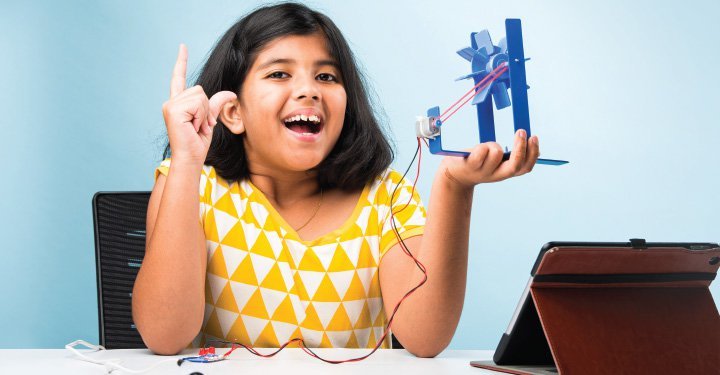
Nikita was excited. Her mom thought it was the usual excitement for the first day of school but decided to ask her anyway. "Students from a school in Finland are coming to our class today as a part of student exchange program. I can't wait to see what they are like. Oh, I wish we could be friends!" she exclaimed happily at breakfast. Nikita's mother smiled as her daughter skipped out of the house to board the school bus. At school, Nikita and her friends met the students from Finland. When they were allowed to interact, Nikita learnt that they started school only at 7 years of age! "Wow! So, were you home schooled till then?" she asked the Finnish boy next to her. "Not really. My mum and dad let me play at home till I joined school. I learnt to read and write though. Some of my friends went to play schools and day care." Nikita was now teeming with questions. How is schooling different in other countries? Why do schools in India start at the age of four? Do they use the same kind of textbooks in other countries? Do they have tests like we do?
Well, we understand you might have the same questions as Nikita, so we put together a few highlights from different education systems around the world for you. These countries have been consistently ranked as top performers by the Programme for International Student Assessment (PISA). Initiated by the Organization for Economic Cooperation and Development (OECD), an economic organization with 36 member countries, PISA is a study done to compare data about education policies of different countries.
Read on to find out how the education systems of these countries vary from ours and what we can learn from them.

Finland has an education system that the rest of the world looks up to. The country has a nine-year basic school program, which starts at the age of 7. Till then, parents can choose to let the children stay at home or enroll them in day-care or play schools.
Read more about their educational system here.
The Dutch education system is mostly government funded and focuses on the needs of the children. Schools are divided based on the stream of education children choose.
Watch the video below to know more.
"It is a common misconception that students in Africa learn about animals while watching them walk outside the window, but it's rarely brought to the front that brave 'lions' are actually in the making inside the classrooms! Being an Edexcel student from one of the reputed schools in Nairobi, Kenya, I have always been asked 'How is the education system in Kenya? Do you actually have classrooms? Do you see monkeys during class? I have learnt to smile sarcastically and say, 'Oh yes! We even share our lunch with zebras'. Jokes apart, the type of education system followed there allows a student to apply his knowledge, rather than just learn and repeat in exams. Memorizing is not a part of education in Kenya.
Kenya, like other countries offers a variety of option for education. The government-based schools offer primary and secondary education. The Kenya Certificate of Primary Education (KCPE) covers Kiswahili (native language of Kenya) English, math, science and agriculture, and social studies. In the fourth year of secondary school, students take up the Kenya Certificate of Secondary Education (KCSE). There are also schools run by private institutions where curriculums from other countries are followed."
- Devisalini Sivaraj, brought up in Kenya, now working mom of a toddler
South Korea has retained one of the top spots among countries with the best education systems. Education is the reason why South Korea has some of the world's most skilled employees who have helped improve its economy in a short span of time.
Learn more about their education system here.

The Japanese education system is known for its emphasis on moral education, apart from academic courses. Japanese students have consistently ranked higher among OECD students in terms of quality and performance in reading literacy, mathematics and sciences.
Read more about schools and education in Japan here.

Singapore spends about 20% of its national budget on education. The country's ministry of education launched the Teach Less, Learn More (TLLM) policy in 2005, which has pushed its education system to a leading spot globally.
Read more about their education system here.
Maya Thiagarajan, Education Director at TREE talks about what we can learn from education systems around the world.
"I have taught in the US, Singapore, and India. For me, teaching is about forging a deep relationship with each student, understanding where each student is in his/her learning journey, and then helping each student develop and grow to his or her full potential.
One of the challenges we still face in the Indian education system is that it has not evolved to keep up with a very rapidly changing world. When I talk to teachers, they often focus more on "covering syllabus" as opposed to ensuring that real, deep learning is happening. Our kids need to be asking questions, as well as thinking creatively and independently; however, our education system, which is still focused on memorizing content or "content coverage", often does not give kids enough opportunities to really think, question, research, and create.
I think we need to put more effort on teacher training and development. In Singapore, for example, only the top students get into the National Institute for Education (NIE), which is their national teacher training program. Furthermore the training teachers receive is very rigorous, and the system ensures that teachers engage in high quality professional development on a regular basis, all through their careers. As a result, Singapore has one of the best education systems in the world. Ultimately, the quality of a nation's education system depends on the quality of its teachers."
Making the right reforms to a country's education policy can change the future of the child and of the country. Let us hope that we can take take a leaf out of these education systems when we draft the National Education Policy in the coming years.
Also Read
16 Fascinating Facts About Education From Around The World
Education Policies and Systems in India: An Interview with Meeta Sengupta
Globalisation and Education: Impact of Globalisation on Higher Education in India
About the author
Written by Kerina De Floras on January 21, 2021.
Join our Circles to share, discuss and learn from fellow parents and experts!
Looking for expert tips and interesting articles on parenting? Subscribe now to our magazine. Connect with us on Facebook | Twitter | Instagram | YouTube
Comments
Edit
Comment Flag
Cancel Update