
Monitoring media use. Why it is important for parents to watch what their child is watching
Aparna Rao
authorparentcircleauthorparentcircleauthorparentcircleauthorparentcircleauthorparentcircleauthorparentcircleauthorparentcircleauthorparentcircleauthorparentcircleauthorparentcircleauthorparentcircleauthorparentcirclev
With all kinds of content being aired by the media, it becomes important for parents to keep a tab on what their child is watching
- 5.5K
- 2
- 2
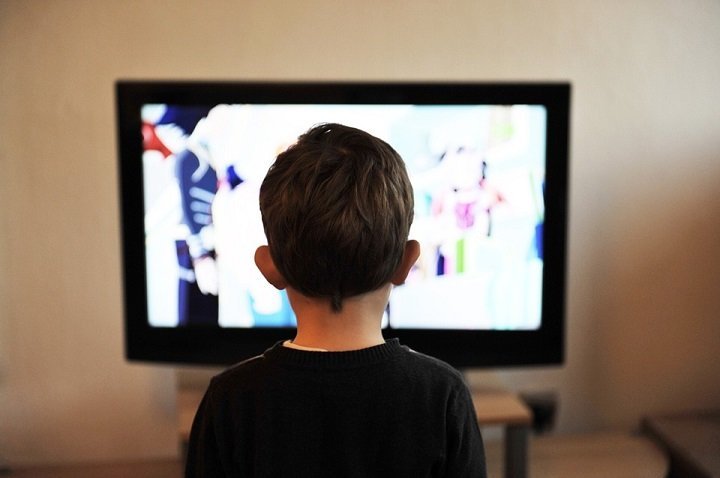
It was quite apparent that Rupali, a preschool teacher, was feeling stressed while speaking about one of her students Parthiv. The reason for her unease was what Parthiv had said during the previous circle time - a session that encourages students to participate in a pre-decided activity. All the students looked forward to circle time as they enjoyed it immensely. In the previous circle time, it was decided that the students would speak about their favourite cartoon characters. While all the students spoke about their favourite character, Parthiv spoke about something very different. He began recounting what he saw in the previous night's episode of a TV serial. Parthiv described in detail a lady being beaten, gagged and thrown into the back of a car. Parthiv's narration was such that the entire class listened to him with rapt attention. However, what Parthiv said left a few of his classmates as well as his teacher disturbed. But, what unsettled the teacher the most was that Parthiv wasn't the only child who had watched this particular episode of the TV serial, there were some other children as well.
Inconvenience in the name of convenience
The change in family structure and value system has made it difficult for most working parents to keep their children engaged. To overcome this problem, a lot of parents allow their children to watch cartoon shows or serials on TV or play video games. However, most parents rarely pay attention to, and some even ignore, the quality of content their children are exposed to and its impact on the young minds. While allowing children to watch TV shows or play with gadgets does help at certain times, unsupervised and unchecked access to them can result in children getting addicted.
"When a visual content that affects the emotional state of the brain is watched with full attention, the brain perceives it to be real. This is especially true for children. The ability to discern between reality and fiction fully develops only between the ages of 8 and 12 years. Exposing children to visual content without setting any time limit or without checking the appropriateness of content can lead to a range of problems such as poor academic performance, lack of social skills, empathy and aggression. Children by nature imitate adults - when adults are glued in front of the TV or are constantly checking phones, we can hardly blame the children," says Dr Gopi, Consultant Psychologist, Ahana Hospital.
Although the debate is still on about the relationship between violent media content and aggression in children, one cannot miss the way children physically respond to such content. A lot of young children watching violent content tend to get startled easily or have nightmares or indulge in bedwetting. Older children experience increased heart rates and feel an adrenaline rush.
Content in cartoons in India
The nature of cartoon shows and animated serials has changed a lot in the past decade, with many notable positive changes such as the increased incorporation of traditional Indian cultural values. However, there still remain areas of concern that need to be discussed and deliberated upon to bring both parents and content creators on the same page. For instance, the concept of superheroes saving the day is still the theme of most popular cartoon serials. While the art of storytelling does give a certain degree of creative liberty to content creators, can little children differentiate reality from imagination? Also, no program shows any age recommendation for viewers.
"In my perspective, when it comes to entertainment, the story is very important. Yes, there are viewers of all ages who would love to watch something larger than life that breaks away from monotony. However, there must be a balance in the way content is presented, so that the entertainment value does not undermine the story," says Vijay, film director.
The downside of unregulated content
Even if we ignore the lack of logic in programs meant for children, we cannot overlook the fact that quite a few programs feature bullying, physical violence, and bad language. With continuous exposure to such content, the risk of children becoming desensitized to violence and suffering is high. For instance, a child could be aware of the fact that a cartoon character is a figment of imagination, but he may be oblivious to the pain felt by a victim of bullying. Or, during a conflict, instead of reporting the incident to an adult, a child may resort to voicing insults or physical aggression. Parents should remember that influence of bad content on a child may not always be obvious but gets registered in his consciousness. For example, a child watching the protagonist eating ladoos and gaining strength may insist on eating more ladoos, thinking that it will make him strong as well.
"The law of cinematography is common to all theatrical and television exhibits, but TV programs come under self-censorship. What is appropriate and what is not appropriate for children is a very subjective matter that will change from one set of parents to another. Technology, in the form of TV, computer or tabs are introduced to children so that they don't get left behind; but, if this is affecting them negatively, then parents can always choose to limit or avoid such content by locking or unsubscribing to a particular channel or by cutting down screen time. In this case, the best practices should start from home," says Mr M Mathialagan, Regional Officer, CBFC (Central Board of Film Certification), Chennai.
Specific tips for parents
Rules for responsibly using technology
- Before you implement screen-time restrictions, discuss the plan with your spouse and/or other adults at home.
- Talk to your children about screen time rules and make them understand that their time could be put to better use. The success of disciplining depends on following it through till it becomes a practice.
- Allow your children to choose a TV show or a game they want to play on the tablet. Check if the content is appropriate and set the time limit. Also, get into the habit of having a 'no gadget time for yourself.
- To compensate for the fun your children would be 'missing', introduce a new game that they enjoy playing.
































Comments
Bharani M Dec 11, 2020
Jayanthan Nov 24, 2020
Edit
Comment Flag
Cancel Update