
How To Help Your Child Discover Hobbies And Interests That Truly Inspire Them
Tejinder Kaur
Tejinder Kaur is a ParentCircle Author has knowledge about parenting.
Hobbies help children explore interests, reduce stress, build confidence, and develop life skills. Learn why hobbies matter for children and how parents can nurture interests through simple, practical strategies at home
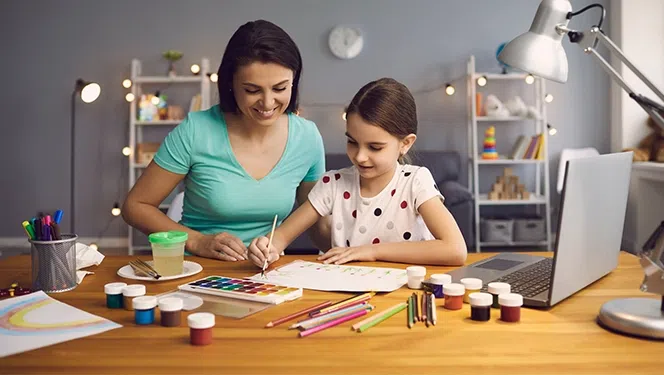
Children are born curious and have abundant energy. They see the world as an exciting place with a zillion things to explore. One moment they are asking us where apples come from, the next they want to know where the moon goes in the day! As parents, it’s our responsibility to help our children understand the world and let them discover their interests. And that brings us to the question: Why should we help our children find a hobby?
Why hobbies are important for children’s overall development
How hobbies support emotional, social, and cognitive growth
- Allow them to learn about the world they live in
- Help them reach their full potential
- Build their problem-solving skills
- Reduce stress, help them relax, and improve their mood
- Enhance their physical well-being
- Help them develop self-esteem and confidence
- Enables bonding with their friends and forging new friendships
Why downtime and unstructured play matter for children
Despite these well-documented benefits, we have a laser focus on homework and grades and tend to downplay our children’s need for downtime when they can just be, without doing anything, or indulge in some meaningful and enjoyable activity, led by their curiosity and creativity. A 2017 survey conducted by Pinwi (Play-Interest-Wise), a data-driven app for child development and smart parenting, found that 25% of Indian parents found it difficult to ascertain their children’s interests, while 31% of parents were unable to keep track of their children’s changing interests.
Hearteningly, nearly 40% of the 800 respondents were keen to learn how to nurture their children’s hobbies. So, how do we facilitate our children’s interests?
Provide fun and varied learning opportunities
To help your child learn exciting things, expose them to a variety of learning opportunities.
Reducing screen time to spark natural curiosity
Limiting distractions such as television and other gadgets will help them observe their surroundings and develop an interest in activities that were previously ignored in favor of watching cartoons.
Introducing hands-on play and creative exploration at home
Next time your child wants you to play the same episode of ‘Peppa Pig’ for the 100th time, give them a Peppa construction set and watch them work creatively to build Peppa’s home. A simple activity like this can introduce your child to the joys of messing with blocks, generating ideas, and making and building things with their hands. As they get older, foster their complex thinking skills by getting them more of the good stuff—they’ll relish the challenge of building robots and fortresses with LEGO bricks!
Do you want to introduce your child to the joys of reading? Then let them spend a lot of time in the school library, browsing, choosing, and reading books. Chances are, they'll fall in love with books. Similarly, if you give your child toys like jigsaw puzzles and musical instruments, they may become curious about them, and soon solving puzzles or playing drums may become their favorite pastime.
Learning beyond the home through real-world experiences
Another fun way to introduce your child to interesting things is to take them to museums, art galleries, zoos, botanical gardens, theaters, concerts, and sporting events. Even a walk in the neighborhood will spark their desire to learn about what they see around them, such as nature, buildings, cars, and bikes.
Observe your child to identify their interests and strengths
Why observation matters more than early labeling
Children are too young to understand what talent or interest means or to recognize them. So it's our job to observe our children and identify what they are naturally good at and what they enjoy doing or making. Some children not only enjoy what they do but also quickly become skilled at it, unlike their peers. On a biological level, their brains develop in ways that enable them to perform these skills exceptionally. The only way to recognize these talents is through keen observation.
Questions that help uncover your child’s natural inclinations
|
Make hobbies a regular part of your child’s routine
Balancing academics with creativity and free time
We all want our children to perform well academically so they can choose a “good” career and become successful adults. We pack their day with schoolwork, screen time, some playtime with the neighbors’ kids, and math or science tuitions. We conveniently forget that our children also need some amount of extracurricular activity, such as a Spanish class or Odissi practice, to nurture their creativity and their interest in learning languages or dance.
Making space for hobbies without overscheduling
Ensure that your child makes hobbies a part of their routine. Consciously shape your child’s routine so they can devote some time to whatever interests them—making animals with play-dough, solving a Rubik’s cube, or drawing comic strips.
Enroll your child in hobby classes when interest deepens
Signs your child is ready for structured learning
Over time, you’ll notice that your child tends to stick to some activities while other hobbies fall by the wayside. For example, they may spend after-school hours immersed in artwork, looking at famous paintings online, or researching painting techniques, ignoring their once-loved hobby of solving puzzles. They may eagerly wait for you to get them new art supplies while the puzzles you got them on their birthday are gathering dust.
Choosing classes that build skills and confidence
When that happens, consider enrolling your child in art lessons so that they may enhance their skills and meet like-minded friends with whom they can exchange ideas. If your child is intimidated by art class, allow them to take it step by step. You can send them to an art workshop first, and if they find it's fun, scout around for art tutors.
Enrolling your child in guitar or swimming classes will also ensure that they are exposed to healthy competition, which can inspire them to do their best and foster crucial life skills such as resilience, perseverance, and sportsmanship.
Track and support your child’s changing interests
Why it’s okay for children to outgrow hobbies
We must understand that children may not stick with something that they once found interesting. Your 8-year-old who enjoys performing magic tricks when guests come over may outgrow their passion and move on to yoga. Similarly, your child’s dream job can change. For example, they might have sworn to become nothing other than a world-class tennis player. But now, as a teen, they realize, after countless hours of tennis practice, that although they enjoy playing tennis with friends as a hobby, they don’t want to turn it into a career. Talk to your child to find out the reason. Is it because they feel they were forced into doing it? After hearing them show respect by valuing their decision.
Talking to your child about their changing passions
It’s a good idea to speak to your child regularly so that they can communicate and open up to you about their hobbies. You can get insights into their likes and dislikes and support their needs. You can ask your child questions such as “Why do you like tennis?” or “Do you want to paint this scenery?” and see how they react. Usually, questions spike interest and can be used to make your child learn more about a topic. Asking genuine questions is a wonderful way of showing your child that you care about them and the things they love.
Build anticipation to spark curiosity and motivation
Turning boredom into excitement through planning
It’s Sunday afternoon, and you are catching up on your Netflix thriller. Your child walks up to you and says the dreadful words, “I’m bored, and I’m tired of books and games.” What do you do?
Pick a hobby your child loves—or one that’s new to them—and build anticipation.
How anticipation boosts creativity and engagement
It’s quite simple. Instead of saying, “Do some artwork,” say, “Today, from 4:00 p.m. to 5:00 p.m., we will draw and paint a mountain.” You can even show them some paintings of mountains and watch a couple of videos online, and add, “Looks like fun, right?” This will get them excited about spending an evening doing an activity with you, something to look forward to, and trigger their imagination to plan what they can draw and paint, think about the materials they can use—sketch pens, crayons, or watercolors.
Trust us when we say they’ll be so busy anticipating the activity that you won’t hear the word bored for the next few hours! Soon they’ll learn there’s more to art than just doodling or coloring in pictures, or making art may become one of their favorite hobbies!
Encourage hobbies influenced by friends
Understanding peer influence in hobby choices
Was there ever a time in your life when you chose embroidery as your hobby just because your best friend was a skilled embroidery artist? If you said yes, you must’ve pestered your parents for sewing kits and embroidery pattern books. A few classes later, the magic of colorful spools of thread faded, and you figured out that painstakingly embroidering a rose bouquet with back stitch or chain stitch wasn’t meant to be your life’s passion.
Letting children explore and exit peer-led interests
Similarly, your child may get interested in their friends’ hobbies and want to explore them—they think the activity might be interesting, or they want to enjoy the company of their friends while doing the activity, or both. Have their friends signed up for football or individual/group chess classes? Then expect your child to follow suit. Talk to them and let them explore the hobby with their friends, if it works out in terms of logistics and family budget. Rest assured that your child will let you know if they no longer enjoy the hobby.
Share your hobbies and passions with your child
How family hobbies strengthen parent-child bonds
Like peer influences, parental and family influences can steer children toward certain hobbies. Most of us had one significant person in our childhood who influenced our choice of hobby—a parent, grandparent, or aunt.
Think about your hobby. What’s your hobby? If you are a railway enthusiast, who introduced you to trains as a child? Perhaps you had an uncle who worked with the Indian Railways and shared his knowledge about the history of railways, locomotives, stations, and railway timetables. Recognizing your fascination with trains, perhaps your parents got you toy trains and train model sets, and you spent your weekends building model trains.
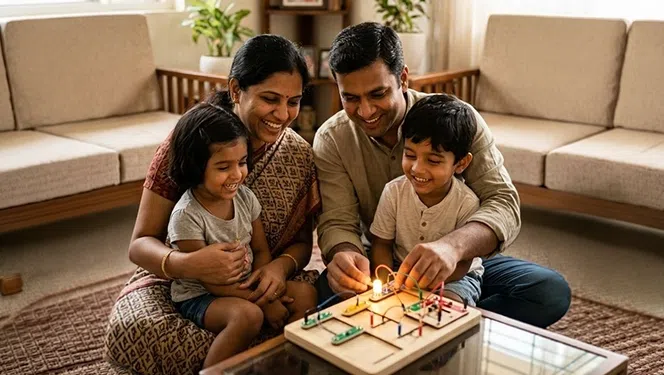
So, how can parents kindle children’s interest in their own hobbies? Those who enjoy cooking and photography can ask their kids to prep veggies and take photos whenever there’s a birthday or anniversary. If your family is awed by your kolams, rangolis, or mehendi designs, why not help your child learn these skills? Is your sister an avid gardener? Ask her to help your child identify various plants and how to tend to them. Doing an activity together makes it more special, and your child will come to associate it with fun family time and happy memories.
Learning together while respecting individual preferences
That said, if your child’s interest is waning, let them explore other interests. Your child is a unique individual, so they may not enjoy your or your relative’s hobbies.
The role siblings play in shaping interests
Siblings, too, can significantly help your child develop hobbies, especially if they consider their sibling a role model. Encourage your older child who has an enviable collection of books on astronomy (and a telescope to boot!) to share them with their little brother or sister and discuss their hobby.
Help your child learn from role models and idols
Why role models inspire deeper learning and commitment
Ask your child to create a list of their idols from any field—their favorite painters, scientists, musicians, sportsmen, writers, or actors. Your child can learn from their idols or find mentors who are willing to coach them. A child inspired by a cricketer may play cricket, enjoy watching the sport on TV or at the stadium, keep track of major sporting events and statistics, learn the techniques of cricket, and may even watch old match telecasts on TV to understand the game.
So, motivate your child to discover their interests and nurture their passions. One of the things they’ll remember about you many years from now is how you let them explore the world at their own pace, without being a pushy parent.
Things parents should remember about children and hobbies
Letting children explore without pressure or expectations
- Your child may jump from hobby to hobby, and that’s okay, as it shows they are figuring out what really excites them. You can talk to them and find out what’s going on. Have they stopped enjoying the hobby, or is it difficult to learn?
Supporting hobbies without turning them into careers
- Hobbies don’t always translate into careers. Don’t expect your child to become the next Raghu Rai or Henri Cartier-Bresson just because they're mad about cameras and understand light and composition.
- Avoid overscheduling your child. Instead of shuttling them among dozens of activities, zero in on a few they really enjoy and help them make space for those.
- Don’t be afraid to let your child explore new-age hobbies such as Artificial Intelligence. Allow them to join an AI class, or help them explore age-appropriate online AI activities.
The author is an International Baccalaureate Educator Network (IBEN) Curriculum Developer, International Baccalaureate (IB) Diploma Programme Coordinator, IB Examiner (ITGS & TOK), and Cambridge Assessment International Education (CAIE) Examiner.
Join the conversation! Explore exciting family entertainment ideas, share your hobbies, and swap tips with fellow parents. From fun activities to bonding moments, enjoy a world of joy with us.
This article was featured in the December 28, 2025, edition of The Free Press Journal
Last updated on: December 19, 2025




















Comments
Edit
Comment Flag
Cancel Update