
How To Help Your Child Deal With Street Harassment
Mudita Gupta
author parentcircle author parentcircle author parentcircle author parentcircle author parentcircle author parentcircle
Today, street harassment has become the norm, rather than the exception. Here are a few ways you can help your child deal with street harassment.
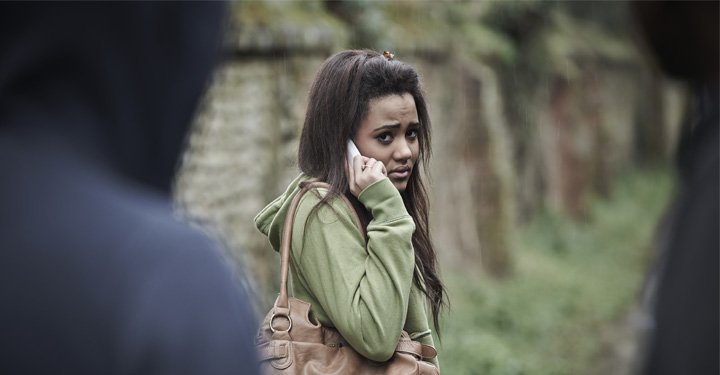
It is imperative to understand that street harassment does not arise out of misogyny or any other identifiable reason. It may be teasing based on race, nationality, disability or class. That is why, it is not necessary that only girls are the victims of such incidents of harassment. Young boys and LGBTQ community too are often at the receiving end of this ugly event. Another prevalent form of street harassment is stalking, which may quickly escalate into a deeper concern. Such dangers and difficulties cannot be eliminated. So, you need to teach your child how to deal with street harassment, when you are not physically present to protect her.
However, before you tell your child how to deal with street harassment, it's important that you make him understand the concept.
Ways to help your child understand street harassment
Start the conversation early: Make your children understand the reality of the situation, without scaring them. While such a conversation may not be common, it is important to understand that ignorance on this subject can lead to problematic situations in the future.
Teach her to practise caution: Educate your child on the difference between a safe and an unsafe touch, and talk to her about how to respond to a situation of harassment. Tell her about the kinds of people she might encounter on the road and how not losing sight of her immediate environment is the key to protecting herself. This might imply that the responsibility of evading harassment lies on the girl, but this statement is not far from the truth. It is advisable to practise caution always.
Teach him right from wrong: Encourage your son to be the one who speaks up and acts against harassment and does not become a part of the problem. The best way to do this is by being a role model. He should be looking up to his father for his exemplary conduct toward women, and to his mother for her no-nonsense attitude toward harassment. If he sees violence or eve-teasing in movies or on television, make him understand that it is unacceptable behaviour.
Now, that your child knows what street harassment is, we tell you how to equip her to deal with it.
How to deal with street harassment
1. Set the ground rules: Until your child is old enough to judge a situation by herself, putting down general rules will help.
- Ask her to avoid very crowded places or isolated streets as these places can be hotspots for harassment.
- Ask him to never accept gifts or chocolate from strangers or get into a conversation with them. Tell him to never go with a stranger anywhere, no matter what they tell him.
- Tell her being cat-called or being touched without her permission is an act of harassment and not a compliment.
2. Keep communication open and free: Be open to communication, so your child feels free to openly talk to you about an untoward incident or an uncomfortable situation. This will help you take appropriate action.
3. Make sure she knows it's not her fault: If your child ever faces this situation, tell her the harasser is always at fault. Children who feel depressed or withdraw from social life, because of an incident, must be helped to move on from the pseudo-stigma.
4. Tell him when to fight and when to walk away: Make your teenager understand when is the right time to fight and when it is advisable to walk away. Teenagers can be impulsive but some situations might need an adult perspective to arrive at the best solution.
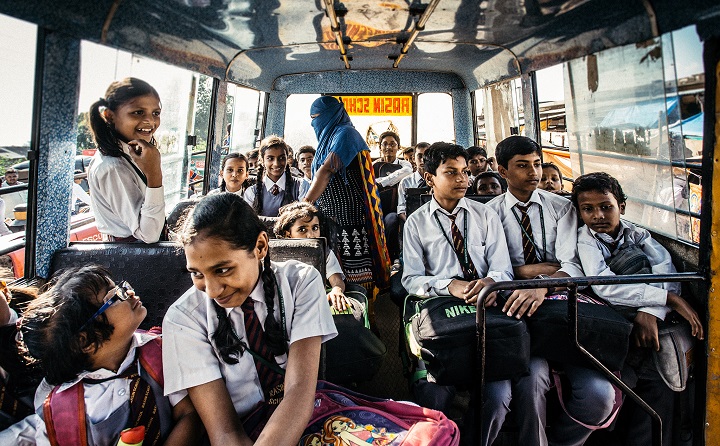
5. Join or form a community or group of parents: Work together to protect your children. A common example is carpooling to school or taking turns in watching over the safety of children going for extra classes or for after-school activities like sports, art or dance classes.
6. Encourage her to join self-defence classes: Consider sending your teen or pre-teen daughter to classes on self-defence or martial arts training. The Self Defence Training Unit of the Delhi Police organises summer training in schools to equip young girls to defend themselves in different situations, such as harassment in buses or queues or during incidents of attack.
7. Know your legal options
- Protection of Children from Sexual Offenses (POCSO) Act criminalises penetrative and non-penetrative assault against anyone under the age of 18. It also prevents re-victimisation of the child. This is relevant, in case harassment leads to other forms of assault.
- National Commission for Women (NCW) takes up issues in the interests of women and actively advocates for safety issues. Reports can be filed with NCW.
- Several NGOs have active rescue numbers to help women in distress.
8. Educate her about self-help apps related to safety
- Safetipin app has all possible safety measures such as GPS tracking and emergency contact numbers.
- Himmat app is recommended by the Delhi Police and works on the SOS alert initiated by the user. It sends the location and the audio or video directly to the police control room.
- VithU app is an initiative of V Gumrah that gets activated if the power button is pressed twice, sending out alert messages to emergency contacts.
- bSafe app follows the user through a live GPS trail and uses Guardian alert buttons and fake call systems to alert emergency contacts.
- Hollaback! is a movement to end harassment and a platform to share experiences anonymously.
- Safecity app works as a trip advisor and allows users to check the safety of a place beforehand.
9. Helplines your child should know
- Police Control Room: 100
- Women in Distress: 1091
- Children in need of care and protection: 1098
It may take some time for our society to rid itself of all social evils. But, as parents, it's our duty to be aware and prepare our children to face the world and all kinds of complex situations that life throws at them. Being aware, practising caution and standing up for yourself, whenever needed, are key suggestions parents can give to their children to help them deal with street harassment.
Mudita Gupta, who is a part of Safecity's Writer's Movement, strongly believes in the idea of spiritual happiness. She heads a college-based live project on rural women entrepreneurship.
Hope you liked this article. To get expert tips and read interesting articles on a wide variety of parenting topics, subscribe now to our magazine.
























Comments
Edit
Comment Flag
Cancel Update