
How To Help Children Overcome Fear Of Darkness: Expert Tips For Calming Nighttime Anxiety
Team ParentCircle
Learn why children fear the dark and how to help them overcome nighttime anxiety. Expert tips guide parents with practical strategies, reasoning, empathy, and play
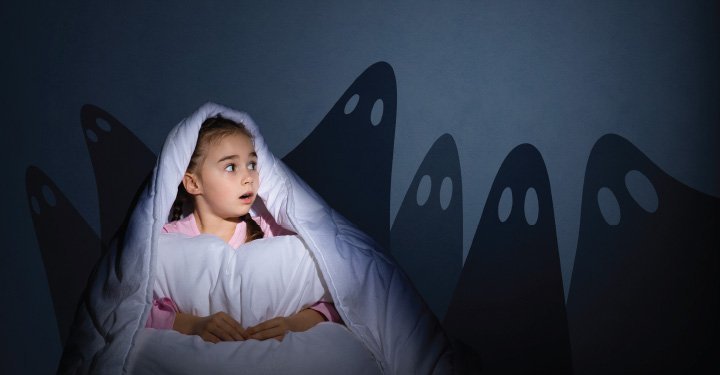
Children fear a lot of things—from darkness and thunder to monsters and animals. Some of us brush off our child's fears ("There's nothing to be afraid of"), while others try to protect their child from such fears ("Let's keep the night lamp on through the night"). Are these good approaches to handling our children's fears?
Arundhati Swamy, Counselor and Head—Parent Engagement Programs at ParentCircle, responds to your questions and provides insights into how you can help your child outgrow their fear of the dark.
Why children fear the dark: Understanding common triggers
Rama, you must be feeling quite disheartened about your daughter's fear of the dark, especially when most children her age seem to be free of it. You're trying so hard, yet nothing seems to work. The impatience and annoyance with your child are understandable. Tiring and frustrating, isn't it? How you wish your daughter would just stop being afraid of the dark. Well, let's see how we can work toward making your wish come true.
First, we want you to know that you have been doing the best you can to help your child. Sometimes, unknown to us, the causes of a child's fears lie within the home environment.
How family environment can increase a child’s fear of the dark
One or both parents are anxious
The child learns to be anxious, and the fear is generalized or expressed specifically (darkness).
What to do: When parents become aware of their anxiety and its impact on their children, they'll want to reduce their anxiety.
Overprotective parenting
The child lacks the confidence to cope with even normal situations.
What to do: Parents can step back and allow their child to become independent in basic self-care tasks to help their self-confidence develop.
A stressful home environment
Severe or chronic illness of a family member, severe conflicts between parents, or deep financial stress can be fearful experiences for a child.
What to do: The child will benefit from having supportive and nurturing adults, such as grandparents, a favorite aunt or uncle, or a compassionate teacher to turn to for comfort.
A traumatic event, such as a theft or the death of a loved one
An incident where an intruder breaks into your home can be scary for both you and your child.
What to do: Reassure your child about how safely you have secured your home.
Death is still an abstract concept for children below 6 years. Parents can explain in simple terms to their child that the person has died, instead of giving abstract explanations that could further confuse their child.
The child's natural temperament
Some children have a natural temperament toward being very emotional or sensitive.
What to do: Acceptance of their child's natural temperament will help parents have more realistic expectations, thus reducing anxiety in the child.
Other common triggers behind a child’s fear of darkness
Rama, if none of these factors occur in your home, let's take a look at other possible reasons. A child's vivid imagination adds drama to their thoughts at night. So, observe your child to learn if her fear is triggered by these or similar situations:
- The impact of what is consumed through media varies from child to child. Television is a very stimulating medium, where the lines between the real and the unreal are easily blurred. However, young children do not yet have the cognitive abilities to separate one from the other. Hence, scary content tends to feel real and becomes exaggerated in their minds. Even in wildlife documentaries, informative as they are, scenes of animals preying upon and killing other animals can overwhelm a child. Help your child choose child-friendly programs to watch.
- Books with graphic visuals of ghosts, goblins, and monsters are potential triggers for nighttime ruminations when shadows and nocturnal sounds abound. Save these books for later when your child can separate fantasy from reality.
- Children usually picture what they read and create strange and fantastical monsters with physical characteristics. These images may haunt them during the quiet and mystical night. Talk to your child about how and why these images play in her mind.
- A parent's threat of a scary person who will take away the child when they don't behave well creates fearful images and thoughts that could keep them awake in the menacing dark.
- Being separated from one or both parents for long hours because of work and hectic travel schedules could make some children feel emotionally unsafe. The insecurity sometimes shows up as fear of the dark.
How parents can help children overcome fear of the dark
Rama, promising your child rewards is ineffective because it doesn't address the real causes of your child's fears. And your gentle talk could be more effective when you try the following:
Acknowledge your child’s fear with empathy
What is not fearful for you could be very fearful for your child. Laughing at her fears or forcing her to be alone in a dark room will only increase her fears. What she requires is your empathy ("It must be so scary for you. This reminds me of some of the things I feared as a child.") Showing empathy and sharing your childhood fears will comfort your child, and she'll know that you truly understand her feelings.
Use reasoning and logic to break down their fears
Help break down her fears in a logical manner. Help her indulge in self-talk with darkness—what it's doing to her and how she can respond to it in different ways.
Remember to use a neutral tone of voice. Any signs of annoyance or sarcasm from you will upset her and will block her from reasoning things out in her mind.
Talk to your child
Bottling up fears will make your child vulnerable and emotionally weak. Encourage her to talk about these fears. And be respectful as you listen to her explanations, no matter how irrational, bizarre, or silly they may sound to you. Remember, the fears are real in her mind. Ask what you could do to make her feel better.
Encourage open conversations about nighttime fears
Use art to help children express their fears
If your child is unable to talk about her fears, ask her to draw or paint them on paper. As she describes her drawing and you listen quietly, the free flow of thoughts and emotions will be a good emotional release. Reassure her with a warm hug and take cues from what she has spoken. Help her explore her fears by asking questions such as, "Can you remember the first time you were afraid of the dark?" Identifying those initial experiences is the key to understanding how the fears have grown over the years.
Create a calming bedtime routine for better sleep
Instead of expecting your child to be brave, help her slowly get over the fear. She'll feel more reassured when you have calming bedtime routines that help her relax and fall asleep. Talk about the nice things that happened throughout the day, thank her for at least two nice things she did or said to someone during the day, sing a favorite song together, or make up silly fun stories.
Help your child face the dark in small, safe steps
Stay with your child till she falls into a deep sleep. Begin by lying down next to her for a few days. Gradually, introduce small changes as she falls asleep—sit next to her, sit away from her, leave the room, and return after a minute. Through this process over days and weeks, appreciate her efforts, "I can see how hard you're trying. Good for you!" Gestures such as a high five or a thumbs-up are equally encouraging.
Patience matters: Progress takes time
Your child is capable of learning how to adjust to darkness, but it will take some time and continuous support from you before she gets there. And there could be an occasional setback. The frustration you feel is normal. Try your best to stay on track and move ahead.
Why some popular methods don’t reduce fear of darkness
Leaving a light on during the night
While a night lamp is helpful for children with mild fears, unfortunately, the shadows it throws in the dark often add to the child's fears.
Using rewards as incentives
Promises of rewards ignore the child's genuine fears and leave them unaddressed, resulting in an even more distressed and helpless child.
Rama, we hope this helps make your wish come true!
When children fear monsters in the dark: What parents can do
Ashutosh, tiresome isn't it, trying hard every day to reassure your son? It's not easy to convince a young child for whom monsters in the dark are so real. So why do monsters top the list of children's fears? Blame it on their vivid imagination and the monster stories they love to read in the safety of daylight. And scared as they are at night, children are spellbound by the menacing monsters they read about or view on television.
Like many parents, you try to reassure your son by checking behind doors. But by doing so, you're unwittingly telling him that monsters do exist, that they're just not behind the doors of your home! Surprised? Well, here's what you could do instead:
Help your child notice their fear signals
Even before we become aware of our fear, our body is already sending out signals. Ask your son to tell you what he feels every time he approaches a door in the dark. Does he shiver, or break out into a sweat, or feel his hands or legs tremble? Does his heart beat faster? You could show him how to take slow, deep breaths to calm the physical symptoms.
Use creative play to transform scary monsters
Ask your son to describe in detail the monster he expects to find behind the door. Be curious and fascinated by his descriptions. Add more details if you like. Or turn the monster into a comical, helpless creature by suggesting silly and odd features. Then, together with your son, make a confident entry into the room and trounce the monster lurking behind the door. Make sure you and your son exude power and courage during this adventure.
Turn imagination into a tool for courage
Your son's imagination has created the monsters, so help him use his imagination to fight the monsters. Enact with him scenes in which he is bigger and stronger than the monsters and destroys them with whatever powers he imagines for himself. Play along with him—strategize, chase, and smash, and come out victorious in each play sequence.
Let your child feel powerful in the dark.
Flip the situation, where the monster decides to turn on the lights. Then prompt your son to use his mystical powers to turn them off. After all, 6-year-olds love lots of action and thrills. He could make up a few catchy phrases, such as 'By the power of...', to defy the monster's actions and conquer it. These actions could make him learn to feel strong and bold in the dark.
It's great that the night lamp and glow-in-the-dark things help your son stay calm, but he does need to confront his fears and fight them with his thoughts. Play is a non-threatening, fun way to do it. Focus on the fun he's having rather than waiting for the results. Each step will take him closer to feeling comfortable in the dark, and be patient because it takes time. We hope one fine day your son will scare you in the dark!
When scary movies trigger fear of the dark
Yamuna, your experience is very relatable. Scores of young children watch scary movies with older siblings, cousins, or friends. It makes them feel all grown up and privileged. Or they may innocently wander into the room and quietly settle down to watch the movie. But it turns out to be a traumatic experience, mainly because young children are not developmentally ready for it. Their emotional and cognitive skills are limited, so they don't completely understand what they've viewed.
Yamuna, in your case, the fears you experienced while watching the movie showed up as fear of the dark. And your parents used creative ways to help you overcome your fear. The fun games helped you relax and enjoy yourself, and the presence of your parents was reassuring. So yes, do try the same with your daughter. But if these strategies don't work, we suggest you help her talk about her fears. The chats you have may well trigger a memory of the incident that started it all. Ask her to describe the place and time when it happened, who was present, what was going on, and the emotions she experienced.
Helping children trace the root of their nighttime fears
Recalling and describing the fear she had experienced could spark an aha moment: "Oh, so now I know why I am scared of the dark!" You could then say to her, "At that time, you didn't know how to help yourself. But now you can." The knowledge gained is often empowering because you can help your child question her current fears and show her how to use reasoning to break them down. The process may take a few chats before you help her get there. Yamuna, we hope your daughter has her aha moment soon enough!
Last updated on: November 14, 2025






























Comments
Edit
Comment Flag
Cancel Update