
Regional Harvest Festivals Of India: Rituals, Stories, And Cultural Significance Across India
Subhechha Chatterjee
From Pongal and Lohri to Bhogali Bihu and Onam, India’s harvest festivals are rich in stories, food, and traditions. This article takes you on a cultural journey across regions, explaining the rituals, legends, and special dishes that make each festival unique, while showing how these celebrations bring families together and teach children gratitude, community, and respect for nature
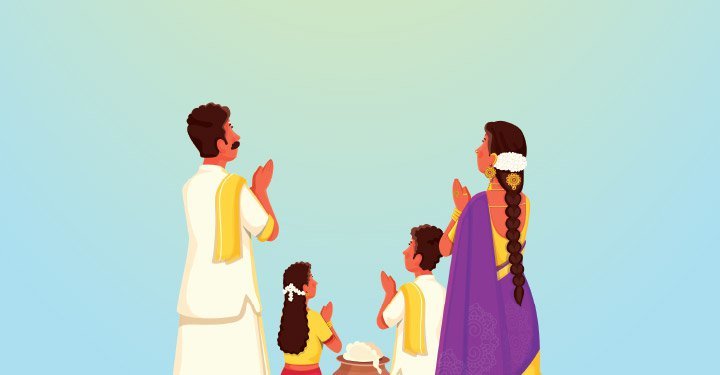
I vividly remember how every Sankranti, as a kid, I would jump with glee as the smell of freshly prepared coconut-stuffed rice dumplings called pithe (in Bengali) wafted in the cold January air. The joy of gorging on a variety of homemade delicacies, the excitement of attending performances by folk artists, and the slight nip in the air made Makar Sankranti a special festival. This harvest festival is celebrated across India. Its name may differ from region to region but the spirit of the festival remains the same.
You can introduce your child to the various customs and delicacies associated with the harvest festivals and narrate the fascinating stories behind the origin and celebration of these festivals.
Why harvest festivals matter in Indian culture
PONGAL
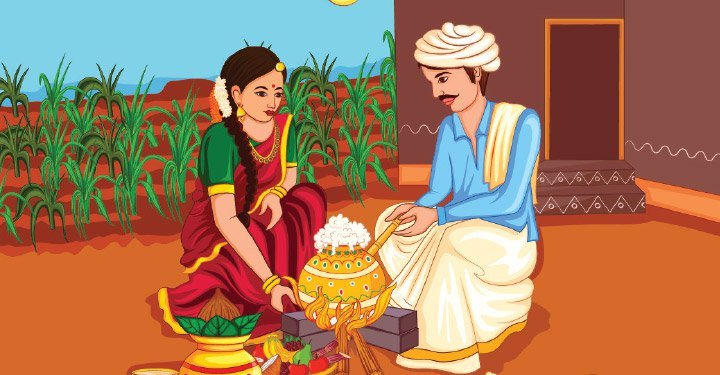
Pongal, meaning to boil or spill out in Tamil, is a four-day festival in Tamil Nadu observed around mid-January.
Legends linked to Pongal
- According to Hindu mythology, Lord Shiva had asked his bull, Nandi, to visit the earth and convey to all mortals that they must eat once a month but oil themselves and bathe daily. Nandi made a mistake. He told people to eat daily and bathe once a month. This carelessness angered Lord Shiva, who banished Nandi to earth forever and cursed him to help people plough their fields so that food could be made available for daily consumption. Thus, to honor bulls, Mattu Pongal is celebrated.
- Another story is about Lord Indra and Lord Krishna. As Lord Indra, the Rain God, had become arrogant, Lord Krishna decided to teach him a lesson. He asked the villagers to stop praying to Lord Indra for rain and a good harvest and convinced them to worship the mighty Mount Govardhan. This audacious act infuriated Lord Indra, who punished the villagers by sending heavy rains, floods, thunder, and lightning. To protect the innocent villagers and animals, Lord Krishna lifted Mount Govardhan on his little finger. Finally, when Lord Indra realized the divine abilities of Lord Krishna, he stopped the rains. In return, Lord Krishna allowed the villagers to continue worshipping Lord Indra as is done during Bhogi Pongal.
Four days of Pongal and their rituals
Each day of Pongal is associated with special rituals. The first day is called Bhogi Pongal, followed by Thai Pongal, Mattu Pongal, and Kaanum Pongal.
- On Bhogi Pongal, people pray to Lord Indra, thanking him for agricultural prosperity. Traditionally, on this day, old unused household items are burnt in a bonfire to welcome the new month, though more and more people are starting to embrace a smokeless Bhogi.
- Thai Pongal is celebrated in honor of the Sun God. Families draw kolams, and sweet Pongal, a popular rice delicacy of Tamil Nadu, is cooked and offered to the Sun God.
- On the third day, Mattu Pongal is celebrated. Cows and bulls are adorned with bells, flower garlands, vermillion, and worshipped. Also, on this day, Jallikattu, a traditional bull-taming sport, is held across various parts of the state. The Supreme Court banned Jallikattu in 2014 because of animal welfare concerns, but the state and central governments stepped in to remove legal hurdles and allow the sport.
- Kaanum Pongal marks the end of pongal celebrations. On this day, turmeric leaves are washed and laid in the courtyard or terrace, and leftover sweet pongal, betel leaves, bananas, and other fruits are placed on the leaves for the crows to enjoy. Families also get together and visit popular tourist spots.
Special Pongal dishes
Two types of pongal are mandatory: sweet or sakkarai pongal and ven or khara pongal. Other dishes that are prepared include vadas, payasam (rice pudding), murukkus (coiled, crunchy savories), laddoos, and pongal kootu (sambar with about seven types of vegetables).
BHOGALI BIHU
Bhogali Bihu, also called Magh Bihu, is a harvest festival celebrated with much fervor and excitement in Assam in the month of Magh (mid-January). The word Bihu is derived from the Sanskrit word Bishu, which means to ask for peace and prosperity, and Bhog means food offering.
Significance of Bhogali Bihu
According to Sahapedia, an open online resource on Indian art, culture, and heritage, Bhogali Bihu marks the harvesting of the crops, when the farmers finally get a window of rest after a prolonged period of hard labor in the fields and when there is surplus food. The idea is to thank the gods for the blessing of a good harvest, especially rice.
Uruka night and the Meji bonfire
- On the eve of Bhogali Bihu, called Uruka, men build a temporary hut called Bhelaghar on the field, using hay, thatch, bamboo, and mud.
- During the night, a bonfire called Meji is lit, around which men sing and dance as a mark of respect to the gods. The people of the village feast in the Bhelaghar and share stories around the bonfire.
- On the morning of Bhogali Bihu, prayers are offered to the ancestral gods by the community. People gather to witness the burning of the Meji, which represents hope and the triumph of life over death.
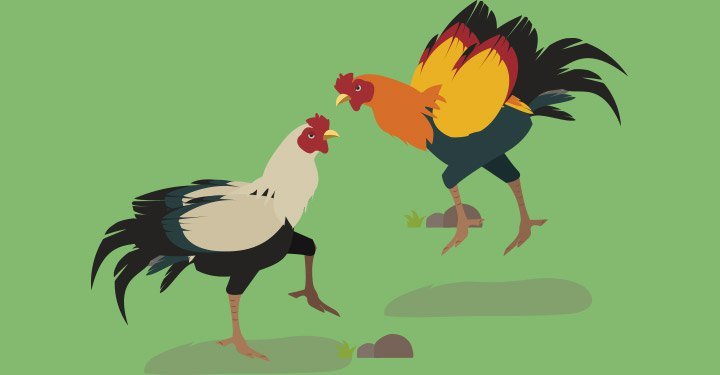
- The festival is celebrated with feasts and games such as Tekeli Bhonga (pot-breaking) and cock or bullfight.
Traditional foods of Bhogali Bihu
Rice cakes (pitha), coconut laddoos (laru), and sesame cakes (tilpeetha) are made to celebrate Bhogali Bihu. Two other popular dishes associated with this festival are sandoh guri (Assamese roasted rice flour porridge served with a garnish of dry fruits and nuts) and mah korai (a savory made with urad dal, black sesame seeds, bengal gram, and sticky rice and flavored with salt, ginger, and a drizzle of mustard oil).
LOHRI
Lohri is mainly celebrated in Punjab, Haryana, and Delhi, primarily by the Sikhs and Hindus. It's another harvest festival celebrated around mid-January to mark the end of the harvest season. Lohri is believed to have originated from the word loh, meaning a large iron griddle on which rotis are made for community meals.
The Legend of Dulla Bhatti
The valor, might, and compassion of folk hero Dulla Bhatti (popularly called the Robinhood of Punjab) are celebrated in the songs sung during Lohri. According to various legends, Dulla, born Abdullah Bhatti, lived in Punjab during the rule of Mughal Emperor Akbar. Dulla is supposed to have saved many poor Punjabi girls from being sold into slavery. He arranged their marriages to boys in the villages and even provided their dowries. He was praised for being a Robinhood who helped the less fortunate and fought the ruling dynasty. Dulla was captured and hanged to death in 1599.
Lohri rituals and celebrations
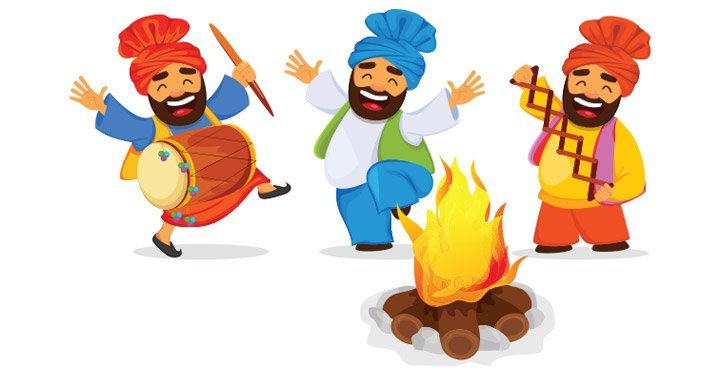
- Lohri is celebrated by lighting a bonfire and placing miniature cow dung idols of Goddess Lohri around it. People dance around the fire, throw sesame seeds, nuts, and jaggery balls into it, and chant 'Aadar aye dilatherjaye,' meaning 'May honor replace poverty.'
- Families share gifts and greetings and offer food and clothes to the needy.
Special Lohri dishes
Til or sesame laddoos are eaten as they help keep the body warm against the harsh winter of North India. Jaggery (gur) is made from freshly harvested sugarcane, and this jaggery is used to make delicious sweets such as gur halwa, gur laddoo, puffed rice laddoo, and gur kheer. Another must-have item on this day is makki di roti (made of cornmeal), which is served with a nice dollop of butter and sarson ka saag (spicy mustard greens).
MAKAR SANKRANTI

Makar Sankranti is celebrated across many states of India around mid-January to mark the end of the winter harvest season. Every state has a distinct tradition associated with Makar Sankranti.
Stories associated with Makar Sankranti
- Makar Sankranti marks the first day of the sun's transit into Makara (Capricorn), which is said to be ruled by Shani (Saturn), the son of the Sun God. The Sun God is welcomed by Shani with open arms, signifying the importance of responsibilities toward parents.
- Another legend goes that Goddess Sankranti vanquished the demon Kinkarasur on this day.
- On Sankranti, people pray to the Sun God and Goddess Sankranti. Women exchange vermillion and sweets, and people decorate their houses and draw kolams or rangolis.
Regional customs and celebrations
- Kite-flying is common during Sankranti in many states, including Maharashtra, Odisha, and Karnataka.
Sankranti foods across India
Every state has special delicacies associated with Sankranti:
- Pithe (coconut-stuffed sweet rice dumplings) and patishapta (coconut-semolina-stuffed sweet crepes) are made in almost all Bengali homes.
- People from Odisha prepare the delectable chhenna pudding made from freshly prepared cottage cheese.
- Kannadigas usually prepare ellu bella (sesame seed and jaggery balls).
- Marathis make til gul laddoos (sesame seed and jaggery laddoos).
- Marathis and Gujaratis prepare puran poli (roti stuffed with lentils and jaggery).
Harvest festivals celebrated in other seasons
While these are some of the harvest festivals celebrated in January across India, a few harvest festivals are celebrated at different times of the year in different parts of the country. Here's a glimpse of some of them:
GUDI PADWA
Gudi Padwa is celebrated by Konkanis and Marathis on the first day of Chaitra month (usually corresponds with March) of the Hindu calendar to mark the beginning of the new year. According to mythology, Gudi Padwa celebrates the annihilation of Ravana by Lord Rama and the victory of good over evil. To commemorate this triumph, people decorate their houses with a brightly colored gudi (flag), neem and mango leaves, and a garland of flowers, on which an upturned metal or earthen pot is kept. Puran poli, shrikhand, and shakkar bhaat are some popular dishes eaten during the celebrations.
ONAM
Onam is a harvest festival celebrated by the people of Kerala. It's celebrated for about 10 days in August or September to welcome the much-loved mythical king, Mahabali. During this festival, women wear the traditional white Kasavu saree with a gold border. Singing, dancing, and merriment are integral parts of the festival. Snake boat races are a distinctive feature of Onam, and hundreds of rowers coordinate beautifully to row a single long snake boat with a melodious chant. The festival concludes with a grand vegetarian feast called Onam Sadya, and consists of over 25 dishes. Some lip-smacking items in the Sadya include sarkara upperi (jaggery-coated banana chips), injipuli (made of tamarind, jaggery, and ginger), and avial (mixed veggies).
BAISAKHI
Baisakhi is a spring harvest festival celebrated predominantly by the Sikhs in Punjab. It marks the Sikh New Year and commemorates the formation of the Khalsa Panth Warriors under the leadership of Guru Gobind Singh in 1699. On this day, gurudwaras are beautifully decorated with lights and flowers. People eat Langar (community meal) at the gurudwara and participate in the community prayer service and kirtans. Halwa and chana, kadhi, lassi, kesar phirni, and the mouth-watering chole bhature are some of the popular Baisakhi dishes.
Harvest festivals are an integral part of Indian culture, with people across the country celebrating a good harvest and seeking blessings for continued prosperity. We hope this year too, a great harvest will paint our country green and bring joy to everyone!
Last updated on: January 08, 2026


























Comments
Edit
Comment Flag
Cancel Update