Growing microgreens at home can be a novel way of gardening with your child. Here is how both you and your child can grow microgreens in your kitchen garden.
Seven-year-old Sneha was a fussy eater when it came to eating veggies and greens. But this was only until Sneha's mom, Sudha, got her to help her out in their indoor kitchen garden. Caring for the plants, watching them grow and then harvesting them, brought about a change in Sneha. Especially when Sudha served her dishes from their own produce, Sneha ate her vegetables with relish. Well, this is just one reason to engage your child in gardening.
1. Your child will learn to become responsible by caring for the plants.
2. Seeing the results of her work, your child will gain confidence.
3. She will learn to love nature.
4. It will keep your child physical active.
5. As you spend time together with your child taking care of the plants, it will help you to connect with him.
6. It is a great hands-on opportunity for your child to learn about the lifecycle of plants, the shapes and sizes of leaves, and so on.
7. She will learn patience as she watches her plants grow every day.
But if you're concerned that setting up an indoor kitchen garden might be an elaborate process involving a lot of space, growing microgreens at home could be the answer. Not only does growing microgreens at home help you spend quality time with your child, but it also provides your family with fresh, healthy produce. So, here's all you and your child need to know about how to grow microgreens, the best microgreens to grow in your indoor kitchen garden, and more. To begin with, let us see what microgreens are.
Many of us think that microgreens are sprouts or shoots. But the fact is that they aren't. They are different from both sprouts and shoots. Then what exactly are they? They are young vegetable greens that are harvested between the stages of being shoots and baby greens. This is the stage when the cotyledon leaves (seed leaves) appear. Depending on the type of seed, it could be anytime between one and three weeks from the time the seeds are sown.
And, you should remember that microgreens are highly nutritious and tasty.
So, what is stopping you and your child from growing microgreens at home? Go on, becoming a microgreens farmer is super easy! Just use the seeds available in your kitchen or buy them from the local nursery.
Here are some of the best microgreens to grow in your indoor kitchen garden:
Now, let's see how to sow the seeds (taken straight from your kitchen shelves!) and harvest your various microgreens.
Materials required
What you and your child can do
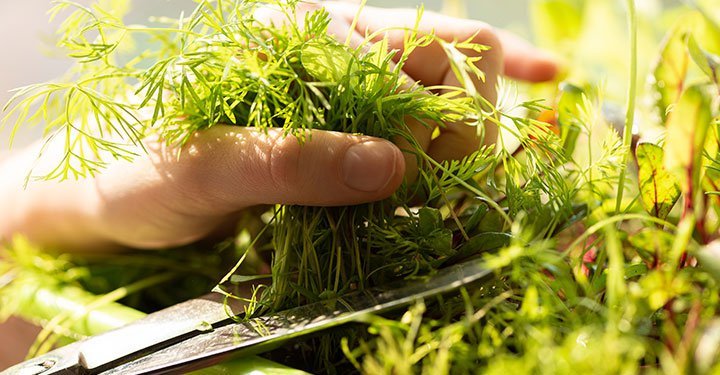
Show your child how to harvest his produce. Your little farmer can reap his produce by either cutting them with a pair of scissors a little above the soil, or by pulling out a bunch of greens each time.
Fenugreek microgreens or methi microgreens can also be grown and harvested in the same way as mustard microgreens.
However, your child will have to wait a little longer to harvest them. Fenugreek microgreens can be harvested only after 3 to 4 weeks. Methi microgreens will also have to be cut using a pair of scissors or pulled out as a bunch.
Materials required
What you and your child can do
To grow black chickpea microgreens at home, first ask your child to soak one cup of channa in water for 12 to 24 hours and keep aside. The next day, both you and your child can prepare the sowing basket. Here is what your child can do:
Materials required
What you and your child can do
To grow mung bean microgreens at home, first ask your child to soak one cup of green gram in water and keep aside for 2 days. After 2 days, when the mung beans begin to sprout, it's time to prepare the growing field, that is the plastic container. For this, get your child to:
Note: You can grow most of the plants as microgreens using any of the three methods mentioned above.
Caution: Plants of the nightshade family such as potatoes, tomatoes, bell peppers and egg plants should not be grown as microgreens as they can be toxic during that stage.
Although growing microgreens at home is easy, there are a few things you and your child should watch out for during daily inspections. These include:
Mold/fungus - At times, due to excess moisture or the high density of seeds or for other reasons, mold can appear on microgreens. It looks like dense, whitish spider-webs. Mold can make microgreens smell fishy or musty. If this happens, it is best to discard the batch and grow a fresh one, as eating contaminated produce can make you fall sick. To prevent mold/fungus, keep the moisture/humidity level at 45% and maintain good airflow (but don't place the tray under a fan).
Falling over - Usually, microgreens grow straight up. However, if your harvest is falling over, it could be due to high temperature, inadequate light or a lack of nutrients. So, check for these and correct them.
Yellow leaves and weak stems - Lack of light can be the reason for this. So, place your plants in a well-lit area and soon the leaves will turn green.
Uneven growth - This happens due to uneven light exposure. The plants that get enough light will outgrow the ones that aren't exposed well to light. So, make sure you keep the tray in an evenly well-lit place.
Slow germination - To overcome this issue, you should pre-soak the seeds for 9 to 12 hours. Pre-soaking moves the seeds from a dormant state to an awakened state.
Weeds - Sometimes, there is a chance that the seeds of weeds present in the soil can also grow alongside microgreens. You can pluck them out and discard them.
What if you don't have enough sunlight for your microgreens?
Here's a quick fix for sunlight. You can buy full-spectrum grow lights, which would help your microgreens grow well. Also, remember that sunlight is not required during the initial germination period (2-4 days).
How many times can you harvest microgreens?
Remember that when it comes to harvesting microgreens, most of them give only one crop. This is because the plants cannot withstand the stress of growing back again once they are cut. However, a few microgreens like peas or wheat grass can be harvested more than once. But their nutritional value may diminish with each harvest.
What will happen if you don't harvest your microgreens?
The plants will die due to the stress caused by overcrowding, poor air flow and the lack of nutrients.
Growing a small patch of microgreens not only provides your family with a superstore of nutrients but it also gives you and your child the opportunity to connect with nature. And, by partnering with your child to grow microgreens at home, you can also foster a closer parent-child relationship.
Looking for expert tips and interesting articles on parenting? Subscribe now to our magazine. Connect with us on Facebook | Twitter | Instagram | YouTube
Join our Circles to share, discuss and learn from fellow parents and experts!

Comments
Edit
Comment Flag
Cancel Update