
Before you feast on sadhya, know the 'Science' behind amazing Onam recipes
Lakshmi Krishnamoorthy
If you think feasts are just a variety of dishes put together to suit your palate, you're mistaken. Read on to know the reason behind every ingredient used in Onam recipes and how to make them those delicious dishes

Onam is an annual Hindu festival celebrated by the people of Kerala to welcome the mythical King Mahabali. Onasadhya is the hallmark of the Onam festival. It is the traditional feast prepared with the vegetables and crops harvested during this season. It is usually served for lunch and comprises a whopping 26 items that are eaten off a plantain leaf.
Most of the dishes served in the sadhya are prepared based on the science that nutrition is the key to good health.
The sadhya is a balanced and nutritious meal, which ensures proper digestion and optimum absorption of nutrients by the body. There is a logic to all aspects of the sadhya —the ingredients chosen to prepare the dishes, the way the plantain leaf is laid and the order in which the dishes are served.
The plantain leaf is placed with the narrow end to the left and the broad end to the right because most Indians eat with the right hand, and serving rice and curries on the right side of the leaf makes it easier to eat them. The condiments and chutneys are served on the left of the leaf. The meal starts with a sweet (sharkara upperi), which is made of deep-fried plantain coated with jaggery and dry ginger. This combination activates the salivary glands which set the digestive system in readiness for the meal.
The three-course sadhya starts with the vegetable dishes, goes on to the rice and gravies, and ends with a sweet. We bring you the most cherished and easy recipes, the 'science' behind them, and a step-by-step guide to make them:
Olan
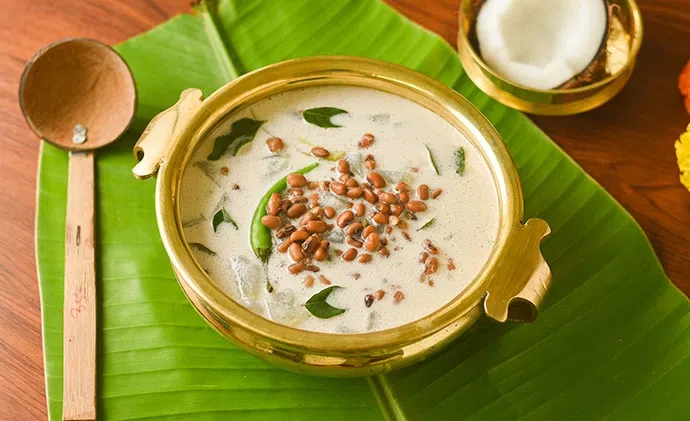
This is a dish made of red and white pumpkin and cowpeas in coconut milk. It is rich in protein, iron and fibre. It helps you feel energised and regulates acidity. It's great for your skin and keeps your blood sugar steady.
Ingredients:
- 250 g red and white pumpkin, chopped into 1-inch pieces
- 4 tsp cowpeas, soaked for 4-5 hours
- 2 slit green chillies
- 1 tbsp coconut oil
- 200 g grated coconut
- 1 sprig of curry leaves
- Salt to taste
- Water
How to make olan dish:
- Blend coconut to extract milk. Strain and keep aside.
- Pressure-cook chopped vegetables, soaked cowpeas, green chillies, salt and coconut milk with a little water for 10 minutes.
- Lace with a little coconut oil and stir well, ensuring the vegetables are not mashed.
- Serve hot with rice.
Kalan
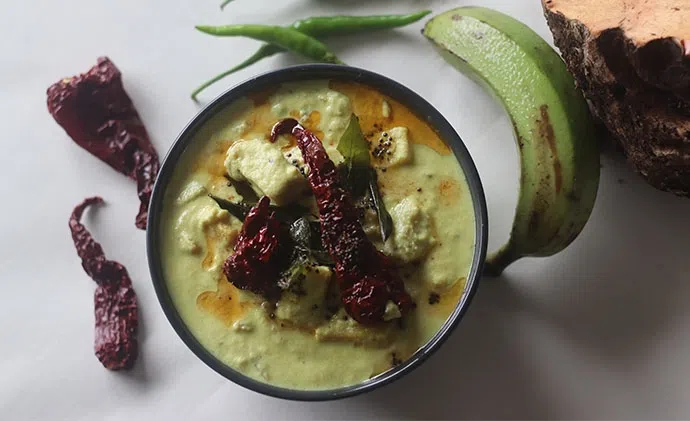
This is a dish made of coconut, buttermilk and raw bananas or yam. While buttermilk is rich in calcium and helps treat acid reflux, raw banana is a good source of fibre and vitamins and controls blood sugar. The strange-looking yam is a powerhouse of nutrients and is pocket-friendly as well. It is high in carbohydrates, vitamins, antioxidants, dietary fibre and protein. It prevents hypertension and regulates hormonal imbalance in women.
Ingredients:
- 500 ml yogurt
- 1 raw plantain
- 100 g yam
- 1 tsp ghee
- 2 pinches of fenugreek seeds powder
- 1 tsp pepper powder
- 1 tsp chilli powder
- 1 tsp turmeric powder
- Salt to taste
To grind:
- 4 green chillies
- 1 tsp cumin seeds
- 1 cup grated coconut
For tempering:
- 1 tsp coconut oil
- 1 tsp mustard seeds
- 3 red chillies
- 1 sprig of curry leaves
How to make kalan dish:
- Wash and cut vegetables into 1-inch squares.
- Grind coconut, green chillies, cumin and some yoghurt without water to make a thick paste.
- Cook the chopped vegetables in water to which a little salt, pepper, chilli powder and turmeric powder have been added.
- Add ghee and the remaining yoghurt and cook, stirring continuously.
- Add the coconut paste and fenugreek powder. Cook for another 2 minutes.
- In a frying pan, heat oil and add the mustard seeds.
- When they splutter, add the curry leaves and red chillies, and fry.
- Add this to the vegetable gravy and stir well.
- Your Kalan is ready to serve.
Avial
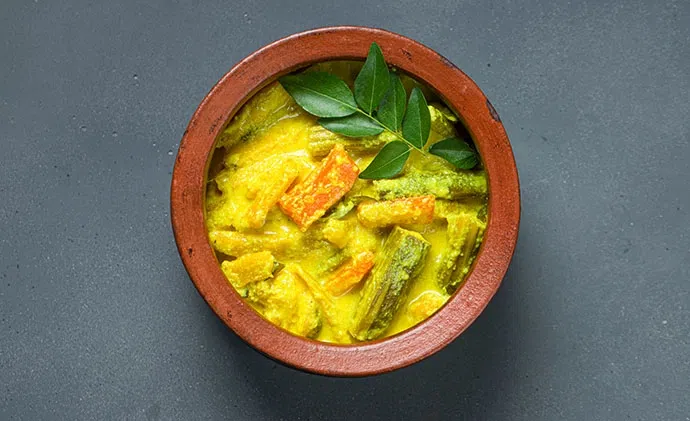
It is a medley of vegetables — carrots, yam, raw banana, beans, drumstick in yoghurt gravy. While the vegetables provide you with vitamins and trace minerals, the yoghurt lines your stomach with probiotics, which aids digestion. Coconut oil, that is used for seasoning avial, reduces bad cholesterol and is good for your heart.
Ingredients:
- 1 carrot
- 1 drumstick
- 1 raw plantain
- 100 g yam
- 100 g beans
- 100 g white pumpkin
- 4 green chillies
- 1 tbsp coconut oil
- 1 tsp cumin seeds
- 100 g grated coconut
- 1 sprig of curry leaves
- 200 ml curd
- Salt to taste
How to make avial dish:
- Cut all the vegetables into 2-inch-long pieces.
- Cook the vegetables with turmeric powder, salt and some water till they are just done.
- Grind chillies, coconut and cumin seeds with a little water.
- Add the ground paste to the cooked vegetables, throw in the curry leaves and stir well.
- Add beaten curd to this gravy.
- Turn off the flame, add coconut oil and mix well.
- Serve with hot rice.
Puli inji
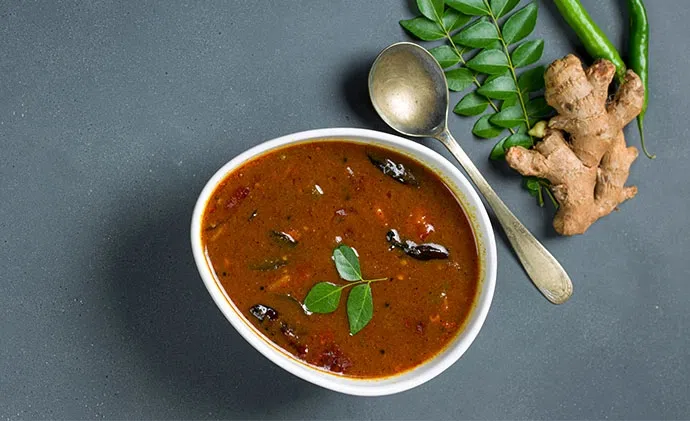
A spicy and tangy pickle, this easy-to-make dish is packed with nutrition. It is made of inji (ginger), which helps control nausea by motion, chemotherapy, or pregnancy; rheumatoid arthritis; and osteoarthritis, and puli (tamarind), which is good for the heart and improves digestion.
Ingredients:
- 100 g ginger, finely chopped
- 1 tsp tamarind extract
- 2 green chillies, chopped fine
- 2 red chillies
- 25 g jaggery
- 1/4 tsp turmeric powder
- tsp chilly powder
- 1/2 tsp mustard seeds
- 1 tbsp coconut oil
- 1 sprig of curry leaves
- Salt to taste
- 1 cup water
- 1 pinch asafoetida
How to make puli inji dish:
- Heat oil and add mustard seeds. When they splutter, add asafoetida, red chillies, curry leaves, chopped ginger and green chillies.
- Fry well until ginger turns brown.
- Add turmeric and chilli powders, and stir well.
- Add the tamarind extract, jaggery and salt.
- Allow it to simmer till it thickens and the oil separates from the mixture.
- Cool and store in a glass bottle.
Erissery
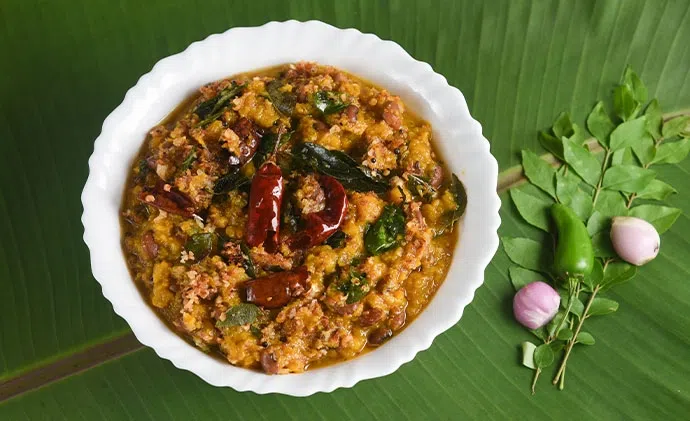
A coconut-based gravy of pumpkins and cowpeas, this is an exotic dish generally prepared during weddings and festivals. Pumpkins contain potassium that lowers blood pressure. They also contain antioxidants that give you good skin and healthy eyes. The beta-carotene in pumpkins slows ageing and reduces the risk of asthma. Cowpeas are high in fibre content and can keep you feeling full longer. They contain a good deal of iron and hence prevent anaemia.
Ingredients:
- 100 g white pumpkin
- 100 g red pumpkin
- 50 g red cowpeas
- 1 tsp turmeric powder
- 1 cup grated coconut
- 1/2 tsp cumin seeds
- 4 green chillies
- 1 tsp coconut oil
- 1/2 tsp mustard seeds
- 2 red chillies
- 1 sprig of curry leaves
- Salt to taste
How to make erissery dish:
- Soak the cowpeas in water for at least 5 hours.
- Grind coconut, cumin seeds and green chillies. Keep aside.
- Cook pumpkin and cowpeas with turmeric powder and salt till they are done but not mushy.
- Add the ground paste and cook for another 5 minutes, stirring well.
- Heat oil. Add mustard seeds and when they splutter, add the curry leaves and red chillies.
- Pour over the cooked vegetable. Stir and serve.
Chakka pradhaman
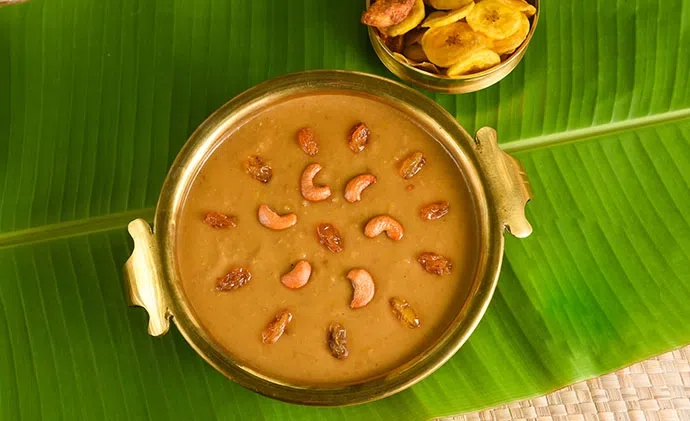
The sadhya ends in sweets such as palada pradhaman or chakka pradhaman. This is different from the payasam made in other parts of South India by way of its ingredients. While payasam is made of milk and sugar, pradhaman is made of coconut milk and jaggery. Jaggery is rich in iron. It has trace minerals like zinc and selenium that prevent free-radical damage and build resistance to diseases. Adding jaggery to sweets prepared during Onam also gives the added advantage of providing the body warmth as monsoon gives way to winter. Jackfruit is grown in plenty during the monsoon in Kerala. This makes it the inevitable choice of fruit to put in your sweet. The fruit provides instant energy and improves immunity. It's good for the eyes and regulates thyroid function.
Ingredients:
- 20 jackfruit pods
- 1 cup thin coconut milk
- 1/2 cup thick coconut milk
- 250 g jaggery, grated
- 1 tsp cardamom powder
- 1 tsp coconut, cut into small pieces
- 5 cashew nuts
- 1 tbsp raisins
- 1 tsp ghee
How to make chakka pradhaman dish:
- Grind fresh coconut in a blender with a cup of hot water. Extract the thick milk. Put the ground coconut back into the blender and add some more water. Blend and extract the thin milk.
- Pressure cook chopped jackfruit pods and grind to a paste.
- Heat the thin coconut milk and jaggery in a thick pan till the jaggery melts.
- Add the jackfruit paste and stir well.
- Add the thick coconut milk and cardamom powder. Cook for another 5 minutes, stirring all the while.
- Add coconut pieces, cashew nuts and raisins (fried in ghee).
But why does the sadhya end with a sweet, you may ask? Well, here's the science behind it:
- Eating a sweet at the end of a large meal means eating only a small quantity of it because you're already full.
- Some people who eat a heavy meal have a sudden drop in sugar level leading to dizziness. So, popping in a sweet after the meal makes them feel better.
- Ending the feast with a sweet augur good times for the family.
Understanding the science behind the Onam menu helps us appreciate the choice of ingredients better and see deeper meaning in these recipes.
If you know of a logical reason for the choice of certain recipes prepared during festivals, do share them with us in the comments below.





























Comments
Edit
Comment Flag
Cancel Update