Behaviour and Discipline

Behaviour and Discipline
Expert Answers - Understanding and Managing your Child's Behaviour and Feelings
If you have queries regarding your child's behaviour then ask your questions to Clinical Psychologist Dr. Meghna Singhal on 27th June 2019. Post your queries between 12:00 PM - 2:00 PM and get all your answers by 6:00 PM on the same day. You may choose to post your questions anonymously too.

























Comments
Ramani Varsha Sep 17, 2019
Preeti Jun 29, 2019
My son is twenty months old, but he dont listen to want to I say, until he wishes to, i mean few things he do but not all the time, also when compared to other kids he talk very few words and get hyper soon. Please suggest.
Thanks ®ards
Team ParentCircle Jul 11, 2019
@Preeti
Ashwini Shastry Jul 3, 2019
My kid is 18months old and hasn't eaten a morcel of food in the last three months. He only wants his bottle. He used to eat well till he was 14months old and he stopped eating one fine morning. It was a hard stop. Tried distracting him with games, videos, books. Didn't work. No amount of coaxing helped. He has had very serious episodes of illnesses in the last couple of months and is just out of the hospital. He falls ill mostly because he lacks resistance ( he doesn't eat) and doesn't eat because he is sick. It's a vicious cycle and very worrisome. Also, has started throwing terrible temper tantrums of late. We are in need of help.
Ashwini Shastry Jul 8, 2019
@Ashwini Shastry
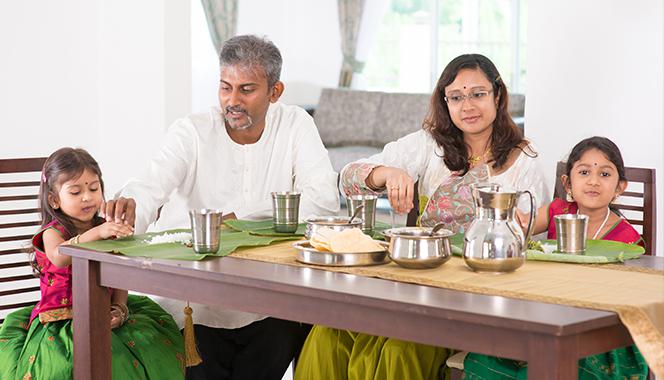
Make mealtimes a family activity, with all the family members gathering at the dinner table. If your child needs to eat earlier than other family members, sit with him while he eats, talk about the different foods on his plate, make up stories about them.
Offer the child what you eat as a family; dont prepare separate meals especially for him. If he refuses to eat, respect that decision. When he gets hungry after some time, offer him the same food item again.
Don't offer him the bottle. Bottle feeding should be stopped after 1 year of age. If he wants milk, offer it to him in an open glass with or without straw, and only after meals.
Toddlers usually hate mixed-up food and refuse to eat food they used to love like khichdi, or sambar with vegetables, or mix veg pulao. As they begin to make sense of the world, they like things to be separate. They don't like things mixed up, and it annoys them when a carrot is touching a bean. This can be really hard if as a family you eat a lot of dishes that have mixed things or do one pot dishes. You can either cook some food separately, or through play, teach your child to separate what they like/ don't like. For instance, with your son, you could teach him to take out the veggies separate from pulao when it's not mealtime. This will make him less angry at mealtimes.
Toddlers usually get fixated on one or two foods, usually beige/ white in colour, such as just ghee and rice, or just roti, just yoghurt, just boiled pasta, or just potatoes. Anything else, including vegetables is rejected. What you can do is continue to make the other foods, and keep them where child can see, and make sure child can see others eat. It is only a phase and will tide through. You don't have to cut veggies in cute shapes or make cat face with carrots. Relax and let child decide.
Toddlers can get angry when you serve foods they don't want. They might sob, scream and yell when you do this. So dont serve him. Ask your toddler to serve himself. He is 18 months and though he'll spill, will learn to serve herself. This makes him feel in control and make it more likely to try what he has served himself.
Toddlers want snacky foods, or just fatty food like a big spoon of ghee or butter or coconut oil. A toddler has a busy lifestyle. They want to learn about the world, go break something, go smell something. Low calorie food annoys them. They have an affinity to high sugar/ high fat foods. Unfortunately this is readily available and is usually junk. So don't stock biscuits, namkeen, etc where kids can see them. You can make an exception for butter and fats because kids tend to naturally stop fatty things as they feel satisfied, but this doesn't happen with junk.
Offer your child powdered mixed dry fruits and nuts or make dry nuts laddoo with loads of seeds and dates. This will help your child regain his strength and immunity.
If your toddler looks at the food, yells, and asks for something very specific like 'apple', set gentle but firm boundaries. Dont relent and give him something he yelled for. Its hard to break that habit. Instead be consistent and loving.
Please take care of yourself. Your child's hospitalisation and frequent illnesses may have left you feeling drained. Please remember that you cant pour from an empty cup. Everyday try to take up one activity (e.g., walking, reading a book, doing yoga, or taking care of your appearance) that doesnt involve caring for others and also makes you feel good and relaxed. All the best!
Team ParentCircle Jun 27, 2019
Our heartfelt gratitude to all parents who joined us today. We look forward to hearing more from you and supporting you in the journey called 'Parenting.'
You can keep asking your queries, share your experiences and guide other fellow parents in our Circles.
HAPPY PARENTING!!
Ruchi Aggarwal Jun 27, 2019
Ruchi Aggarwal Jun 27, 2019
@Ruchi Aggarwal
1. Focus on your relationship with her, which at this point of time, is the most important source of support, security, and connection for her. The more you will display genuine confidence in her abilities, the more youll talk to her like she is the most wonderful, smart, and kind little girl, the more shell believe these things about herself.
2. It is extremely important for you to encourage her to pursue whatever activities she shows interest in. Dont push her but give her a gentle nudge time and again. If she displays resistance to do something or is unable to do something well, talk to her about her feelings. You could ask How did you feel when you came in last in swimming? Focus on her effort, rather than the outcome. You could say It was really courageous of you to try rather than saying Dont feel bad about coming in last.
3. Dont give false praise. Kids can very easily discern when we are being truthful and when not.
4. Help her focus on her strengths. Talk to her about what she likes in herself. Use everyday situations to point out good qualities in her. In some families, I recommend spelling out the childs name and brainstorming one positive quality with each letter and sticking this up on the fridge for everyone to see.
5. When she gets scared with what seems trivial to you, dont diminish her. Talk to her instead about how she is feeling and acknowledge her feelings. No, she wont feel more scared if you acknowledge her fear, instead it will help her calm down. You could say something like I saw your friend pushed you in the playground. How did that make you feel? Talk to her about different situations and what other children might feel in them. And what she can do if she does feel scared. What can she do to find assurance and security? Could she come and tell a trusted adult (such as a teacher or you?) Could she tell her friend not to push her (thereby standing up for herself)? Could she pause from the game for a few minutes and return when she feels better? Empower her to try different options that help her feel in control. All the best!
Sri Snnigdha Jun 27, 2019
Thanks for taking the time out to read.our Qs.
How can a child be coached to pay attention to the task..repeated attempts to gentllt telling him.
Gets distracted easily. Hits parents and doesn't like being tied down. Picked up the behavior in school...doesn't listen unless he is being yelled at.
Hates traveling in car due to nausea.
Tried to distract him with candies and stories as well.
Pl.help
Sri Snnigdha Jun 27, 2019
@Sri Snnigdha
1. Play focus games that require thinking, planning, and use of memory. Games such as jigsaw puzzles, crosswords, card games (such as Uno and Memory), as well as activities such as spot the differences, or in which the child has to look for the hard-to-find or missing objects.
2. Play games that require your child to sit or stand still for some time (such as statue or the freeze game, in which children dance to music and have to freeze when it suddenly pauses).
3. Do sorting exercisessorting into a number or sequence or type, such as grain sorting (in which you mix big pulses such as rajma and chana/chola and ask your child to sort them, and then move on to mixing 3 different types of pulses or small grain pulses, to increase the difficulty level). You could also encourage your child to practice putting things in a sequence, such as reading a book, following a recipe step-by-step, setting the table, or putting things in alphabetical or numerical order.
4. Pay attention to his environment. Is his study environment full of distractions? When he sits down to study, is there a lot of background noise in the house? Does he have to keep getting up to procure his study materials? When he doesnt finish a task, is he allowed to go play or watch TV?
5. Reduce use of gadgets. Watching screens (TV, iPad, mobile) is detrimental to ones concentration in the long run. Ensure that your child doesnt watch more than 30 minutes of screens daily. Instead, allow him to spend more time in open spaces, such as playground and parks. Ensure that he gets enough physical activity and exercise daily.
6. Turn something dull into something interesting. Of course crashing cars into one another might be more interesting (and simpler) for your child than practising spellings or reading sight words! A little creativity on your part into turning boring tasks into fun, interesting exercises will go a long way in helping your child focus.
You also mention several other behavioural issues, such as hitting parents. What is your response when he hits you? Do you hit back? Yell? Scream? Does he see other family members being aggressive toward each other? None of this will actually work. Instead, focus on forging a connection with your child, the foundation of which is love and mutual respect. The way you behave with him is the way hell learn to behave with you and others. Talk to him kindly, even if he doesnt listen. Put firm limits but without being harsh. And never use candy to distract him.
If you require more help, I recommend you meeting a qualified mental health professional such as a clinical psychologist to sort out the multiple issues in your family.
Bharathy Jun 27, 2019
Bharathy Jun 27, 2019
@Bharathy
You could try the following, if you havent already:
1. The next time your child asks for something your nephew has, dont condemn his request or label him as being greedy. Instead, affirm his desire and then explain your honest reason for objection. You could say something like In our family we have a specific budget for buying clothes and toys. This will also help him understand that each family and their values are different.
2. Build a wish-list. Bring out a paper and a bright marker and stick it on your fridge or a prominent place in your house. Every time your child asks for something, it goes on the list. Then you could ask him to choose any item from the list when a special occasion such as a birthday or summer vacation comes along. The advantages of having a wish-list are manifold: they help acknowledge your childs wishes, give time to children to change their mind (in which case the item can simply be crossed off the list), and make them realise that they actually dont want everything they say they do.
3. Practice what you preachthats the best way to teach the importance of nonmaterial values to children. As a family, buy less stuff, and ensure that your child doesnt hear you whining about that new handbag you saw in the mall! Emphasise traditions that dont involve shopping and giftingsuch as visiting friends and relatives, getting together as a family and visiting a temple/orphanage, singing songs, etc.
4. Involve your child in charity. Have your child pick out any 10 toys he doesnt play with anymore or any 10 clothes he doesnt wear anymore. Then make a trip to an orphanage, or blind school, or slum and give out these items. In fact in some homes, the rule is every time a new item is purchased (or received) an old one is given away. All the best!
Bharathy Jun 27, 2019
@Bharathy
Brishti Ghosh Jun 27, 2019
Brishti Ghosh Jun 27, 2019
@Brishti Ghosh
Use everyday moments to talk about friendships and what they entail. For example,
friendships should be characterised by mutual respect, and not coercion. Talk
about how its not okay to force someone to do things they are not comfortable
with, or to use physical violence, even if you have a conflict with someone.
Talk about boundaries with your child (such as physical boundaries, emotional boundaries, social boundaries, etc.). An example of emotional boundaries is that if someone is teasing your child, calling her names, she has a right to speak up about how it makes her feel. If the peer keeps doing it, your child has the right to stop being friends with that person.
Play the What if? game. Discuss with your daughter some possible peer conflict situations. Ask her what she would do in such situations. Role-play the things she could say and do. This will equip your daughter with tools she can use if an actual situation arises without having to think on her feet about what to do.
Respect her feelings at home. It is important that your childs words are respected at home. This does not mean giving her her way. It means acknowledging her feelings (even if they are negative feelings) and let her know you are listening. This will help her build confidence and self-esteem. Tell her that you appreciate her speaking her mind, even though she disagrees with you.
Encourage extracurricular activities that involve team building exercises, such as sport or involvement in girls scouts or other clubsthey are an excellent way to build confidence and exercise assertiveness.
And of course, model assertiveness yourself! Be mindful of how you interact with family and friends. There is a big difference between being assertive and being rude. For example, when you make a customer service call, maintain a polite but direct tone. If you say no to someone, stick to your word. Make sure your child sees you modelling what you are teaching by holding your ground and sticking to your word, especially with those who violate your boundaries. All the best!
Meena P Jun 27, 2019
Meena P Jun 27, 2019
@Meena P
1. Have open ongoing conversations with your child about what drugs are, and what are the consequences of consuming drugs. Talk about the toll it takes on the individuals mind and body as well as families. Be open and honest. This will help ensure that your child doesnt get his information about drugs from the wrong/incorrect sources.
2. Talk to your child about the difference between fiction and reality, i.e., what is portrayed in cinema, how drugs are glamourised on screen, and what a contrast it is in the real world.
3. Allow your child to talk as well. Your child may already have an opinion on the matter. Encourage your child to share with you, without resorting to making judgments or criticising his view. Talking to your child and giving him the space to share will also strengthen your bond with him, ensuring that you are cued in into his life.
4. Use videos to impart factually correct information. Websites like http://www.drugfreeworld.org/ have videos on drug abuse specifically targeted at young children. They offer information about drugs and empower children to make the right choice.
5. Teach your child the skill of assertiveness, or being able to say NO when someone offers him a drug. Practice role-playing different peer pressure situations with your child, so that your child hones his skills to resist pressure and builds confidence to be able to make the right decision.
6. Lastly, role model keeping away from drugs such as tobacco yourself. All the best!
S Jun 27, 2019
S Jun 27, 2019
@S
1. Talk to your daughter about whats acceptable (touching her private parts herself in private) and whats not (touching herself in public, or asking someone to touch her in private). Use the correct terms for private parts, such as vagina, bum, penis, etc. and educate her about safe and unsafe touch.
2. When she comes and tells you, youre right in not giving a positive or negative expression. Additionally you could remind her that touching her own private parts should only be done in private and not in front of anyone.
3. You could also ask her (and figure out yourself) why she touches her private parts. Is it pure habit? Does it have to do with comfort? Or with filling in time when she is not engaged or focused on anything else? Or, is it mainly to do with seeking out the pleasure of touching?
4. It will help to find a way to distract her, or engage her in a fun but consuming activity. Or some other comforting behaviour (like getting a foot rub or soaking in a warm bubble bath). Or she might just need to get up and start moving, or focus on some other activity that will keep her mind from drifting.
5. Depending on her behaviour in other contexts (such as school, with her friends, etc.) you need to be concerned about this behaviour only if its happening in public or even at home if its happening unconsciously (in which case you could come up with a signal to remind her to stop). All the best!
Deepti Jun 27, 2019
Deepti Jun 27, 2019
@Deepti
1. As parents, it is extremely important- if we want our children to follow us- to first display emotional regulationthat is, get a hold on your emotions first. Pause and calm down. Instead of thinking hes doing this to trouble me, think differently Hes doing this because thats what kids do. This will make a world of a difference in your attitude when you approach him to complete some tasks.
2. What are the types of instructions your child is more resistant to follow? Is it about dressing up for school in the morning? Or clearing up his toys? Or something else? For routine-related issues, such as getting up in the morning and going to school, you could involve him in making a picture time table for himself. Have him cut colourful pictures from magazine and stick them in a sequence of what order we follow when we get upwe brush our teeth, have breakfast, etc. So when he actually gets up, instead of telling him what to do, simply point to his chart. He is much more likely to follow something he has taken ownership of.
3. Try being playful instead of doling out instructions. Instead of saying clean up your room, try saying I bet you can't put all the blocks in your basket! and challenge him to do so within 1 minute. From a resistant pre-schooler you have will have an eager child who runs to win the game.
All the best!
Adyasha Jun 27, 2019
Sumita Jun 27, 2019
@Adyasha
Adyasha Jun 27, 2019
@Adyasha
1. Pause: The first step is to watch out for your own emotional reactions. If you find yourself getting frustrated, upset, or angry, just take a deep breath and try to calm yourself. Your anger or frustration will rarely be effective in a situation in which your child is overwhelmed as well. Also, by calming yourself (instead of screaming, hitting, etc.) you will be imparting a valuable lesson to your child - that when we get angry, we have the choice to calm ourselves.
2. Empathise and communicate: When your child is upset, logic wont often work until we have responded to their emotional needs first. Try to empathise with your child, by putting yourself in their shoes, and connecting with them emotionally. Try saying, Sometimes its really hard, isnt it? or I understand youre upset. Hold your child (if they allow you) to comfort them physically. However, this doesnt mean you give in to every wish or desire of your child. It means that you are making your child feel heard and cared for, instead of dismissing their feelings or desires as silly.
3. Engage: By connecting with your child, you will be able to communicate to them that you are tuned into how they are feeling. Once they are tuned in, only then will they be able to talk logically with you about their behaviours. At this stage, you could bring in problem-solving that is, brainstorming about the many ways in which the problem situation could be resolved and picking one that is best feasible and acceptable to both of you.
Its generally a good idea to discuss their behaviour and its consequences after the child has calmed down, since when the child is angry is not the best time for lessons to be learned. All the best!
Adyasha Jun 27, 2019
@Adyasha
1. Having open ongoing conversations with your teen on a daily basiseven if your teen tells you something you dont approve of, fight off the urge to jump in with your judgments and dislikes. Try to hear her out with patience and help her figure out her own path.
2. Guide her in the steps she needs to take to solve a problem, you could brainstorm possible solutions with her for example, but whatever solution she chooses, help her own it by discussing the possible consequences. If you do this consistently, rest assured that you will have a strong bond with your teen and she wont think twice before sharing any part of her life with you herself.
3. Help her balance her life (both academic pursuits, extra curricular activities, hobbies, time with friends and family) by drafting a weekly time table for herself, to prioritise whats important to her and manage her time better.
Also emphasise to your teen the importance of getting adequate sleep, regular physical exercise, and a nutritious diet. These go a long way in keeping her mind and body healthy and stress-free. All the best!
See All Reply
Show all 15 comments
Edit
Comment Flag
Cancel Update