
What Happens When You Hit Your Child: The Impact Of Physical Punishment On Children's Behavior
Arun Sharma
Many parents resort to hitting in moments of frustration, but physical punishment can leave lasting effects on children’s behavior, emotions, and self-esteem. This article helps parents understand what happens when a child is hit, and offers healthier, positive ways to discipline children
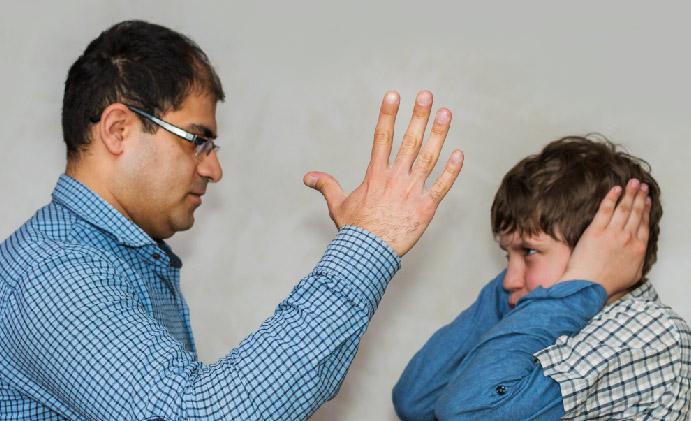
Every parent has moments when patience runs thin, and frustration takes over. In those tough times, hitting may feel like a quick way to discipline, but it often creates more harm than good. Physical punishment doesn’t just affect behavior in the moment—it shapes how children see themselves, their parents, and even the world around them. Understanding the true impact of hitting helps us choose kinder, more effective ways to guide our children while still setting boundaries they can respect and trust.
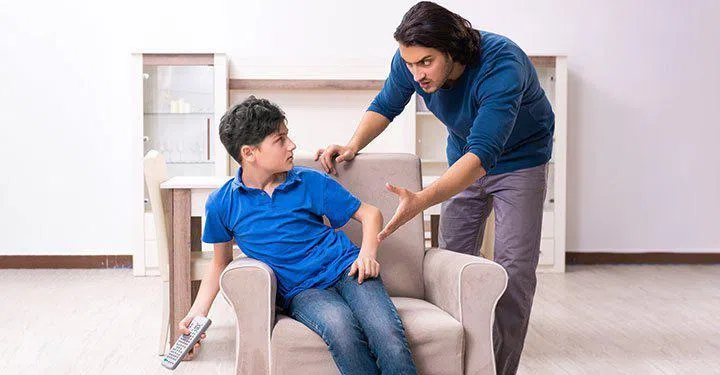
During those moments of frustration and helplessness, parents often lose control and resort to hitting their children, sometimes at the slightest provocation. Hitting a child hurts them emotionally and physically and makes parents feel guilty and unhappy.
Effects of hitting on children’s behavior
Neuroscience tells us that every life experience impacts how the neural networks in the brain develop. Positive life experiences that arise from nurturance, strong relationships, and empathy help to build positive neural networks in the brain. Therefore, we must provide our children with as many positive experiences as possible. Beating and hitting children only creates emotionally painful experiences.
But there are moments when we lose control of our emotions simply because we may not have learned how to manage our emotions in challenging situations.
Physical punishment causes pain to children, and it never produces the desired effects because of the emotional hurt it causes. Research studies have shown that consistent physical punishment can lead to psychiatric issues like anxiety disorder, alcohol abuse or dependence, and externalizing behaviors.
Hitting a child to discipline them only serves to:
- Lower their self-esteem
- Instill fear
- Trigger rebelliousness
- Provoke aggressive behavior
- Cause anger and frustration
Why parents sometimes resort to physical punishment
- Exposure to physical abuse as a child
- To halt misbehaviors like aggression or tantrums
- To instill discipline
- To make the child comply with their demands or heed their warnings
- To get the child to fulfill parental expectations
- Worried about the impact of the child's behavior on people and situations
- To make the child associate the wrong action with the pain caused by hitting and, therefore, refrain from repeating the action
- Giving vent to their feelings of disappointment when their child underperforms in academics or other competitions
How physical punishment affects parent-child trust
Parents who start with hitting once in a while come to rely on it over time. As the habit takes deeper roots, they could start hitting their children even for the slightest breach of rules. These parents find it difficult to break the cycle, giving rise to the likelihood of them turning into abusers. Parents experience guilt and stress and find it difficult to reconcile and reconnect with their children.
No parent will hit their child for pleasure. Only when the parent is unable to manage the child, or if the child has committed a seemingly unpardonable mistake, would a parent resort to physical punishment. But, after inflicting physical punishment, most parents are overwhelmed by feelings of regret and remorse, as they love their children a lot. However, if parents are under stress, then their tolerance levels toward their child's slip-ups and flaws can be low. As a result, they may frequently resort to physical punishment for want of a better way of disciplining the child. Dr. Ravi Samuel
How hitting affects children
When children lack the emotional vocabulary to express their feelings, they act them out. Impulsive behavior, anxiety, stress, fear, hunger, and tiredness are all manifestations of their inability to manage themselves. Children need their parents to help and support them through those difficult emotions.
While hitting causes the child to stop what they are doing, it does nothing to modify their behavior. Hitting a child has the following repercussions:
- It causes the child to feel wronged and treated unjustly and unfairly.
- It gives rise to feelings of anger, humiliation, aggression, and fear.
- It can cause long-term mental health issues like mood and anxiety disorders, and even substance abuse.
- It hinders a child's natural ability to explore, learn, and focus, leading to poor academic performance.
- It increases the chances of the child engaging in aggressive, violent, or criminal behavior.
The adverse effects of corporal punishment go even beyond these. A study by Tomoda et al titled, 'Reduced Prefrontal Cortical Gray Matter Volume in Young Adults Exposed to Harsh Corporal Punishment', was published on NeuroImage (2009). It outlined the effects of harsh corporal punishment (HCP) on the brain. According to them, "HCP may be an aversive and stressful event for human beings that potentially alters the developmental trajectory of some brain regions in which abnormalities have been associated with major forms of psychopathology."
What happens to the parent-child relationship
- Children look to their parents for emotional support and to have their needs met. Children expect their parents to love and protect them, treat them with respect, support them during times of distress, guide them when they feel lost, and help them when they are in trouble. Parents who resort to hitting deprive their children of a secure and wholesome parent-child relationship.
- Consequently, children become disrespectful and resentful of their parents. Instead, they develop a negative attachment with the punitive parent, filled with fear and anxiety.
- There is a disintegration of the parent-child relationship, a breakdown in respectful communication, a hostile and insecure environment at home, and increasing confrontations and conflicts between the parent and child, which mostly remain unresolved.
Emotional regulation, or managing one's emotions, is key to managing children's behavior. Like other people, parents experience all kinds of emotions and lose control.
Practical tips to help parents stay calm and consistent
1. PAUSE AND STEP BACK: We tend to react to a child's misbehavior. But in between an event and a response, you could create a neutral space in your mind. All you need to do is use a bit of self-talk.
"I'm feeling so angry now." (You are acknowledging and accepting your feelings).
"I'm going to step back and take a few moments to calm myself." (You are focusing on yourself first).
Do something to calm yourself - leave the room, drink a glass of water, do some slow deep breathing... whatever works for you ( you are now in a neutral space in your mind).
Calming yourself gives you more control over your emotions. To your child, you will appear calm, not mad and fierce. This makes your child feel less fearful of you. A calm state of mind helps you talk to your child with empathy and understanding, with firmness and kindness. So, now you have a child who is beginning to feel calm, too. When two calm people talk to each other, the greater the chances of solving the situation together.
2. REPAIR THE RELATIONSHIP: Sometimes it's hard to manage our emotions in a difficult situation. We say harsh things or hit our children. Wait for things to settle down before you approach your child with an apology. "I'm so sorry that I hit you. It must have hurt you a lot. It wasn't right for me to do that. Could you please forgive me?"
You may think that this approach will give your child the upper hand. But that's not true. Instead, your child will begin to feel understood, and you'll be setting an example for your child to learn the social skill of offering an apology. Most importantly, you would let your child know you made a mistake and are willing to rectify it. This is the better way to reconnect with your child and to strengthen your relationship with them.
3. REFLECT ON YOUR HABIT OF HITTING: Where does it come from? How did you learn to use hitting as a way to sort things out? What were your childhood experiences like? Remember that as a child, you had no control over what was happening then, but now as an adult, you can reason it out and choose to do things differently, one small step at a time.
Or, is there something else troubling you right now that's draining you of your emotional energy, leaving you on a short fuse when your child troubles you? Try talking about it to someone you trust, or seek a counselor's help.
Children can somehow overcome the physical pain inflicted on them, but need their parents to help them heal from the emotional pain. An emotionally regulated parent responds to situations, rather than reacting. So do spend time learning to take a pause. You will begin to see its benefits, and it will help build your confidence as a parent.
Last updated on: August 21, 2025





















Comments
Hadarah Couture Jan 25, 2023
Beautiful article.... I can relate to most of the article physically. Learnt a lot from reading this piece... thank you very much for putting this up here.
Edit
Comment Flag
Cancel Update