
Easy Ways To Deal With Your Fussy Eater And Encourage Healthy Eating Habits
Divya Sainathan
Divya Sainathan is a writer and editor with a special interest in early childhood education.
Mealtimes don’t have to be a daily struggle. Learn how to turn food battles into moments of connection and joy with these simple, practical, and stress-free ways to handle your fussy eater while gently guiding them towards enjoying nutritious foods

It was a Monday morning. My 4-year-old son was bathed and seated at the dining table with a hot, crisp dosa on his plate. His drive to school was 45 minutes away. I felt good that my child had plenty of time to eat something he really liked. This should be a fuss-free morning.
About 20 minutes later, he had gone through four dips for just half a dosa, polishing off portions of chutney, sugar, chutney powder, and peanut butter and demanding a spoonful of jam while the dosa lay cold and ignored. I had catered to my son's every whim in my desperation to get him to eat his breakfast.
When kids sit at the table for a meal, coaxing, begging, bribing, scolding, and crying become the order of the day. Such mealtime battles take a heavy toll on our sanity and our relationship with our kids. It's a fairly short walk from 'Is my kid eating enough for him to grow normally?' to the great self-doubt, 'What am I doing wrong?'
The truth is, fussy eating is natural and quite common among kids. Aayushi Srinivasan, a psychologist based in Hyderabad, believes sensory issues such as aversion to texture, taste, smell, color, or even the act of chewing could be a factor. "Kids can also be put off when parents force them to eat something they don't like or when they don't want to eat," she says.
So, here's how you can handle fussy eaters.
Do not insist, give ultimatums, or force your child to clean her plate
Create conditions conducive to eating
Parents come up to me and say, "My child is not eating." And I ask them, "Do you sit with them and eat with them?" I have actually told them that one meal a day has to be a family meal, reveals Srinivasan.
"Eating is supposed to be a focused task, where you know what you're eating, how much you're eating, and whether you're spilling food, she adds. For eating to be about food, you must set the right scene, space, time, and routine associated exclusively with food. Kids will know it's mealtime when the family gathers at the dining table at 1 p.m. for lunch, after washing their hands and grabbing their plates.
My son's attitude to food changed when we moved from the sofa to the dining table, from among toys and TV to among dishes of the day, from being fed alone to being served with everyone. He would peek into the serving dishes, observe what we put on our plates, and ask for something for himself. For us, this was revolutionary."
Understanding your child’s food preferences
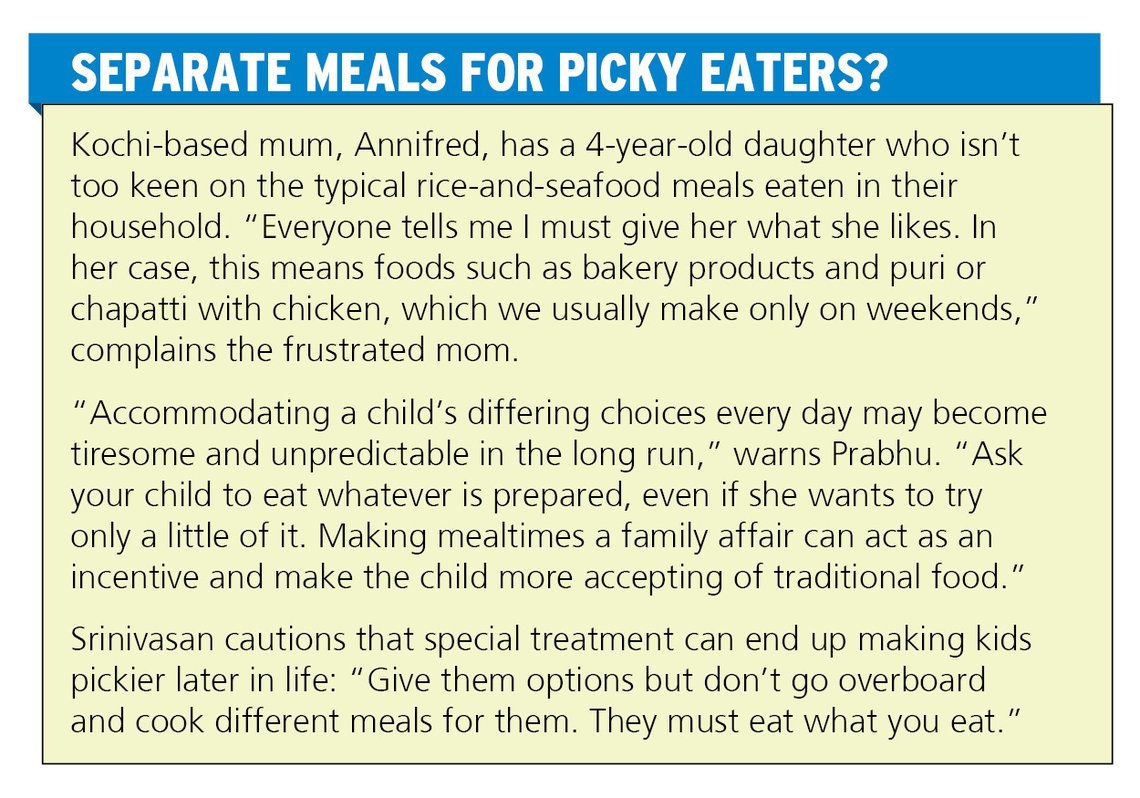
How many mealtime tantrums, tears, and threats have their beginnings in conflicting expectations of the quantity and variety of foods you offer, and your child is willing to eat?
Setting realistic expectations is key to managing a fussy eater. "Every child has different eating habits and food and portion size preferences. The best you can do is understand your child's preferences and tailor the meals we give them. It would be unfair to compare your child's appetite with their friends," explains Soniya Prabhu, a nutritionist based in Bengaluru. She suggests offering frequent snacks (healthy options only) if you're concerned about your child eating too little in one sitting.
Srinivasan suggests encouraging children to eat with their hands. "The child's hand must be the one that puts food into their mouth. They will take a lesser quantity of food compared with our hand size, but it's still filling for them because they have the amount they require. They will know their limits when they're full and don't want to eat any more."
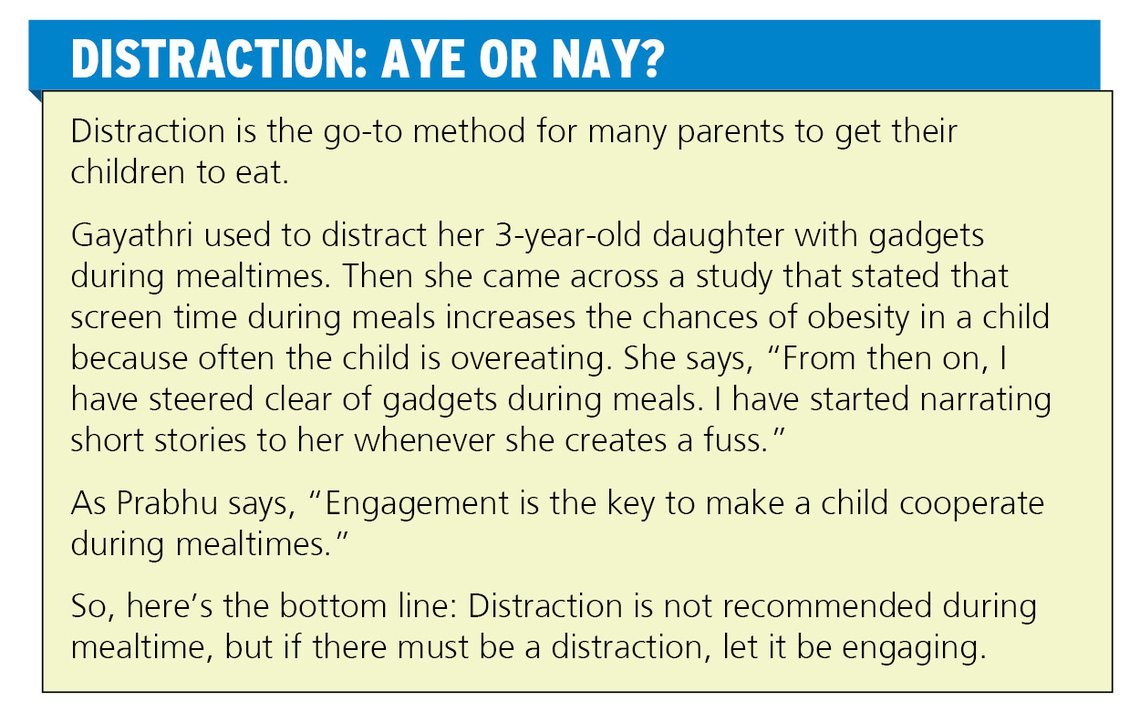
How to involve your child in meal preparation
Srinivasan strongly believes that children's involvement in meal-prepping will get them more interested in food. "When I say meal prep, I don't mean kids have to sit and chop veggies. They could help us unpack veggies, set the table, fetch their plate, and glass."
Prabhu agrees, adding, "Engage children when the produce comes home. When my 4-year-old son helps put away fruits and veggies in the fridge, he recalls them when they show up on his plate later."
Meal-prepping is a great opportunity for parents to:
- Share control of food with their autonomy-seeking preschooler (Shall we make carrot or beetroot?)
- Trust their child to choose well from limited options (Would you like a banana or some dates for a snack?)
- Give their child responsibilities (Take the chapattis to the table)
- Enforce cause and consequence (eating what the child chooses and helps make)
Call your food offerings yummy, cool, or special instead of healthy, good, nutritious
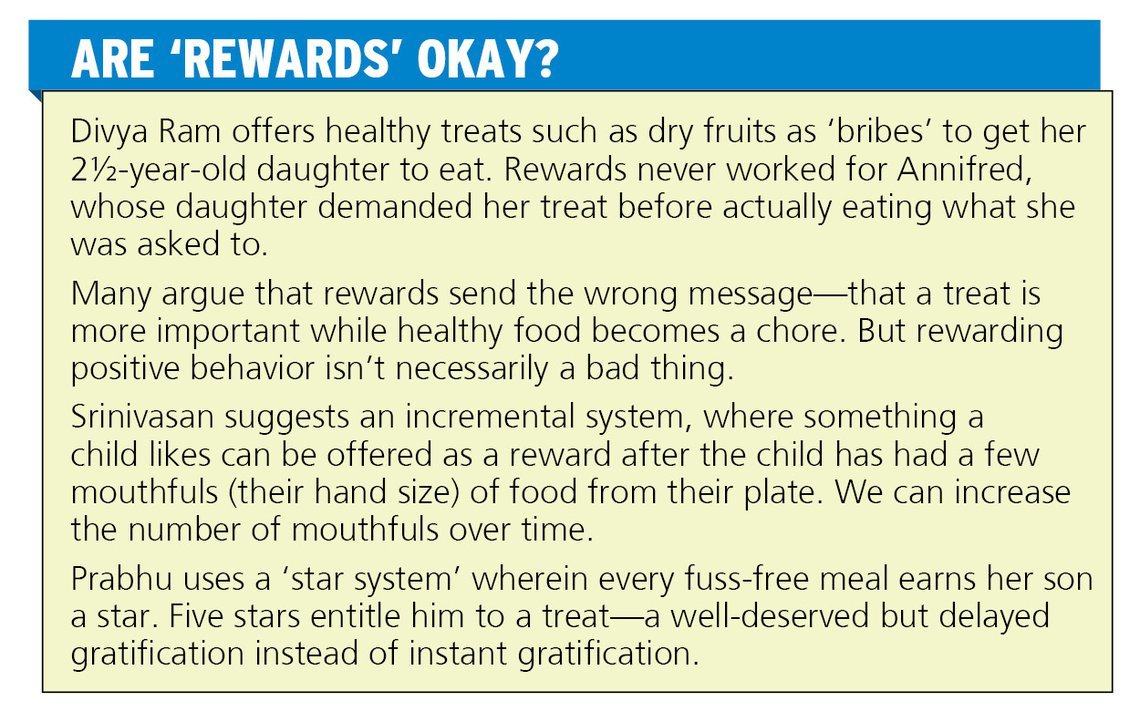
Using a fun presentation to spark interest in food
Picky eaters find plenty of reasons to turn down the cream in milk and curd, mustard or cumin tempering in rasam, or the tartness of orange. It's up to you to tweak food so that your fussy eater can look past their pet peeves.
- Offer dips, condiments, or accompaniments that add flavor to a dish. Freshly ground chutneys, dry lentil powders, roasted papad, and homemade savories are good options.
- Get creative with plating. Funky-faced sandwiches, smiley dosas, chapatti wraps or rolls, or rainbow plates with colorful fruits and veggies make eating more appealing.
- Work on your cooking skills. Understand your child's tastes and learn to make dishes that balance their nutritional needs with their preferences. When the lockdown was imposed during the recent pandemic, Divya Ram noticed her daughter fussing over the food she cooked. "My mother used to bring her a variety of dishes, but my cooking skills were limited. My daughter seemed to miss my mum's cooking," she surmises.
Creative Ways to Introduce New Foods
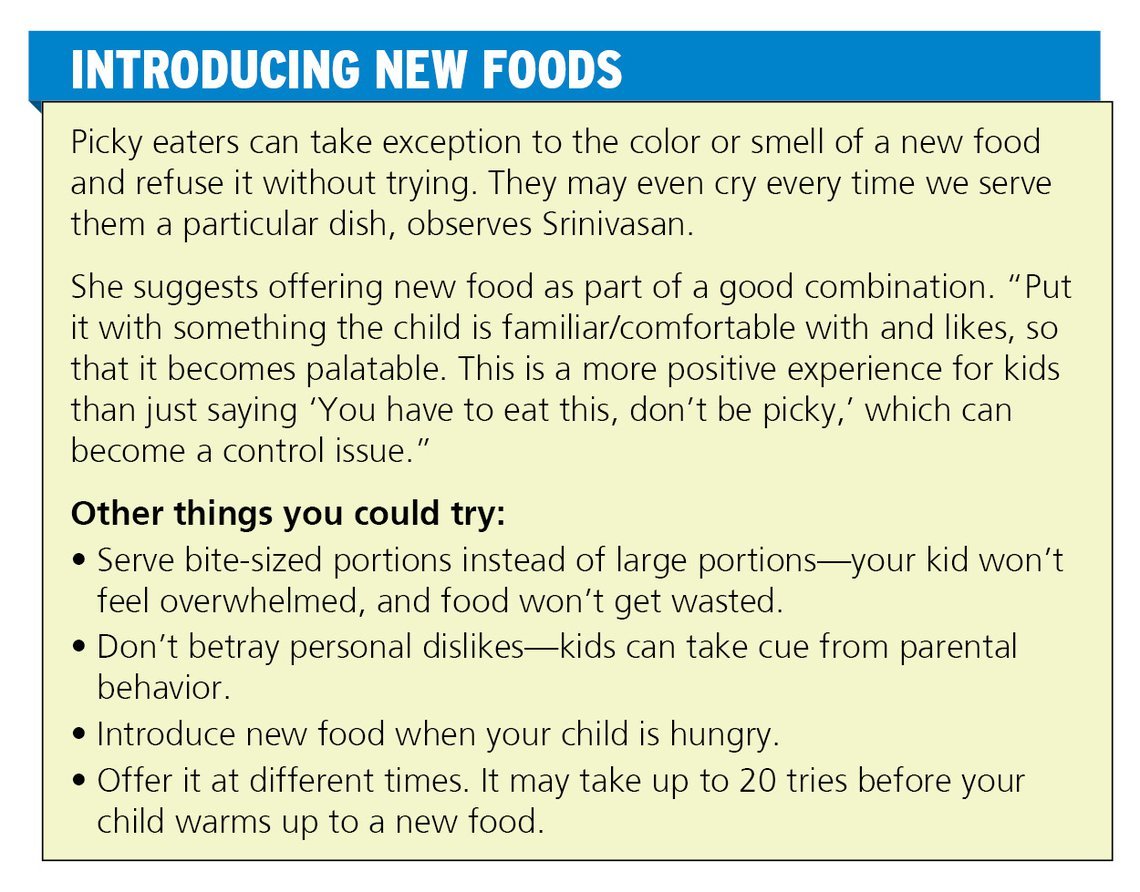
Making mealtimes relaxed and pressure-free
We all want eating to be a pleasant experience, not a chore or a punishment. But it's hard to keep that in mind when your child refuses to eat something you've painstakingly made. Lashing out, forcing, sermonizing, or criticizing at that point can backfire.
Stay calm, use the right words, and reinforce the right behavior.
- Adjectives can make or break your kids' perception of food. You don't want them thinking healthy and tasty are two different planets. So, how about calling your offering yummy, cool, and special instead of healthy, good, and nutritious?
- Bite back your criticism when your child eats too little, plays with their food, spills, or causes a mess. Ignore their attention-seeking gimmicks and deny them an excuse to take eating off the table.
- Do not insist, give ultimatums, or force your child to eat everything on their plate. The ensuing power struggle will make them dread eating.
- If all your efforts go in vain and your child has had only one morsel for lunch, remember that you can make up during snack time, dinner, or the next day.
Kids sometimes reject food they had no trouble eating earlier, leaving parents at their wits' end. All kids go through this phase, reassures Prabhu.
Just bide your time. Try offering different foods from the same food group: cheese instead of yogurt, cabbage instead of spinach, eggs instead of meat.
Model good eating behaviors
Geetha Arun had trouble getting her younger child (aged 5) to finish her meal despite entertaining her with stories and cooking what she liked. "She takes too long to eat. Then I made her join her elder brother for meals. She began to eat whatever he ate, without any complaints. And my son eats just about anything!"
Being a role model is one of the most effective ways to make fussy eaters pick up good eating habits. Be it a parent, sibling, or, best of all, a peer. Positive examples make a huge impression. This is why psychologists and nutritionists alike stress on making meals a family affair.
Dealing with a fussy eater is a long-haul, time-consuming project. In your short-term struggles, let's not lose sight of the long-term goal of helping your fussy eater develop a positive relationship with food, including the ability to make healthy choices.
This article was featured in the September 7, 2025, edition of The Free Press Journal.
Last updated on: August 13, 2025






















Comments
Edit
Comment Flag
Cancel Update